Animal

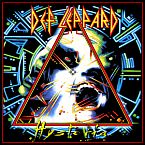
Album: Hysteria (1987)
Charted: 19 6
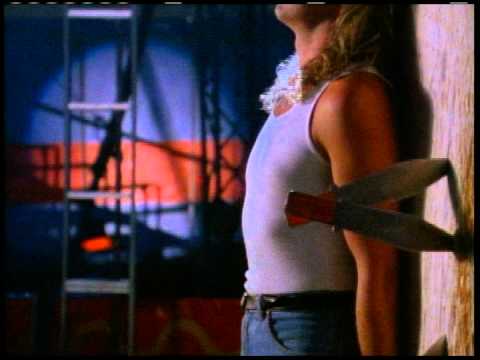
Play Video

Songfacts®:

  • This song about a raging animal lust took three years to complete. Following up their wildly successful 1983 Pyromania album, the first attempts to record Hysteria were with producer Jim Steinman, but that didn't work out very well. Steinman is the guy who crafted big, orchestral songs like "Total Eclipse Of The Heart" and "Making Love Out Of Nothing At All," and unlike Steinman's compositions, "Animal" won't leave you scratching your head or listening for the string section: it's straight-up rock produced by Mutt Lange, who took over the project 18 months after work started on the album.

    And unlike the reckless passion that is the lyrical content, the song was produced to perfection, with Lange making sure every note was just right, ensuring they had a hit single to follow up Pyromania.

    "Animal" was released in advance of the album in the UK, and in America it followed "Women" as the second single, leading a slow march up the charts for Hysteria, which eventually landed at #1 after 49 weeks.
  • This was Def Leppard's first hit in their native England. Even Pyromania, which was a massive hit album in America, was largely ignored in their home country. "Animal" was the song that finally broke through in the UK, and it earned them their first appearance on the popular music TV show Top Of The Pops.
  • Def Leppard guitarist Phil Collen wrote the original version of this song, which he recorded as a demo. In our interview with Collen, he explained: "We'd revisit it and I remember we were recording vocals in Paris for something and one day Joe [Elliott] had done this vocal and Mutt Lange had said, 'Wow, this vocal's killer. Let's rewrite the song around that.' So we did and it was our first English Top 10 single, so it was worth waiting."

    Collen credits Lange for taking the song to the next level. "He said, 'Yeah, this is okay but this can be great.' That's always his thing. 'Yeah, it can be alright and it can be an okay song but we want to make it great.' And I think we achieved that. Certainly with the album, Hysteria. It had a different kind of response to it than if we had just sat there and released the first draft."

Comments: 2

  • Kathleen from Clinton, MdThe line "Like the restless rust, I never sleep." is a reference to Neil Young's Rust Never Sleeps released in 1979. Def Leppard also quoted Neil Young's Rust Never Sleeps album in their song "Rock of Ages" by quoting the refrain of Young's "My My, Hey Hey." (I had a typo --- sorry!!!)
  • Kathleen from Clinton, MdThe line "Like the restless rust, I never sleep." is a reference to Neil Young's Rust Never Sleeps released in 1979. Def Leppard also quoted Neil Young's Rust Never Sleeps album in their song "Animal" by quoting the refrain of Young's "My My, Hey Hey."
see more comments

Editor's Picks

Donnie Iris (Ah! Leah!, The Rapper)

Donnie Iris (Ah! Leah!, The Rapper)Songwriter Interviews

Before "Rap" was a form of music, it was something guys did to pick up girls in nightclubs. Donnie talks about "The Rapper" and reveals the identity of Leah.

Bass Player Scott Edwards

Bass Player Scott EdwardsSong Writing

Scott was Stevie Wonder's bass player before becoming a top session player. Hits he played on include "I Will Survive," "Being With You" and "Sara Smile."

Chris Fehn of Slipknot

Chris Fehn of SlipknotSongwriter Interviews

A drummer for one of the most successful metal bands of the last decade, Chris talks about what it's like writing and performing with Slipknot. Metal-neck is a factor.

Carol Kaye

Carol KayeSongwriter Interviews

A top session musician, Carol played on hundreds of hits by The Beach Boys, The Monkees, Frank Sinatra and many others.

James Bond Theme Songs

James Bond Theme SongsMusic Quiz

How well do you know the 007 theme songs?

Annie Haslam of Renaissance

Annie Haslam of RenaissanceSongwriter Interviews

The 5-octave voice of the classical rock band Renaissance, Annie is big on creative expression. In this talk, she covers Roy Wood, the history of the band, and where all the money went in the '70s.