A hexagram is a potent symbol of the macrocosm (God, the Universe or Higher Energies) and of the relationship between the macrocosm and the microcosm (Humankind, the Earth or Manifest Energies). In its regular form, it is drawn as two intersecting equilateral triangles, and is most commonly seen as the Judaic Star of David.
One triangle points upwards (Godwards, if one were so inclined) into the ethereal and transcendent while the other points downward into the dense and Earthly. This theme of reflective dualities plays out in "Hexagram" as Deftones frontman Chino Moreno repeatedly links the word "worship" with "play," with worship being the direction of consciousness upwards/Godwards and "play" being the engagement of mind with the material realm. In a balanced perspective, both aspects of human existence are acknowledged and embraced (and Moreno is all about balance, as explained below) - a healthy human life soberly combines the two impulses.
The dualistic theme is further expressed in Moreno's comparison of himself and his music with a terrorist and a car bomb.
And the crowd goes wild
And the camera makes you seasick
God, it's so sweet of you, you know I'm proud
And the car bomb tick-ticks with the same sound
It's the same sound
With the same sound
Just as the terrorist's car bomb transforms the material world through destruction, Moreno's music reflects the opposite by "blowing minds" and lifting consciousness upward.
"Suckas" was a working title for this song.
A key to unlocking the song can be found on Ohms, the band's ninth studio album, released in 2020, 17 years after the song was released on the album Deftones. In the buildup to releasing the album, Deftones released lyric visualizers of "One Weak" (appearing on their 1995 debut album Adrenaline), "Hexagram," and "Minerva." Fans quickly noted that combining the first letter in each song spells "Ohm." But the connection between the songs is more than just wordplay - each one deals overtly with spiritual concepts. There's another interesting overlap in that the word "breach" is used in ambiguous reference to life-and-death in both "One Weak" ("but you will never find me breach unborn") and "Hexagram" ("death is the standard breach for a complex prize").
Moreno has stated that
Ohms is about balance and harmony. Sometimes he refers to the balance within himself or more abstractly "the" self and sometimes he refers to the balance in Deftones' music, which has experimented and played upon the contrast of hard and heavy with soft and light as much as any popular band in history. "The Yin and Yang of it," Moreno
told NME. "We've never just been a metal band, we've never just been an alternative band, we've always just been us. We feel comfortable in never having to choose."
Moreno rarely addresses his spiritual beliefs with the media, but he has shared enough to suggest that overlap with metaphysical ideas isn't coincidental or meaningless. In 2011 he formed a side project named Crosses and explained that its name wasn't overtly Christian but was rather using the cross as an esoteric symbol of general spiritual significance. Some esoteric traditions hold that the cross represents concepts very similar to the Hexagram, with the vertical line referencing transcendent reality and the horizontal line representing material reality, with Christ at the center representing a properly balanced human consciousness. He has also spoken of reading an old text titled
The Urantia Book, which still has the support of a movement and which delved into complex discussion about the spiritual world's overlap with human existence. The third track on
Ohms is titled "Urantia."
"Hexagram" and "Minerva" were the only two singles released off Deftones, the band's self-titled fourth studio album. The band spent a lot of money making the album, landing it on lists as one of the most expensive in history. They were hoping to build on the incredible momentum generated from their previous two albums, Around the Fur and White Pony, but Deftones didn't sell as well as hoped, and the singles underperformed. "Hexagram" didn't crack any US charts (it earned low positions in a couple UK charts, but these too fell short of previous efforts). The investment may have been worth it artistically, but it didn't reap greater sales success.
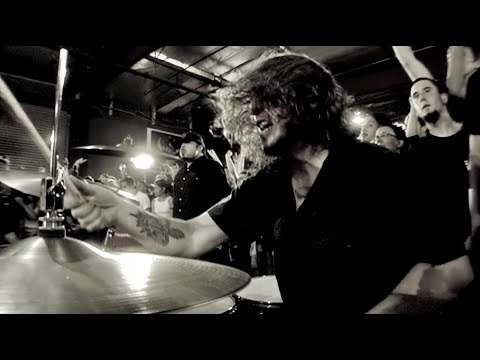
"Hexagram" didn't find much love on radio, but its video was played a lot on MTV’s Headbangers Ball and on Fuse TV's Uranium. The video shows Deftones performing in a warehouse setting, surrounded by crazed headbanging fans. Moreno brings it with a violent performance, as usual, and the crowd reactions appear to be legitimate enthusiasm rather than acting.