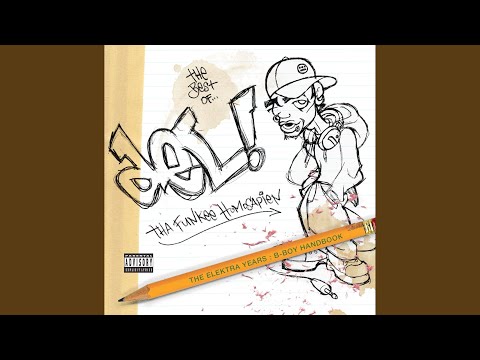
Mistadobalina

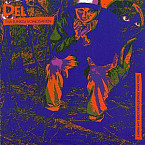
Album: I Wish My Brother George Was Here (1991)
Play Video

Songfacts®:

  • Del The Funky Homosapien didn't invent Mr. Bob Dobalina; he came from an oddball recording called "Zilch" by The Monkees, found on their 1967 album Headquarters. In "Zilch," the four Monkees each pick a phrase and repeat it over and over. Peter Tork's phrase is, "Mr. Dobalina, Mr. Bob Dobalina."

    Del is a big fan of The Monkees and couldn't get that line out of his head, so he built a song around it, compressing the name into one word for the title: "Mistadobalina."
  • The song is a rather vicious diss track where Del throws lots of darts at one of his fraudulent foes. He told Spinner that the song isn't about anyone specific, but "is basically somebody who thinks he knows what's hip. He thinks he's hip, he think he's cool, but he's really right off. Like he ain't right on - he's right off."
  • "Mistadobalina" was Del Tha Funky Homosapien's second single (following "Dr. Bombay"), included on his debut album, I Wish My Brother George Was Here, in 1991. Del is from Oakland, where the song got a lot of attention. There weren't many radio stations devoted to hip-hop at the time, but many big cities had pop stations that were adventurous enough to play the song. Outside of those cities, though, you weren't likely to hear it, although in Europe it charted in various countries. (It was surprisingly common for American rap acts to get more attention in Europe - especially the UK - around this time when they were starting out. N.W.A and Public Enemy are examples.)

    Del built a following not just as a solo artist but also with his group Deltron 3030.
  • This song, and the rest of the I Wish My Brother George Was Here album, was produced by Del's cousin, Ice Cube.
  • The song was created with an array of samples, including:

    "Stone to the Bone" by James Brown (groove)
    "Give It to You by Upp" (drums)
    "I Wouldn't Change a Thing" by Coke Escovedo (percussion)

    It came as laws were evolving to clarify that samples needed to be cleared, but at the time, many rappers were still sampling without getting permission.

Comments

Be the first to comment...

Editor's Picks

Mike Scott of The Waterboys

Mike Scott of The WaterboysSongwriter Interviews

The stories behind "Whole Of The Moon" and "Red Army Blues," and why rock music has "outlived its era of innovation."

Edwin McCain

Edwin McCainSongwriter Interviews

"I'll Be" was what Edwin called his "Hail Mary" song. He says it proves "intention of the songwriter is 180 degrees from potential interpretation by an audience."

Philip Cody

Philip CodySongwriter Interviews

A talented lyricist, Philip helped revive Neil Sedaka's career with the words to "Laughter In The Rain" and "Bad Blood."

Harold Brown of War

Harold Brown of WarSongwriter Interviews

A founding member of the band War, Harold gives a first-person account of one of the most important periods in music history.

Graham Bonnet (Alcatrazz, Rainbow)

Graham Bonnet (Alcatrazz, Rainbow)Songwriter Interviews

Yngwie Malmsteen and Steve Vai were two of Graham's co-writers for some '80s rock classics.

Tony Joe White

Tony Joe WhiteSongwriter Interviews

The writer of "Rainy Night in Georgia" and "Polk Salad Annie" explains how he cooks up his Louisiana swamp rock.