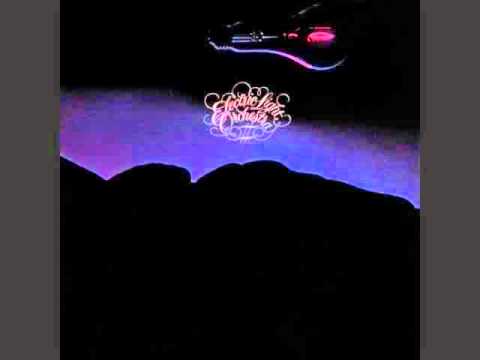
Album: Electric Light Orchestra II (1973)
Play Video

Songfacts®:

  • This 11-minute progressive rock piece tells the story of a young girl named Kuiama whose country is ravaged by war. A soldier from the invading country brings her back to his homeland to keep her safe, but she's inconsolable after all the horrors she's seen. The soldier is also wracked with guilt, and in the last verse he makes a startling admission: "I just shot them, I just blew their heads open."

    The song is an allegory for the Vietnam War, which was raging in 1973 when it was released. It was written by Electric Light Orchestra leader Jeff Lynne.
  • "Kuiama" is part of Electric Light Orchestra II, the group's second album. The album showcased the new sound of Electric Light Orchestra as Roy Wood, Bill Hunt, Hugh McDowell and Andy Craig were replaced by Mike Edwards, Michael De Albuquerque and Colin Walker. They were building a following in their native UK at the time, and a few years later, after moving away from their progressive rock sound, they broke out with a string of hits that includes "Evil Woman" and "https://www.songfacts.com/facts/electric-light-orchestra/mr-blue-sky."

    Note that they were using a lightbulb as their logo back then; the one they used on the Electric Light Orchestra II cover resembled the General Electric logo so closely, they later changed it to avoid confusion.
  • At 11:19, "Kuiama" is the longest song in the ELO catalog.

Comments: 4

  • Joe from Park Ridge, NjI don't think Vietnam is the setting for this song; it's far more likely Europe during World War I. For one, there are no Vietnam-like references: jungle, firebombing, defoliating. For two, Lynne is British, and the British didn't fight in Vietnam -- but hundreds of thousands of Brits were killed in the bloody, bloody battlefields of France in World War I. For three, there was no trench warfare in Vietnam, or even in World War II ("no more trenches where the soldiers lie"); that was the hallmark of "The Great War." Four: "No horsemen in the night...riding through your dreams..." Cavalry was still in use in World War I. Five: "The Great War" left most of France in ruins ("left you to walk through the ruins"), while most of the Vietnam War was fought in the jungles. Six: "Fatherland" is the term Germans have traditionally used (not just the Nazis -- the term came from the militaristic Prussians) to refer to their country. I guess we'll need Jeff Lynne himself to come out and explain it (unfortunately, my search for any ethnic roots to the name Kuiama came up empty), but that's my reasoning.

    The only thing that even mildly bothers me about this song concerns the way it comes to a stop-and-restart several times; to my mind, it interrupts the flow. Other than that, though, the surprisingly-moving lyrics and the music are driving and powerful, and "Kuiama" features perhaps the greatest violin solo (by Wilf Gibson, not future ELO "blue violin" virtuoso Mik Kaminski) in rock history.
  • Tj from La, UgandaThis is an anti-war song--probably Vietnam. Lynn is singing to perhaps an asian person named "Kuiama." He compares his calls his country the "Father Land" which is what the Nazi Germans called Germany. He is saying that he was forced to kill for his nazi country (UK? USA?) and he can't live with himself.
  • Ethan from HelsinkiThe first of many great songs by Jeff Lynne. :]
  • Chris from Magdalena, NmThis 11-minute Progressive Rock piece showcased the new sound of Electric Light Orchestra as Roy Wood, Bill Hunt, Hugh McDowell and Andy Craig were replaced by Mike Edwards, Michael De Albuquerque and Colin Walker.

    This comment left out Jeff Lynne. He was the driving force behind ELO. Jeff wrote and produced all of ELO's work.
see more comments

Editor's Picks

Muhammad Ali: His Musical Legacy and the Songs he Inspired

Muhammad Ali: His Musical Legacy and the Songs he InspiredSong Writing

Before he was the champ, Ali released an album called I Am The Greatest!, but his musical influence is best heard in the songs he inspired.

Adam Duritz of Counting Crows

Adam Duritz of Counting CrowsSongwriter Interviews

"Mr. Jones" took on new meaning when the song about a misguided view of fame made Adam famous.

Wang Chung Pick The Top Songs Of The '80s

Wang Chung Pick The Top Songs Of The '80sSongwriter Interviews

'80s music ambassadors Wang Chung pick their top tracks of the decade, explaining what makes each one so special.

Gentle Giant

Gentle GiantSongwriter Interviews

An interview with Ray and Derek Shulman of the progressive rock band Gentle Giant to discuss counterpoint, polyrhythms, and... Bon Jovi.

Billy Gould of Faith No More

Billy Gould of Faith No MoreSongwriter Interviews

Faith No More's bassist, Billy Gould, chats to us about his two new experimental projects, The Talking Book and House of Hayduk, and also shares some stories from the FNM days.

Carl Sturken

Carl SturkenSongwriter Interviews

Hitmaker Carl Sturken on writing and producing for Rihanna, 'N Sync, Christina Aguilera, Kelly Clarkson, Donny Osmond, Shakira and Karyn White.