
Homeboy

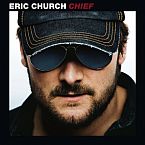
Album: Chief (2011)
Charted: 53
Play Video

Songfacts®:

  • This may sound more like a title of a hip-hop track, but Eric Church loved the idea of naming a country cut after the urban slang term for a male friend. It was Church's sports-coaching co-writer who came up with the title and the North Carolina native strung a story round it about a small-town homeboy who severs ties with his square family. The song was chosen as Church's first single from his third studio album and released to country radio on February 14, 2011.
  • Church came up with this song thinking of the different ways you can use the word "Home." He said of the track: "I love the message of the family element. I think everybody at some point and time in their life has been on the wrong path. I know I have. I think it's about having a family member come and say, 'Hey, I think you're on the wrong path.' And I know that's what the sentiment of the song was for me. It attacks some social things and uses the environment that we're in today to tell the story. 'Homeboy' is about two brothers, but it does deal with social issues. It deals with drugs. It deals with gangs. It deals with those things and I think that's what's going on in the country and it's fun to be able to put that in a song and at least raise the awareness about stuff a little bit."
  • A homeboy is defined by Brewer's Dictionary of Modern Phrase & Fable as "a person from one's own home town or region, or a member of one's own peer group." Etymologists generally trace the term to African American language from the late 19th century. This was a time when many African Americans were migrating to cities in larger numbers, and "homeboy" meant a male friend from back home. It was eventually shortened to "homie." Since the 1980's, the word has been particularly prevalent in hip-hop subculture.
  • The song's music video was shot in the former Tennessee State Prison, which was also the setting for the movies The Green Mile and The Last Castle. Church previously filmed the clip for "Lighting" there.
  • Responding to suggestion that someone could hear this song as racist, Church said, "I know the sentiment of the song is really about two brothers and one gets off on the wrong path. I honestly think the message there, and myself included, is that we've all been on the wrong path at some point and time. Everybody has that moment when they go, if I continue down this road - whatever road it is - I'm going to be in trouble if I don't change. And this song is about a brother trying to make the other brother realize it. You're going down the wrong path. I understand it because of the slang term homeboy but from my standpoint, that was the furthest thing from my intention."
  • The album's name, "Chief," refers to a nickname of not only the singer's grandfather, but also Church's own pet name among friends and family. "My grandpa was chief of police for 35 years in Granite Falls, N.C., but the cool part of the story is my nickname on the road is Chief," he explained. "That's what the band calls me. That's what everybody calls me, and my grandpa's nickname was Chief so it was kind of a full circle."
  • Co-writer Casey Beathard came up with the song's idea after hearing his son Tucker say, "come on, homeboy" to a friend.

Comments

Be the first to comment...

Editor's Picks

Who's Johnny, And Why Does He Show Up In So Many Songs

Who's Johnny, And Why Does He Show Up In So Many SongsSong Writing

For songwriters, Johnny represents the American man. He has been angry, cool, magic, a rebel and, of course, marching home.

Zakk Wylde

Zakk WyldeSongwriter Interviews

When he was playing Ozzfest with Black Label Society, a kid told Zakk he was the best Ozzy guitarist - Zakk had to correct him.

Art Alexakis of Everclear

Art Alexakis of EverclearSongwriter Interviews

The lead singer of Everclear, Art is also their primary songwriter.

John Lee Hooker

John Lee HookerSongwriter Interviews

Into the vaults for Bruce Pollock's 1984 conversation with the esteemed bluesman. Hooker talks about transforming a Tony Bennett classic and why you don't have to be sad and lonely to write the blues.

Tim McIlrath of Rise Against

Tim McIlrath of Rise AgainstSongwriter Interviews

Rise Against frontman Tim McIlrath explains the meanings behind some of their biggest songs and names the sci-fi books that have influenced him.

80s Video Director Jay Dubin

80s Video Director Jay DubinSong Writing

Billy Joel and Hall & Oates hated making videos, so they chose a director with similar contempt for the medium. That was Jay Dubin, and he has a lot to say on the subject.