My Man

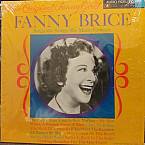
Album: The Original Funny Girl (1921)
Play Video

Songfacts®:

  • Fanny Brice was a famous comedienne and singer, but her signature song was "My Man," a somber lament about her unhealthy attachment to a serial cheater and abuser. Based on the French song "Mon Homme," which was introduced by the Parisian revue star Mistinguett in 1920, it made its way to America through the Ziegfeld Follies the following year.

    Channing Pollock, a playwright who often wrote dialogue and songs for the Follies, translated Jacques-Charles and Albert Willemetz's French lyrics into English, but Florenz Ziegfeld wasn't satisfied with his work after a lackluster rehearsal with Brice. He advised Pollock to write new lyrics that pulled from Brice's real-life romantic troubles. Her husband, Nicky Arnstein, was an ex-con who faced prison again for carrying stolen securities into the District of Columbia. To make matters worse, she had just given birth to her second child and had to get back on the road with the Follies.

    Brice's loneliness and exhaustion are reflected in the Pollock's updated version as she acknowledges her guy's shortcomings - he's not very attractive or courageous, he's unfaithful, and he beats her - but she loves him just the same. She even hopes he'll leave his criminal life behind to be with her.

    The song debuted on Atlantic City on June 14, 1921 to little fanfare, but Brice popularized it when she released it as a single later that year.
  • In 1999, Brice's 1921 recording earned a Grammy Hall of Fame Award.
  • "Mon Homme" was composed by Maurice Yvain, who wrote many other songs for Mistinguett, as well as the popular French entertainer Maurice Chevalier.
  • Brice made her film debut in the 1928 movie My Man, a partial talkie that features her singing the title song. She also sang it in the 1936 biographical movie The Great Ziegfeld, starring William Powell as the Follies' namesake.
  • In 1939, Alice Faye performed this in The Rose Of Washington Square, a musical drama inspired by Brice's life story.
  • After starring in the Broadway musical Funny Girl, a loose adaptation of Brice's rise to fame and her stormy relationship with Arnstein, Barbra Streisand recorded this for her 1965 album My Name Is Barbra. The single peaked at #79 on the Hot 100 and #17 on the Adult Contemporary chart. When she reprised the role for the 1968 film adaptation, she sang it at the end of the movie after Brice's bittersweet reunion with Arnstein. (The song wasn't, however, featured in the original Broadway production.)
  • Arnstein was offended by the song because it portrayed him as an abuser, with Brice singing:

    He isn't good, he isn't true
    He beats me too
    What can I do?


    He may have been a playboy, but he insisted he never beat Brice. Streisand's version omitted the reference to physical abuse.
  • A few other artists found success with the tune. Billie Holiday released a jazz/blues version in 1937 that went to #12 on the Pop chart. Her rendition was added to the Grammy Hall of Fame in 2018. Peggy Lee's drum-centric cover from her album, I Like Men!, peaked at #81 on the Hot 100 in 1959. When Diana Ross portrayed Billie Holiday in the 1972 biopic Lady Sings The Blues, she recorded the song for the hit soundtrack. Two years earlier, she sang it during her final concert appearance as a Supreme; that rendition was featured on the live album Farewell.
  • A version by Regina Spektor was used on Boardwalk Empire in the end credits to the 2011 episode "A Dangerous Maid."
  • Both the French and English renditions have showed up in film and TV, including these movies:

    La Vie En Rose (2007)
    The Quiet American (2002)
    Chocolat (2000)
    Du Barry Was A Lady (1943)
    Angels Over Broadway (1940)
    Too Many Husbands (1940)
    The Informer (1935)
    Fashions Of 1934 (1934)


    And these TV shows:

    The Man In High Castle ("Excess Animus" - 2018)
    Genius ("Picasso: Chapter Seven" - 2018)
    Glee ("Funeral" - 2011)
    The Sopranos ("Sentimental Education" - 2004)
    Beavis And Butt-Head ("Politically Correct" - 1993)

Comments

Be the first to comment...

Editor's Picks

Dar Williams

Dar WilliamsSongwriter Interviews

A popular contemporary folk singer, Williams still remembers the sticky note that changed her life in college.

Verdine White of Earth, Wind & Fire

Verdine White of Earth, Wind & FireSongwriter Interviews

The longtime bassist of Earth, Wind & Fire discusses how his band came to do a holiday album, and offers insight into some of the greatest dance/soul tunes of all-time.

Gary Louris of The Jayhawks

Gary Louris of The JayhawksSongwriter Interviews

The Jayhawks' song "Big Star" has special meaning to Gary, who explains how longevity and inspiration have trumped adulation.

Yoko Ono

Yoko OnoSongwriter Interviews

At 80 years old, Yoko has 10 #1 Dance hits. She discusses some of her songs and explains what inspired John Lennon's return to music in 1980.

Classic Metal

Classic MetalFact or Fiction

Ozzy, Guns N' Roses, Judas Priest and even Michael Bolton show up in this Classic Metal quiz.

P.F. Sloan

P.F. SloanSongwriter Interviews

P.F. was a teenager writing hits and playing on tracks for Jan & Dean when he wrote a #1 hit that got him blackballed.