The Fat Man

Album: Fats Domino's Hits (1950)
Play Video

Songfacts®:

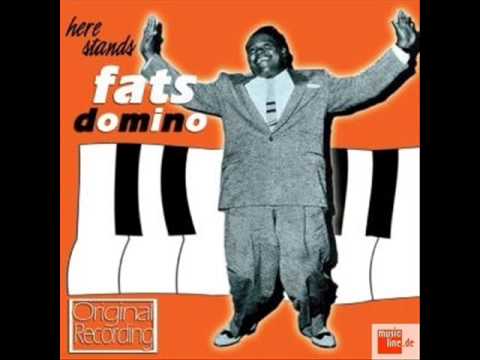
  • "The Fat Man" was the B-side of "Detroit City Blues" and was recorded by Domino the same day, December 10, 1949, at J&M Studio. Co-written with bandleader and regular collaborator Dave Bartholomew, it runs to around 2 minutes 39 seconds, and is partly autobiographical, with an explanation for his nickname:

    They call me the fat man
    'Cause I weigh 200 pounds
  • The song finds Domino standing on the corner of Rampart and Canal streets in New Orleans, watching the girls go by. He decides to leave, because "women and a bad life" are "carrying this soul away."

    Of course, if you're looking to get in trouble and enjoy the company of certain ladies, New Orleans is one of the best places to do it. In this part of the song, Domino is playing a role; he was already married to his childhood sweetheart (and remained so until her death in 2008) and had no interest in leaving New Orleans, where he made his home.
  • "The Fat Man" is based on a 1940 song Domino often performed called "Junker's Blues," recorded by a former boxer who went by Champion Jack Dupree. It begins:

    Some people call me a junker,
    Say I'm loaded out of my mind
  • There is no real chorus in this song, just a middle section where Domino repeats "wah wah wah" over and over.
  • Domino played the piano as well as supplying the vocal, and was accompanied by an orchestra. Other personnel included Ernest McLean on guitar, Herb Hardesty on sax and Earl Palmer on drums.
  • Released in 1950, "The Fat Man" sold well, reaching #6 on the R&B chart and launched what was to become a distinguished career. Domino died in October 2017 aged 89. >>
    Suggestion credit:
    Alexander Baron - London, England, for above 2

Comments: 1

  • Barry from Sauquoit, NySeventy years ago today on March 18th, 1950, Fats Domino's "The Fat Man" peaked at #2* {for 1 week} on Billboard's 'Most-Played Juke Box Rhythm & Blues Records' chart, for the week it was at #2, the #1 record for that week was "Double Crossing Blues" by the Johnny Otis Quintette featuring Little Esther and the Robins...
    Between 1950 and 1964 the New Orleans native had sixty records on the R&B charts, thirty eight made the Top 10 with nine reaching #1...
    Fats Domino, born Antoine Domino Jr., passed away at the age of 89 on October 24th, 2017...
    May he R.I.P.
    * "The Fat Man" was Fats Domino's first of an amazing ten of his records to peak at #2 on the R&B charts...
    And from the 'For What It's Worth'department, the remainder of the Most-Played R&B Juke Box' Top 10 on March 18th, 1950:
    At #3. "Information Blue" by Roy Milton and His Solid Senders
    #4. "I Almost Lost My Mind" by Ivory Joe Hunter
    #5. "Why Do Things Happen To Me?" by Roy Hawkins
    #5. "Rag Mop" by Lionel Hampton and his Orchestra
    #7. "Three Times Seven Equals Twenty-One" by Jewel King
    #7. "School Days" by Louis Jordan
    #9. "Little School Girl" by Smokey Hogg
    #9. "I Like My Baby's Pudding" by Wynonie Harris

see more comments

Editor's Picks

James Bond Theme Songs

James Bond Theme SongsMusic Quiz

How well do you know the 007 theme songs?

Hawksley Workman

Hawksley WorkmanSongwriter Interviews

One of Canada's most popular and eclectic performers, Hawksley tells stories about his oldest songs, his plentiful side projects, and the ways that he keeps his songwriting fresh.

Dave Pirner of Soul Asylum

Dave Pirner of Soul AsylumSongwriter Interviews

Dave explains how the video appropriated the meaning of "Runaway Train," and what he thought of getting parodied by Weird Al.

Tom Keifer of Cinderella

Tom Keifer of CinderellaSongwriter Interviews

Tom talks about the evolution of Cinderella's songs through their first three albums, and how he writes as a solo artist.

John Kay of Steppenwolf

John Kay of SteppenwolfSongwriter Interviews

Steppenwolf frontman John Kay talks about "Magic Carpet Ride," "Born To Be Wild," and what he values more than awards and accolades.

Brenda Russell

Brenda RussellSongwriter Interviews

Brenda talks about the inspiration that drove her to write hit songs like "Get Here" and "Piano in the Dark," and why a lack of formal music training can be a songwriter's best asset.