
The Garden Wheel

Album: People Who Aren't There Anymore (2024)
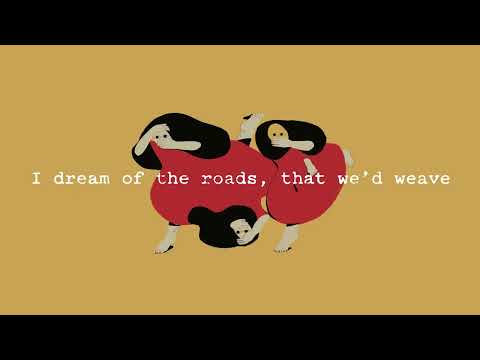
Play Video

Songfacts®:

  • "The Garden Wheel" is the closing track of People Who Aren't There Anymore, the seventh album by Future Islands. The song serves as a melancholic epilogue to the record, a chronicle of the dissolution of frontman Samuel T. Herring's long-distance relationship with Swedish actress Julia Ragnarsson across the worldwide COVID-19 lockdown.
  • The song reflects on the emotional wreckage left behind. Herring's signature baritone aches with questions like "How am I supposed to feel?" Adrift in a sea of loss, he searches for answers in the changing seasons and the natural world around him.

    "I had a conversation with my ex to ask her if it was OK to sing about the end. She told me she wouldn't ever deny me my art," he told Uncut magazine. "That allowed me to feel I could go deeper."

    At that point Herring had only written the penultimate track "The Sickness" and shared it with Ragnarsson. "That was a strange conversation, although necessary. It felt like it was its own ending," he said.
  • The imagery in "The Garden Wheel" is vivid. Cardinals flit through a garden, turning the "autumn wheel," a symbolic image of the relentless cycle of change. The "onions peel," a metaphor for the layers of pain being peeled back. The harvest, a symbol of what was once fruitful, now feels like the "hardest" one yet.

    The rhythms of nature as love and loss is one of Herring's favorite motifs. Breakthrough track "Seasons (Waiting On You)" compares the growth of a relationship to summer and the aftermath to its end as winter.
  • People Who Aren't There Anymore grapples with the lingering aftershocks of a world upended. For Herring, the record doesn't fall neatly into the pre- or post-pandemic boxes. "The first half of the album was written within the pandemic," he told Apple Music's Hanuman Welch. "The second half was written after we did our first tour back. So this really elongated space with plenty of time to forget what we're going through, but still being in it."

    This extended period of reflection seems to have informed the album's core theme: navigating a world forever altered. Herring describes it as a collective reckoning, "a sense of how much the world has changed" since 2020.
  • Produced by the band themselves alongside longtime collaborator Steve Wright, People Who Aren't There Anymore benefits from the familiar touch. Mixing duties are shared with Chris Coady, who helmed Future Island's breakthrough album, Singles, adding a touch of nostalgia to the mix.
  • The People Who Aren't There Anymore title is borrowed from a haunting painting by Albuquerque artist Beedallo (a dedicated Future Islands fan himself). This theme is further echoed in the cover art, another of Beedallo's works titled Fading Memory Of A Face. The hazy, somber imagery captures the introspective reflections that lie at the heart of the album.

Comments

Be the first to comment...

Editor's Picks

Benny Mardones

Benny MardonesSongwriter Interviews

His song "Into The Night" is one of the most-played of all time. For Benny, it took him to hell and back.

Artis the Spoonman

Artis the SpoonmanSong Writing

Even before Soundgarden wrote a song about him, Artis was the most famous spoon player of all time. So why has he always been broke?

Daniel Lanois

Daniel LanoisSongwriter Interviews

Daniel Lanois on his album Heavy Sun, and the inside stories of songs he produced for U2, Peter Gabriel, and Bob Dylan.

Early Days of MTV

Early Days of MTVFact or Fiction

If you can recall the days when MTV played videos, you know that there are lots of stories to tell. See if you can spot the real ones.

Protest Songs

Protest SongsMusic Quiz

How well do you know your protest songs (including the one that went to #1)?

Sam Phillips

Sam PhillipsSongwriter Interviews

Collaborating with T Bone Burnett, Leslie Phillips changed her name and left her Christian label behind - Robert Plant, who recorded one of her songs on Raising Sand, is a fan.