Sanctuary

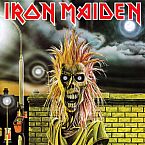
Album: Iron Maiden (1980)
Charted: 29
Play Video

Songfacts®:

  • This song is about a fugitive who needs "sanctuary from the law." It seems he's come unhinged, and although we never learn what he did, he doesn't seem innocent.

    The "running from the law" theme shows up in other Iron Maiden songs as well, including "Murders In The Rue Morgue," "The Fugitive" and "Innocent Exile."
  • "Sanctuary" first appeared on a 1980 compilation album called Metal for Muthas along with another Maiden song, "Wrathchild." It was released as a single in the UK that year (Maiden's second, following "Running Free" but wasn't included on European versions of the band's self-titled debut album until it was re-released in 1998.
  • Paul Di'Anno was Iron Maiden's lead singer at the time - he was replaced by Bruce Dickinson in 1981 after two albums with the band. Di'Anno wrote the song with Maiden guitarist Dave Murray and bass player Steve Harris.
  • The single is a far better quality version of the song than that included on the album. It was the band's second single after "Running Free." The cover art of "Running Free" introduced the shock-haired, skeletal zombie known as Eddie, and the cover art for "Sanctuary" depicts him killing Margaret Thatcher, who was known as the "Iron Maiden." On the cover, she has been tearing down an "Iron Maiden - Live" poster off a wall before Eddie draws his knife and does the deed. The cover art for the single was actually the first installation of a story that was continued in the cover art of the next two singles. On the cover for "Women In Uniform," Margaret Thatcher is alive again, dressed as a soldier and carrying a gun. She has torn down another Iron Maiden poster and is waiting for Eddie, who is just around the corner with two young girls. On the cover art for "Twilight Zone," Eddie is a ghost attacking a girl in her bedroom.
  • Most of the singles for "Sanctuary" were issued with a black bar over the face of Margaret Thatcher as a response to controversy over it. According to Derek Riggs, who designed the cover, "the 'flak'... was invented by the band's management. They 'banned' it and they put the black square over her face and then they showed it to the press and cried 'censorship,' but there really wasn't any. The flak was all imaginary and self-generated for publicity. It's an old trick and it nearly always sells records... go and ask all the rappers who swear on their records all the time, if it depressed the record sales they would soon stop doing it."

    Riggs also claims that the cover art was inspired by the lyric, "Never killed a woman but I know how it feels," and remarks dryly, "Lovely state of mind..."
  • There is a startlingly realistic sound effect of a police siren that appears midway through the song. This sound effect is missing from the original Metal for Muthas version.
  • Dennis Stratton (then the band's guitarist) performed a slightly different solo on the Iron Maiden version of this song than on the Metal for Muthas rendition.
  • There was a popular Iron Maiden tribute band from New York City called Sanctuary. Their logo used the same font ("Metal Lord") as Maiden, and they performed many songs from the Bruce Dickinson ("golden") era.
  • This was covered by Abattoir and included on the album Call to Irons II. The album is a tribute to Iron Maiden.

Comments: 3

  • Matthew from Rugby, United Kingdom'"Sanctuary" is also the name of a Madonna song. The band hates Madonna.'

    Haha, respect Maiden even more than I did before - hilarious.
    Yep, very good song indeed.
  • Jimi from London, United KingdomThis song was written by steve harris and was used for Sanctuary records back in its day to promote.


    J
  • Brett from Northglenn, CoThe "girl" on the Twilight Zone single cover is none other than the beloved Charlotte. Check out the framed picture on her vanity. It reads: To Charlotte. Love, Eddie.
see more comments

Editor's Picks

Brian Kehew: The Man Behind The Remasters

Brian Kehew: The Man Behind The RemastersSong Writing

Brian has unearthed outtakes by Fleetwood Mac, Aretha Franklin, Elvis Costello and hundreds of other artists for reissues. Here's how he does it.

Jack Blades of Night Ranger and Damn Yankees

Jack Blades of Night Ranger and Damn YankeesSongwriter Interviews

Revisit the awesome glory of Night Ranger and Damn Yankees: cheesily-acted videos, catchy guitar licks, long hair, and lyrics that are just plain relatable.

Mike Scott of The Waterboys

Mike Scott of The WaterboysSongwriter Interviews

The stories behind "Whole Of The Moon" and "Red Army Blues," and why rock music has "outlived its era of innovation."

Leslie West of Mountain

Leslie West of MountainSongwriter Interviews

From the cowbell on "Mississippi Queen" to recording with The Who when they got the wrong Felix, stories from one of rock's master craftsmen.

Harry Wayne Casey of KC and The Sunshine Band

Harry Wayne Casey of KC and The Sunshine BandSongwriter Interviews

Harry Wayne Casey tells the stories behind KC and The Sunshine Band hits like "Get Down Tonight," "That's The Way (I Like It)," and "Give It Up."

Gary LeVox

Gary LeVoxSongwriter Interviews

On "Life Is A Highway," his burgeoning solo career, and the Rascal Flatts song he most connects with.