This sexually charged '90s classic is about a relationship that is both destructive and addictive, going from a bed on fire with passionate love to a fight in the kitchen with knives and skewers. It's by a British band called James led by frontman Tim Booth, who wrote the song with their bass player, Jim Glennie. Booth's lyrics often explore the human condition via spirituality and sex. "Laid" is based on fragments of his real life that are piece together to create a beautiful mess of a story. Booth said he's interested in "What it means to be a man, at the mercy of your sexual desires."
James formed in 1982 and had a modest following in the UK when they released "Laid" as the title track to their fifth album in 1993. It ended up being a surprise breakthrough in America, where every college kid knew the song because it was always blasting out of bars, dorm rooms and college radio stations.
But the band didn't think much of the song when they wrote it. It came out of a loose jam, and felt "too pretty," a fleeting 2:36 of what Tim Booth called disposable pop. Jim Glennie agreed, describing it as almost suspiciously simple; just the classic C–F–G progression looping all the way through.
Still, as Glennie admitted in Uncut magazine, "Sometimes in music you should do the easy thing and enjoy it."
Booth had fragments of lyrics kicking around during the jam and fleshed them out afterward, stitching together a collage of fact, fiction and half-remembered emotional truths.
This bed is on fire with passionate love
The neighbors complain about the noises above
The opening line sounds like tabloid confession, but Booth said it's mostly invented. Other lines come closer to home.
Moved out of the house so you moved next door
The lyric reflects a real-life arrangement with Booth's former partner, the mother of his son, after he relocated to Dunham Massey in Cheshire. "I was very happy because it meant we could bring up our son together," he told Uncut. "It was obviously weird as well."
From there, the song gleefully spirals. "Dressed me up in women's clothes" was inspired by Booth's time working with dancer Gabrielle Roth, whose workshops encouraged participants to explore movement - and identity - in unconventional ways. The result was a sense of liberation that fed directly into the lyric's playful take on gender and desire.
Other lines - including the more volatile imagery of knives and skewers - draw from heightened emotional experiences, filtered through the song's tongue-in-cheek tone.
Booth essentially cram a whirlwind of obsessive, messy relationship moments into just over two minutes, figuring the mischievous lyric matched the song's breezy, unpretentious feel.
The song gained a huge new audience in the late 1990s and early 2000s when it was used as the theme song for the American Pie films. However, it wasn't always the original James recording used. A cover version by Matt Nathanson was recorded exclusively for the third film, American Wedding (2003), and was also used in the 2005 direct-to-video spin-off American Pie Presents: Band Camp. The fourth theatrical film, American Reunion (2012), brought it full circle with the original James version.
The ambient music maestro Brian Eno produced this very non-ambient song during six weeks of sessions that yielded both the Laid album and another one called Wah Wah that they issued the following year. Eno would roll tape and make Tim Booth improvise lyrics, which forced him to let random thoughts flow out of him without scrutiny. This was a big shift for Booth, who was a perfectionist about lyrics and would sometimes take years to finish writing a song. Eno's method made him surprisingly productive. "I always knew stuff came from the unconscious," he told iJamming. "But this was like a new way of writing, that whenever I got blocked, I improvised it, did four or five takes, wrote out what I thought I was singing, and almost always in those four or five takes I can get a whole lyric."
Brian Eno was on the band's wish list as a producer since their debut album in 1986. They had sent demos to Eno's management as far back as 1986 and received no reply. When it came time to record Laid in 1993, Tim Booth took a more direct approach, writing Eno a personal letter and including a cassette tape with his own phone number written on it. Eno took the cassette on holiday, fell in love with the songs while listening on a beach, and rang Booth up on his return, introducing himself simply as "Brian."
The word "laid" doesn't show up until the end of the song, when Tim Booth wails it a few times. It sounds like he's singing "raid" (more like "raaaayyyyeeeeed"), which helped evade censors.
Musically, the song is rather unconventional, with no real chorus. "Even though it's a bit shambolic, it's got heart," James guitarist Saul Davis said. "You know, the guitars are out of tune. The first four bars are slow and when Dave (Baynton-Power) comes in with a drum roll it really speeds up like hell, then it finds its tempo. No one, not even some half-assed indie band from wherever would do that now."
James were ready to leave "Laid" off the album, but Brian Eno insisted it was a keeper, even persuading Booth to stick with that slightly off-kilter vocal take. "It's true that we didn't want it on the record," said Davis. "But there was this domino effect of it going on the album, the song being titled 'Laid'... then suddenly the album's called Laid and the title track a single, because a label guy in America said, 'I stake my house on this being a hit in America.' So we're thinking: 'Maybe Brian was right.'"
James took "Laid" stateside in March 1994, performing it on the late-night circuit, including The Tonight Show with Jay Leno, Late Show with David Letterman and Late Night with Conan O'Brien. The exposure pushed the song onto the Hot 100, where it reached #61 that April. James never had another American hit but they remained popular in the UK until their breakup in 2001. They got back together in 2007.
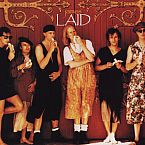
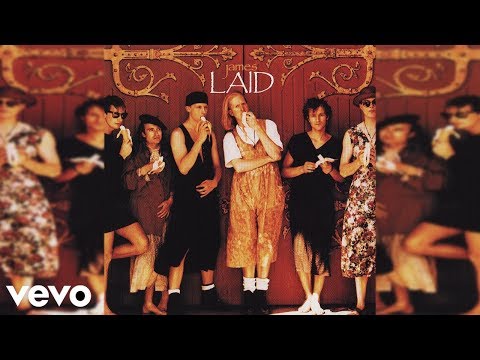
"Guys in dresses" was the visual motif for the Laid album, with the band frocked-up on the album cover. That's the theme of the music video as well, which comes in three different edits at different levels of controversy.