The Blue Danube

Album: 2001 A Space Odyssey Soundtrack (1867)
Play Video

Songfacts®:

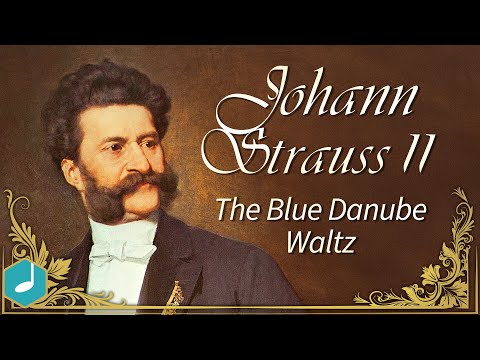
  • Johann Strauss II was born in St. Ulrich near Vienna, the son of Johann Strauss I, another composer of dance music. His father did not wish him to become a composer, but rather a banker. Nevertheless, Strauss Junior studied the violin secretly as a child and when his father discovered his son secretly practicing the instrument one day, he gave him a severe whipping, saying that he was going to beat the music out of the boy. Fortunately, this did not discourage the budding musician.

    Strauss found his early years as a composer difficult, but he soon won over audiences after accepting commissions to perform away from home. When his father died from scarlet fever in Vienna in 1849, the younger Johann merged both their orchestras and engaged in further tours. By the 1850s he'd surpassed his father's fame, and was recognized as the most sought-after composer of dance music.
  • Strauss wrote over 400 waltzes, most notably "An der schönen blauen Donau" (better known to the English-speaking world as "The Blue Danube"). Written to celebrate the River Danube that flows through Vienna, it was premiered as a choral piece on February 13, 1867 at a concert of the Vienna Men's Choral Association. Its initial performance only got a lukewarm response and Strauss is reputed to have said "The devil take the waltz, my only regret is for the coda - I wish that had been a success!" Strauss adapted it into a purely orchestral version for the World's Fair in Paris that same year, and it this form that it is best known today.
  • The German composer Johannes Brahms was a personal friend of Strauss. An anecdote dating around the time is that Strauss's stepdaughter, Alice von Meyszner-Strauss approached Brahms with a customary request that he autograph her fan. Brahms cheekily inscribed a few measures from the "Blue Danube," and then wrote beneath it: "Unfortunately, NOT by Johannes Brahms."
  • The piece's popularity was bolstered after its prominent use in the Stanley Kubrick film 2001: A Space Odyssey. It was used to accompany the scene in which a spaceplane is seen docking with a space station after Kubrick made an association between the spinning motion of the satellites and the dancers of waltzes. The waltz was also used to accompany the film's closing credits.
    The piece was also used as the gastrointestinal bypass surgery music in the 2003 film Super Size Me.

Comments: 4

  • Michael from Brussels, BelgiumA vocal version was recorded in 2021. Look up "Blue Danube of Mine" on YouTube or Spotify.
  • Harry from Fort Worth TxThe Blue Danube Waltz is a favorite of mine. It is so beautiful it makes me feel so much pleasure as if I was in love with a beautiful intelligent lady.
  • Zabadak from London, EnglandI have heard that The Danube is actually mostly brown...!
  • Reg from Kemptville, OnWhat a classic piece of music.
    I was only 10 in 1968 when "2001: A Space Odyssey" came out.
    "The Blue Danube" was already very familiar to me, even though we didn't listen to classical music in our household.
see more comments

Editor's Picks

Name the Character in the Song

Name the Character in the SongMusic Quiz

With a few clues (Works at a diner, dreams of running away), can you name the character in the song?

Joe Elliott of Def Leppard

Joe Elliott of Def LeppardSongwriter Interviews

The Def Leppard frontman talks about their "lamentable" hit he never thought of as a single, and why he's juiced by his Mott The Hoople cover band.

Gary Louris of The Jayhawks

Gary Louris of The JayhawksSongwriter Interviews

The Jayhawks' song "Big Star" has special meaning to Gary, who explains how longevity and inspiration have trumped adulation.

Bill Withers

Bill WithersSongwriter Interviews

Soul music legend Bill Withers on how life experience and the company you keep leads to classic songs like "Lean On Me."

Ian Anderson of Jethro Tull

Ian Anderson of Jethro TullSongwriter Interviews

The flautist frontman talks about touring with Led Zeppelin, his contribution to "Hotel California", and how he may have done the first MTV Unplugged.

Annie Haslam of Renaissance

Annie Haslam of RenaissanceSongwriter Interviews

The 5-octave voice of the classical rock band Renaissance, Annie is big on creative expression. In this talk, she covers Roy Wood, the history of the band, and where all the money went in the '70s.