T.B.D.
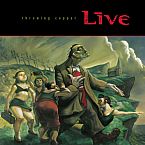
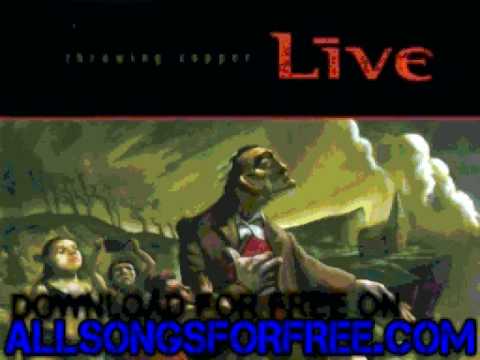
by Live

Album: Throwing Copper (1994)
Play Video

Songfacts®:

  • The title's letters are an acronym for Tibetan Book of the Dead. Composed by the Buddhist guru Padmasambhava in the 8th century, it's a very large book that's analogous to Christianity's Last Rites as a way to ease the transition into death.

    But Ed Kowalczyk, the band's frontman and primary songwriter, is careful not to be too heavy-handed with his religious references because he wants the fans to relate to Live's music on their own terms.

    "I'd rather just title a song 'TBD' and go about it by inference instead of by saying it or getting in anybody's face about anything," he told The Sun Sentinel in 1997. "If there is a doctrine, a message behind Live, it's just that wordless intensity, that doesn't necessarily have to mean anything."
  • Lead singer Ed Kowalczyk sings as if he is the one dying, trying to cope with his imminent fate. The song details his inner conflict and injects some Eastern philosophies into the discussion, as the title suggests. >>>
    Suggestion credit:
    Live Freak - Beirut,Lebanon, for above 2
  • This was inspired by the death of Aldous Huxley, a writer and philosopher who also had a keen interest in the effects of psychedelic drugs. When the Brave New World author was on his deathbed in 1963 after a three-year battle with laryngeal cancer, he convinced his wife, Laura, to administer LSD to ease his passing.

    According to a letter she wrote after her husband's death, the couple also read Timothy Leary's guide to LSD trips based on The Tibetan Book Of The Dead in his final months. Huxley had introduced his friend Leary, a famous psychologist who also supplied him with the drug for his final trip, to the spiritual tome.

    In 1964, Leary's manual was published as The Psychedelic Experience, which inspired John Lennon to write "Tomorrow Never Knows."
  • This song was a portent of things to come, as the group's next album, Secret Samadhi, (1997) had many references to Eastern philosophy in the lyrics. That album sold 2 million copies in the US.
  • Live's popularity exploded with Throwing Copper, which sold 8 million copies in America. Their performance at Woodstock '94 (which didn't include "T.B.D." on the setlist) gave them a lot of exposure and helped the album reach #1.

Comments: 7

  • Phaedrus from Fort WorthI projected myself into the song and thought it was about an introverted reader of philosophical novels (I was reading a lot of Kerouac and Hesse) who was taking a deliberate step to socialize but not lose who he is: “dressed in blue” (blue=truth); “I don’t need a book” (socializing, getting one’s head out of books for a change). I really felt this song as part of my identity back in my early 20s.
  • Bradley from WashingtonI always thought "dressed in blue" referred to a cop and that "but I don't need a book" meant it was a corrupt cop.
  • Darin from Philadelphia, PaIn high school, Ed Kowalczyk worked at the Bookland. The 2 Bookland stores were mostly it for bookstores in York. They had a lot of magazines, romance, science fiction, and porn. The "other religion" section was very small. Ed used to mention Krishnamurti a lot in interviews. For some reason, Bookland had numerous Krishnamurti books. In the late 80s, they also would have had the Tibetan Book of the Dead.
  • Nick from Melbournewhat a way to go...
  • Dave from LondonAs an interesting other thought, not knowing the Tibetan Book of the Dead story years ago when I first heard it, I always read into 'this is how I go out tonight, dressed in blue by the book tonight' that it was like a young Christian man going out for the night, but all the things he wants to do/is going to do are contradictory to the teachings of his faith. Hence he's swamped in feelings of guilt and shame, while at the same time going out in seek of his pleasure. Maybe it's not meant at all, but would still be interesting.
  • Cory from Lancaster, PaSecret Smadhi sold very well. It debuted at #1 on the Billboard top 200, and it sold well over 2 Million albums.

    The song is about Aldous Huxley who had "The Tibetan Book of the Dead" which is a Tibetan Budhism book on not just death but rebirth and life, read to him while he was fed LSD into his arm. Ed Kowalczyk has said he wanted to die like that, not prematurely but if he has a chance to set it up and rig it, it'd be like that.
  • Chris from Altoona, PaThis song was about a man that wished to be read passages from "The Tibetan Book of the Dead" while being intraveneously fed LSD as he slowly passes away.
see more comments

Editor's Picks

Martyn Ware of Heaven 17

Martyn Ware of Heaven 17Songwriter Interviews

Martyn talks about producing Tina Turner, some Heaven 17 hits, and his work with the British Electric Foundation.

John Kay of Steppenwolf

John Kay of SteppenwolfSongwriter Interviews

Steppenwolf frontman John Kay talks about "Magic Carpet Ride," "Born To Be Wild," and what he values more than awards and accolades.

Jon Foreman of Switchfoot

Jon Foreman of SwitchfootSongwriter Interviews

Switchfoot's frontman and main songwriter on what inspires the songs and how he got the freedom to say exactly what he means.

Desmond Child

Desmond ChildSongwriter Interviews

One of the most successful songwriters in the business, Desmond co-wrote "Livin' La Vida Loca," "Dude (Looks Like A Lady)" and "Livin' On A Prayer."

Graham Nash

Graham NashSongwriter Interviews

Graham Nash tells the stories behind some of his famous songs and photos, and is asked about "yacht rock" for the first time.

Chrissie Hynde of The Pretenders

Chrissie Hynde of The PretendersSongwriter Interviews

The rock revolutionist on songwriting, quitting smoking, and what she thinks of Rush Limbaugh using her song.