

Never Said

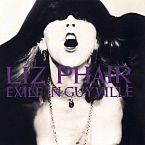
Album: Exile in Guyville (1993)
Play Video

Songfacts®:

  • Exile in Guyville was written by Phair as a song-by-song reply to the Rolling Stones' 1972 album, Exile on Main St. and this song corresponds to "Tumbling Dice." Phair recalled to Rolling Stone in a 2010 interview: "I remember thinking the most important song happens at the fifth song. Because in my mind 'Tumbling Dice' is the big radio hit. I was like, I need to do the big radio hit there, which is funny because 'Never Said' ended up being the radio hit off that record for me, and I don't think Matador would have gone with that just because I said so. I think that was the natural song to play on the radio and make the video for. 'Never Said' was one of those times where I was showing I could be just as unaccountable. 'Tumbling Dice' is really about, again, I'm picturing all the guys from Urge Overkill, hey man, you may get to go home with me tonight, you may not. I may show up at the bar and be available, and I might not. You gotta roll me and see how it's going to roll. I was playing that same game. 'I don't know what you're talking about, I never said nothing, you can't pin that on me.' I was playing the female version. Most women don't spend their lives sitting in bars maybe going home with people, but we often spend our lives socially networking, 'No, I never said that about you behind your back!'"
  • Phair borrowed the term "Guyville" from Urge Overkill's 1992 song "Goodbye To Guyville." She explained what the word meant to her and how it tied in with the album: "For me, Guyville is a concept that combines the small-town mentality of a 500-person Knawbone, KY-type town with the Wicker Park indie music scene in Chicago, plus the isolation of every place I've lived in, from Cincinnati to Winnetka. All the guys have short, cropped hair, John Lennon glasses, flannel shirts, unpretentiously worn, not as a grunge statement. Work boots. It was a state of mind and/or neighborhood that I was living in. Guyville, because it was definitely their sensibilities that held the aesthetic ... This kind of guy mentality, you know, where men are men and women are learning. They always dominated the stereo like it was their music. They'd talk about it, and I would just sit on the sidelines."
  • Phair expounded on the song's meaning in a 2018 Rolling Stone interview, saying it was "just kind of like about the music scene and how catty it was. People were always getting upset about something that someone had said about their band or whatever the latest gossip was. To me, I love the way that song is speaking in a rock shorthand. Like, 'I ain't done nothing wrong, I never said nothing.' There's something insouciant and punk rock to just overtly speak in street language or street lingo or something. There's just something that I always liked about that."
  • So what did the Stones think of a fresh-on-the-scene indie chick taking on their classic album? Phair recalled in a Noisey interview: "I met Mick Jagger and the way I understood that he understood it, I don't think he'd ever listened to it, but he essentially shook my hand and gave me a wide smile as if to say, 'You're welcome for using our name to get your fame.' And it was sort of like, 'We're gonna let you off this one time, you cheeky person.' ... I understood where he was coming from. And I kind of respected him for being that high above me that that's all he could give from that atmosphere level."

Comments

Be the first to comment...

Editor's Picks

Little Richard

Little RichardFact or Fiction

Was Long Tall Sally a cross-dresser? Did he really set his piano on fire? See if you know the real stories about one of rock's greatest innovators.

Michael Glabicki of Rusted Root

Michael Glabicki of Rusted RootSongwriter Interviews

Michael tells the story of "Send Me On My Way," and explains why some of the words in the song don't have a literal meaning.

Greg Lake of Emerson, Lake & Palmer

Greg Lake of Emerson, Lake & PalmerSongwriter Interviews

Greg talks about writing songs of "universal truth" for King Crimson and ELP, and tells us about his most memorable stage moment (it involves fireworks).

Charlie Daniels

Charlie DanielsSongwriter Interviews

Charlie discusses the songs that made him a Southern Rock icon, and settles the Devil vs. Johnny argument once and for all.

Desmond Child

Desmond ChildSongwriter Interviews

One of the most successful songwriters in the business, Desmond co-wrote "Livin' La Vida Loca," "Dude (Looks Like A Lady)" and "Livin' On A Prayer."

Timothy B. Schmit

Timothy B. SchmitSongwriter Interviews

The longtime Eagle talks about soaring back to his solo career, and what he learned about songwriting in the group.