Kevin Carter

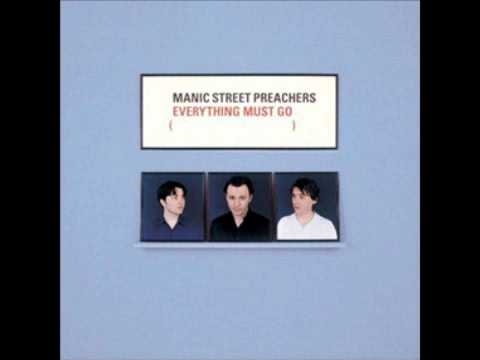
Album: Everything Must Go (1996)
Charted: 9
Play Video

Songfacts®:

  • Kevin Carter was a South African photographer who took his own life months after winning the Pulitzer Prize for feature photography for a haunting Sudan famine picture. After dropping out of school for bad grades he joined the South African Defense Force where he found upholding the apartheid regime loathsome - when he took sides with a black mess-hall waiter, some Afrikaans-speaking soldiers called he 'kaffir-boetie' (ni--er lover). After a few odd jobs, Carter worked in a camera shop and fell into journalism. Carter, whilst working for the Johannesburg Star, hooked up with three friends - Ken Oosterbroek of the Star and free-lancers Greg Marinovich and Joao Silva - and they began moving through Soweto and Tokoza at dawn. Capturing the chaotic hand-to-hand street fighting between Mandela's A.N.C. and the Zulu-supported Inkatha Freedom Party which involved AK-47s, spears and axes. The four became so well known for capturing the violence that Living, a Johannesburg magazine, dubbed them "the Bang-Bang Club."

    In 1993 Carter headed north of the border with Silva to photograph the rebel movement in famine-stricken Sudan. He wandered into the open bush. He heard a soft, high-pitched whimpering and saw a tiny girl trying to make her way to the feeding center. As he crouched to photograph her, a vulture landed in view. Careful not to disturb the bird, he positioned himself for the best possible image. The picture immediately became an icon of Africa's anguish. on April 12, 1994, the New York Times phoned to tell him he had won the Pulitzer. Carter was always troubled by personal problems and two months after receiving his Pulitzer, Carter would be dead of carbon-monoxide poisoning in Johannesburg, a suicide at 33. His pickup truck was parked near a small river where he used to play as a child, in a note left on the passenger seat part of it read: "The pain of life overrides the joy to the point that joy does not exist." >>>
    Suggestion credit:
    Dave - Southampton, England
  • Richey Edwards wrote the lyric to this song. The Manic Street Preachers guitarist vanished in February 1995, and the band continued on without him, including five songs on the Everything Must Go album (the first one released after his disappearance) that he co-wrote. The band was hoping that Edwards was in hiding, and that including some of his songs on the set would flush him out.

    In writing about Kevin Carter, Edwards opened a window to his own sense of nihilism and a depression that is exacerbated by success. His body was never found.

Comments: 2

  • Dan from Shrewsbury, UkHi Karl. I never really saw the Manics as Brit-Pop per-se. They were very thoroughly a punk band in their early incarnation to my mind. Sure, under Bradfield they kinda fell in line in the mid to late nineties but then again as they aged, their output spanned multiple genres in a single album in a way that you wouldn't expect from the likes of Oasis, Blur, Supergrass, et all.

    They were always overtly radically political too.
  • Karl from Ingatestone, United KingdomManic Street Preachers championed a new sound called Britpop, and this song really sums it all.

    as a Manics fan since September 10th 1998, i realized that Kevin Carter was an African bloke who killed himself
    such a remarkable song for Britpop, along with 'Wonderwall' and 'Parklife'

    Manic Street Preachers will never split up, they will continiue making good music and great new albums
see more comments

Editor's Picks

Who's Johnny, And Why Does He Show Up In So Many Songs

Who's Johnny, And Why Does He Show Up In So Many SongsSong Writing

For songwriters, Johnny represents the American man. He has been angry, cool, magic, a rebel and, of course, marching home.

Zakk Wylde

Zakk WyldeSongwriter Interviews

When he was playing Ozzfest with Black Label Society, a kid told Zakk he was the best Ozzy guitarist - Zakk had to correct him.

Art Alexakis of Everclear

Art Alexakis of EverclearSongwriter Interviews

The lead singer of Everclear, Art is also their primary songwriter.

John Lee Hooker

John Lee HookerSongwriter Interviews

Into the vaults for Bruce Pollock's 1984 conversation with the esteemed bluesman. Hooker talks about transforming a Tony Bennett classic and why you don't have to be sad and lonely to write the blues.

Tim McIlrath of Rise Against

Tim McIlrath of Rise AgainstSongwriter Interviews

Rise Against frontman Tim McIlrath explains the meanings behind some of their biggest songs and names the sci-fi books that have influenced him.

80s Video Director Jay Dubin

80s Video Director Jay DubinSong Writing

Billy Joel and Hall & Oates hated making videos, so they chose a director with similar contempt for the medium. That was Jay Dubin, and he has a lot to say on the subject.