Darn that Dream

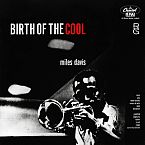
Album: Birth of the Cool (1939)
Play Video

Songfacts®:

  • "Darn that Dream" appeared on the album Birth of the Cool in 1957, which showcased pivotal recordings made between 1949 and 1950 by Miles Davis' nonet. This recording clearly demarcated Davis' transition from Bebop to "Cool Jazz," in which he attempted to make Jazz accessible again to the listening public after Bebop had digressed into unintelligibility throughout the 1940s.
  • "Darn that Dream" is considered to be one of the more daringly experimental popular tunes of its generation, using a chromatic harmony and complex arrangement. This particular song shows the inclusion of a distinctly popular music idiom with its roots in classical polyphony, cementing Davis' departure from the Bebop genre. His solo near the end of the song is a work of supreme understatement, coolly simplistic.
  • This song tells the story of a disappointed lover who repeatedly dreams that his lost love will return his affections, even though he knows that this will never happen. He desperately holds on to this sad state because it is the only way he can be with this lover: "Darn that dream and bless it too. Without that dream, I never would have you."
  • This song is a popular Jazz standard that appeared in a Broadway production entitled Swingin' the Dream, which was a collaboration between the popular music composer James Van Heusen and band-leader and lyricist Eddy De Lange written in 1939. The original show incorporated artwork and sets by Walt Disney, music by the Benny Goodman Sextet, and an extravagant cast of 150 people. Despite the lavish production, Swingin' the Dream was notoriously unpopular and was canceled after only 13 performances – one of the biggest and most expensive failures on Broadway of its time.

    The plot of Swingin' the Dream was based on Shakespeare's A Midsummer Night's Dream, but this did not play to its strengths, of which the music was chief. The New York Times said of the opening night that "it would have been better to throw Shakespeare out of the window. Every now and then a flare of dancing breaks through the professorial patter, and the Benny Goodman boys perform brilliantly on a piece of music. But the going is heavy through the long stretches of the evening."
  • Unlike the show in which it featured, "Darn that Dream" has had a very long shelf-life. After the initial Broadway performance by Louis Armstrong in 1940, this song became a standard sung by the likes of Ella Fitzgerald (on Ella Swings Gently with Nelson in 1962), Billie Holiday (on All or Nothing at All in 1996) and Doris Day (on You're My Thrill/Young at Heart in 2007). The music has also been performed by notables other than Miles Davis and Benny Goodman, such as Thelonious Monk and Ahmad Jamal.
  • On Birth of the Cool, "Darn that Dream" features the vocals of Kenny Hagood, who had been a vocalist in the Bebop scene throughout the 1940s, singing for the Dizzy Gillespie Orchestra before recording this song with Miles Davis in the 1950s.

Comments

Be the first to comment...

Editor's Picks

Harold Brown of War

Harold Brown of WarSongwriter Interviews

A founding member of the band War, Harold gives a first-person account of one of the most important periods in music history.

Have Mercy! It's Wolfman Jack

Have Mercy! It's Wolfman JackSong Writing

The story of the legendary lupine DJ through the songs he inspired.

Wherefore Art Thou Romeo Lyric

Wherefore Art Thou Romeo LyricMusic Quiz

In this quiz, spot the artist who put Romeo into a song lyric.

A Monster Ate My Red Two: Sesame Street's Greatest Song Spoofs

A Monster Ate My Red Two: Sesame Street's Greatest Song SpoofsSong Writing

When singers started spoofing their own songs on Sesame Street, the results were both educational and hilarious - here are the best of them.

Devo

DevoSongwriter Interviews

Devo founders Mark Mothersbaugh and Jerry Casale take us into their world of subversive performance art. They may be right about the De-Evoloution thing.
Dave Mason

Dave MasonSongwriter Interviews

Dave reveals the inspiration for "Feelin' Alright" and explains how the first song he ever wrote became the biggest hit for his band Traffic.