
Album: Z (2005)
Play Video

Songfacts®:

  • In this haunting track from their fourth studio album, My Morning Jacket take on organized religion and how its purpose has been corrupted to keep people fearful and divided. Lead singer/songwriter Jim James elaborated on the song's meaning in a 2011 episode of VH1 Storytellers:

    "I took the very loose definition of great destroyer and I felt like religion, especially when religion is used in politics, is horribly destructive and horribly divisive. 'Gideon' is trying to explore that... how can religion be used in a peaceful way that everybody understands that doesn't have to be so destructive. It's incredible how divided people are over this stuff, and it's all supposed to be good. Everybody is thinking they're doing good, but I think a lot of people are acting out of fear. It's something I think about a lot."
  • In the Bible, Gideon is introduced in chapter six of The Book of Judges. At this point, the Israelites are dealing with the fallout of worshipping the pagan god Baal as God allows the Midianites to attack them and steal their crops and animals for years. After the Israelites show repentance for their sins, God instructs Gideon to destroy the altar to Baal and put together an army to defeat the Midianites. But God only allows him to bring a mere 300 men to battle an army of thousands, otherwise the Israelites will think their own strength brought them the victory. Gideon outsmarts the enemy by arming his small band of soldiers with trumpets and torches to create the illusion of a bigger militia in a nighttime attack on the Midianites.
  • The song title could also refer to Gideons International, an evangelical Christian company that distributes free Bibles worldwide, most notably in hotel rooms. That's where Rocky Raccoon found one in the Beatles song of the same name.
  • Z was the first My Morning Jacket album to be recorded in a professional studio with a professional producer. James, who produced all of the band's previous albums on former MMJ guitarist Johnny Quaid's family farm in Kentucky, was hesitant to work with an outside producer until he met John Leckie.

    "I have never found anyone I could give my baby to, based on their roster or what they'd done before. Once you know the person is talented, the other half is their personality. Are they going to come in and push you around and make you put your verses here and choruses here?" James told Marquee Magazine in 2005.

    Leckie certainly had an impressive roster, having produced Radiohead's critically acclaimed sophomore album, The Bends, and, as luck would have it, he also had the right personality.

    "Once we got into it, his talent was really making the band feel comfortable," James recalled. "But, he also wasn't afraid to be the asshole, or the one who says, 'You know, that take wasn't good.' Or, 'That vocal wasn't great and you can do better.'"
  • Most of the songs were written and rehearsed before the band headed to the Catskill Mountains in upstate New York to record the album at Allaire Studios, where they put on the finishing touches - but not too many. Unlike their reverb-heavy previous albums, where they threw everything to the wall to see what stuck, they took a more minimalistic approach to Z.

    "On all of our records we always tried to do a ton of stuff," James explained to Marquee Magazine. "You know, have a ton of vocals and two guitars harmonizing and acoustic guitars and reverb on all of the drums - you know, this huge wall of stuff going on, and on Z we wanted to be conscious of not doing anything unless you really needed to do it. Like to have no guitars or no keyboards come in until halfway through the song. On It Still Moves it was like, '1, 2, 3, 4 everybody start playing.' This one we tried to get everyone not to play unless they had too."
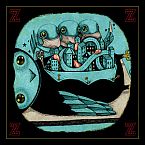
  • The album's cover art is a drawing by Kathleen Lolley called "The World Within." It depicts three bird surgeons operating on a companion who has a small city inside his stomach. "I thought it set a good tone about the world within us and going inside and being more within yourself, is how I took it," James said.

    "It's something that I try really hard to do, to stop thinking and stop the mental noise and chatter in my mind. It really is like static, just a thousand voices and mental movies in your mind and when you stop and you just concentrate on your surroundings or where you are, it's really like turning off a loud radio that's just playing a bunch of s--t."
  • Z is the 26th letter of the alphabet, and Jim James pointed out that he was 26 when he wrote the songs for the album. That fact could be the inspiration behind the title, or maybe it doesn't mean anything at all. Said James: "I speak through music and lyrics, so with the title I wanted to get away from speaking and use something that didn't mean anything at all - just one letter not connected to any other letters or vowels at all."

Comments

Be the first to comment...

Editor's Picks

Roger McGuinn of The Byrds

Roger McGuinn of The ByrdsSongwriter Interviews

Roger reveals the songwriting formula Clive Davis told him, and if "Eight Miles High" is really about drugs.

John Lee Hooker

John Lee HookerSongwriter Interviews

Into the vaults for Bruce Pollock's 1984 conversation with the esteemed bluesman. Hooker talks about transforming a Tony Bennett classic and why you don't have to be sad and lonely to write the blues.

Crystal Waters

Crystal WatersSongwriter Interviews

Waters tells the "Gypsy Woman" story, shares some of her songwriting insights, and explains how Dennis Rodman ended up on one of her songs.

Arrested For Your Art - The Story Of 2 Live Crew's "Obscene" Album

Arrested For Your Art - The Story Of 2 Live Crew's "Obscene" AlbumSong Writing

In the summer of 1990, you could get arrested for selling a 2 Live Crew album or performing their songs in Southern Florida. And that's exactly what happened.

David Bowie Lyrics Quiz

David Bowie Lyrics QuizMusic Quiz

How well do you know your David Bowie lyrics? Take this quiz to find out.

Petula Clark

Petula ClarkSongwriter Interviews

Petula talks about her hits "Downtown" and "Don't Sleep In The Subway," and explains her Michael Jackson connection.