1941

Album: Pandemonium Shadow Show (1967)
Play Video

Songfacts®:

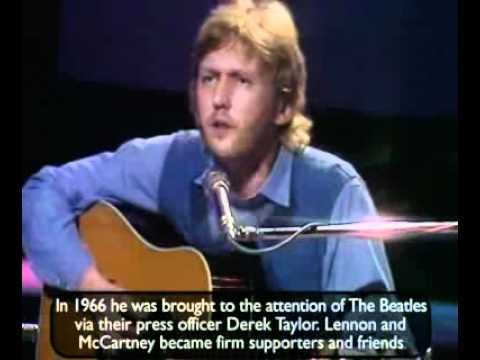
  • Harry Nilsson said his songs were a product of personal experience, but they were not autobiographical. Still, it's hard not to see the striking similarities between "1941" and the singer's own life. The song opens with a father celebrating the birth of his son in 1941. By 1944, the father abandons the boy and his mother. Later, the boy runs away and falls in love, only to repeat his father's mistakes.

    Nilsson was born in 1941, was also abandoned by his father in 1944, ran away from Brooklyn to Los Angeles, and also had broken marriages that left a son behind (though he did keep in contact with his son and would have a successful third marriage that brought six more kids).
  • Nilsson had a fascination with numbers that extended to his music (also see "One"). "When I started writing '1941,'" he explained to Stereo Review in 1973, "I was interested in writing a song about a number. So I thought I'd write a song about a year. First, I tried 1944. No. Then I tried 1941. Yes, that's it! Originally it was going to be a war song."
  • Beatles' publicist Derek Taylor remembers hearing "1941" for the first time while sitting in the car with his children in a grocery store parking lot. He wrote in the liner notes of Nilsson's subsequent album, Aerial Ballet: "I button-pushed into a 17-bar song snatch and Timothy, eight and bright, said: 'Oh, you're smiling now. Why? Oh Why?' Why...the song had said: 'He met a girl the kind of girl he'd wanted all his life. She was soft and good and kind to him and he took her for his wife. They got a house not far from town and in a little while the girl had seen the doctor and she came home with a smile. And in 1961 the happy father had a son....' Such a fragment of song it was, and from whom? It was new and hardly anything is new! And how could something come so strong and sudden so swiftly to snap the sad and slumbrous Saturday Safeway stupor? Hayes, who rides the discs like Joel McCrae, said ''1941' folks.' Oh yes he said, ''1941' by Nilsson.' Nilsson. 'Nilsson,' he said again, and told us it was good and that is why we smiled."

    Taylor would mail copies of Pandemonium Shadow Show to the members of the Fab Four, who were quickly enamored with the album. It wasn't long before they were publicly singing Nilsson's praises, and they became fast friends.
  • Canadian folk rocker Tom Northcott scored a minor hit (#88) with his cover in 1968.

Comments: 2

  • Barbara Elaine Kirk from Morley, West YorkshireI recall reading a piece by Ray Connolly in the Daily Mail about how this song had inspired him. He thought - what if the boy in the song hadn't joined the circus like his dad, but joined a funfair? And this idea went into the film That'll Be The Day, where David Essex played Jim McLaine, who did run away from his mother to join a funfair after his soldier dad abandoned the family.
  • Lars63 from TxHe left us too early.
    Many do.
see more comments

Editor's Picks

Amanda Palmer

Amanda PalmerSongwriter Interviews

Call us crazy, but we like it when an artist comes around who doesn't mesh with the status quo.

Janis Ian

Janis IanSongwriter Interviews

One of the first successful female singer-songwriters, Janis had her first hit in 1967 at age 15.

Producer Ron Nevison

Producer Ron NevisonSong Writing

Ron Nevison explains in very clear terms the Quadrophenia concept and how Heart staged their resurgence after being dropped by their record company.

John Waite

John WaiteSongwriter Interviews

"Missing You" was a spontaneous outpouring of emotion triggered by a phone call. John tells that story and explains what MTV meant to his career.

Protest Songs

Protest SongsMusic Quiz

How well do you know your protest songs (including the one that went to #1)?

Keith Reid of Procol Harum

Keith Reid of Procol HarumSongwriter Interviews

As Procol Harum's lyricist, Keith wrote the words to "A Whiter Shade Of Pale." We delve into that song and find out how you can form a band when you don't sing or play an instrument.