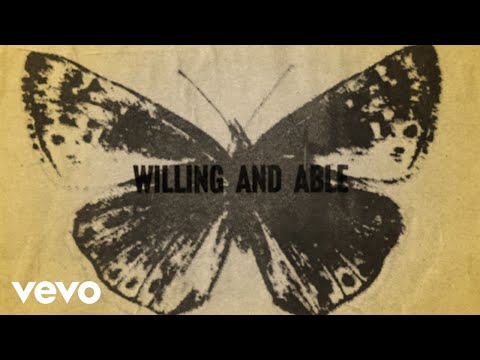
"Willing and Able" is a song about one of the most tiring relationships a person can have: the kind where somebody only reappears when they need emotional support, creative validation, or perhaps help moving a sofa. Noah Kahan wishes they could put the resentment down and simply be.
Throughout the song, Noah Kahan sets two competing versions of the same person against each other. "All I see is a shadow," he sings, while everyone else insists, "you're a light." The tension between those perspectives powers the song's first half. The verses are sharp-edged and resentful, full of accumulated frustrations toward someone who seems to drift in and out of his life according to their own needs. But then the bridge arrives and quietly dismantles the entire argument.
I wish I could do nothing with you
Sit in the yard while the day dies
Leave it all on the table
And I'll say I love you and mean it this time
Suddenly, the fight itself no longer matters. The resentment falls away, revealing something far more vulnerable underneath it. The conflict in "Willing and Able" is not really about anger at all; it is about two people who have become so practiced at deflecting affection that arguing has turned into a substitute for honesty.
The final line - "If you're willing, I'm able" - subtly reverses the entire song's emotional balance. Up to that point, Kahan has spent the track insisting on his own willingness to engage, to repair, to keep showing up despite the hurt. But the ending hands the decision over completely. The title stops being a declaration and becomes an invitation.
The song's target is deliberately ambiguous, and that ambiguity is one of its great strengths. The lyric "And I'll see you again in six months, when you need your next song" is the most significant clue; it is addressed to someone who uses Kahan instrumentally, returning only when they need something from him creatively or emotionally. That detail narrows the field considerably: this is not a romantic relationship but a creative or familial one. Kahan's own Facebook statement about the album, "I stare across it. I see old friends, my father, my mother, my siblings, my younger self," places a parental or familial reading squarely within the song's emotional universe.
The "childhood lie that we both had the courage to leave" is the other key phrase: this is a shared mythology between two people who grew up together and both eventually saw through something they once believed, which again points toward a family member or very old friend rather than a romantic partner.
The lyric, "If you wanna kick this rock around," is a deliberate callback to "
Northern Attitude" on
Stick Season, where Kahan observed of someone back home:
You settle down, you're feeling lost
You're getting stoned, then kicking rocksOn "Northern Attitude" kicking rocks is an image of stagnation, someone left behind, going nowhere. In "Willing and Able," Kahan adopts the same image as an offer of solidarity: I'll kick this rock around with you. Kahan is taking an image he once used to describe being left behind and repurposing it as an act of love.
Noah Kahan wrote the song with his guitarist, Noah Levine. Kahan produced it with Aaron Dessner, also known for his work with Taylor Swift, Gracie Abrams and Ed Sheeran.
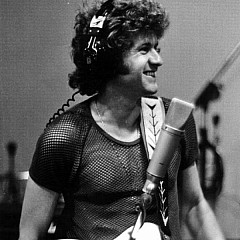
Rob Moose - a classically trained violinist and arranger who has worked extensively with Dessner on Taylor Swift's Folklore and Evermore, as well as with Bon Iver and The National - arranged the song's strings.
"Willing and Able" is track 8 on Kahan's fourth album, The Great Divide. It is the album's most complete emotional journey in a single song: from bitterness to bafflement to an ache so deep it barely has words. By the end, Kahan is no longer accusing or defending himself. He is simply offering connection on the only terms he can still manage: "If you're willing, I'm able."