
Two Suns in the Sunset

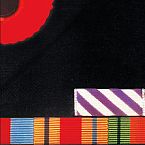
Album: The Final Cut (1983)
Play Video

Songfacts®:

  • This song is about fear of nuclear holocaust in England. In the song it says the sun is in the East, even though the day is done (the sun sets in the West). Roger Waters told Uncut in 2003: "It describes a nuclear war – the remnants of all that paranoia about nuclear war from the '60 – and it's that idea that it may be at the end of life, one may have that kind of realization that you could have when you're alive and living, and you go, "Hold on a minute, maybe this is what I should do."

    Waters adds that the song is meant to encourage us to live in the moment. "Don't be scared to live it," he says. "Don't be scared to take risks."
  • This song featured a sax solo by Raphael Ravenscroft, who played on many of the songs from The Final Cut, and is known for his sax solo on Gerry Rafferty's "Baker Street." >>
    Suggestion credit:
    Zep - Cape May, NJ
  • A session musician named Andy Newmark played drums on this track in place of Pink Floyd's regular drummer Nick Mason. Roger Waters explained why: "Rhythmically, there are some five/four timings thrown in so the downbeat changes from bar to bar and it's confusing for Nick. His brain doesn't work that way. That's why he didn't play on 'Mother' on The Wall."

Comments: 9

  • Shane from Bloomington-normal, IlNick Mason didn't play drums on this track. It is instead Andy Newmark, who then played on Roger's _Pros and Cons of Hitchhiking_ album.
  • Javi D. from New York, NyI absolutely love this song - for some reason at the end of the long days of work and toil, this song will pretty much sum up how I feel - sarcastically nihilistic.

    Roger Waters may have smothered Gilmour on this album, in this song you feel Gilmour's restrained riffs powerfully hit you. Not the greatest, but this entire album sure is worth listening to.
  • Liquid Len from Ottawa, Ns"we were all equal in the end" means that no matter how right we were and how wrong our opponents were, in the end, we're both going to be dead. Kind of nihilistic.
  • Rod from Logan, Njthis song is awesome all around ...best band ever
  • Floyd from The Dark Side Of The Moon, Otherthat last line "we were all equal in the end" might even be a hint at the relationship between Waters and Gilmour, and how they both end up equal no matter what happens.
  • Kevan from Bolton, Englandashes and diamonds, foe and friend...we WERE all equal in the end !!! or... whats the point of either side trying to wipe out the other when the only way to win would be to wipe out us all!
  • Bryan from New York, Ny"as the windshield melts, and my tears evaporate." Roger wasn't trying to be too subtle there. I like the sax solo at the end, and the drumming, even though it's not Nick. For some reason I find the sax solo at the end upbeat, even though it's about the apocalypse...
  • Michael from OxfordGreat scream around 2:32-34...
  • Rogério from Curitiba, BrazilExactly... It's obvious that the other sun is a nuclear bomb... "And as the windshield melts
    And my tears evaporate..." corroborate this point of view.
see more comments

Editor's Picks

Mike Scott of The Waterboys

Mike Scott of The WaterboysSongwriter Interviews

The stories behind "Whole Of The Moon" and "Red Army Blues," and why rock music has "outlived its era of innovation."

Edwin McCain

Edwin McCainSongwriter Interviews

"I'll Be" was what Edwin called his "Hail Mary" song. He says it proves "intention of the songwriter is 180 degrees from potential interpretation by an audience."

Philip Cody

Philip CodySongwriter Interviews

A talented lyricist, Philip helped revive Neil Sedaka's career with the words to "Laughter In The Rain" and "Bad Blood."

Harold Brown of War

Harold Brown of WarSongwriter Interviews

A founding member of the band War, Harold gives a first-person account of one of the most important periods in music history.

Graham Bonnet (Alcatrazz, Rainbow)

Graham Bonnet (Alcatrazz, Rainbow)Songwriter Interviews

Yngwie Malmsteen and Steve Vai were two of Graham's co-writers for some '80s rock classics.

Tony Joe White

Tony Joe WhiteSongwriter Interviews

The writer of "Rainy Night in Georgia" and "Polk Salad Annie" explains how he cooks up his Louisiana swamp rock.