Other Arms

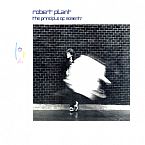
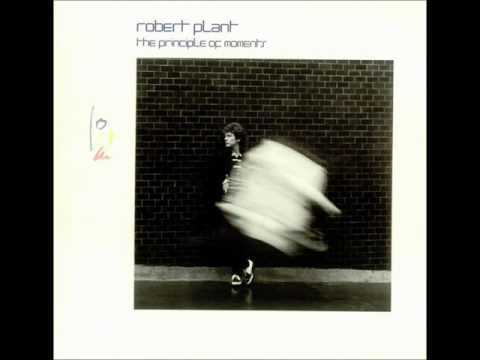
Album: The Principle Of Moments (1983)
Play Video

Songfacts®:

  • This song is about a difficult romantic relationship, possibly a love triangle (more on that below).

    The lyrics may be intended to capture the paradoxical, often-contradictory feelings that come during an intense love affair - or they simply may be confusing. Either way, in the song, Robert Plant sometimes sings as the victim and other times as the perpetrator. In the first verse he goes from asking for acceptance ("oh, now baby, let me sleep at night") to offering solace ("I'll make everything all right"). This pattern persists throughout the song, possibly mirroring the chaotic storm of emotions we feel in strained romantic relationships, possibly indicating that both parties are equally hurt, or possibly being unintentionally convoluted.

    The subject of the song even switches inexplicably from being the person addressed (as "you") to being a third-person character (as "she"). This indicates the song may be about two different lovers.

    Oh, I gotta find her
    Oh, is she here, is she there, I really wanna know


    Perhaps the height of confusion in the song comes from a verse in which Plant goes from begging for release to demanding surrender, all in the span of three lines.

    Oh, please release me, let me go
    Lay down arms, baby
    Now, surrender to me, don't you know


    The "Other Arms" title adds further weight to the "love triangle" hypothesis, as it indicates being in the arms of someone other than the person being addressed in the song. This is far from a certainty, though, especially when one considers the nature of the songs written by the duo of Robert Plant and Robbie Blunt.
  • Guitarist Robbie Blunt is the co-writer of every track on The Principle of Moments, Plant's second solo album. He also co-wrote all the songs on Plant's debut solo album (Pictures at Eleven, 1982) and most of the tracks on Plant's third (Shaken 'n' Stirred, 1985).

    The songwriting team's signature style included elliptical lyrics and song titles that seemed to have nothing to do with the songs (at least not in any obvious way). So, this complicates the matter a bit. In this case, the title of the song does help illuminate its meaning, but the lyrics get pretty opaque no matter what the correct interpretation is.
  • Plant issued "Big Log" and "In The Mood" as singles from the album rather than "Open Arms," even though many involved with the project thought "Other Arms" was the strongest track (many still think this way today).

    Plant was afraid of getting pigeonholed as a hard rocker, so he opted for the softer selections. Disc jockeys went ahead and pumped out "Other Arms," anyway, sending it past "Every Breath You Take" to claim the #1 spot on the Billboard Mainstream Rock chart, August 13, 1983.
  • When making his debut solo album, Pictures At Eleven, Plant was egalitarian in his approach as frontman of an act not named Led Zeppelin (which split in 1980). To many in the studio, he even seemed somewhat unsure of himself, and he almost scrapped the entire project when faced with pressure to do something more like Zeppelin. If it hadn't been for the counsel of Phil Collins, he may abandoned it.

    Plant's attitude was different for The Principle Of Moments. He asserted himself as the creative legend in the room and ruffled some feathers in the process. In Robert Plant: A Life, producer Benjamin "Benji" Lefevre is quoted saying, "He can be incredibly intense and very, very controlling. He winds people up the wrong way. He knows what he wants but he doesn't know how to put it across to others people terribly wells sometimes."

    Plant later explained that he doesn't like taking the boss position but also isn't averse to it when he needs to get things done his way. He also said that he was more accustomed to being combative with fellow rock icon Jimmy Page, who could give as well as he could take, and that it was hard to transition to dealing with musicians who didn't have Page's status and thick skin.

    During Plant's time with Zeppelin, journalists and fans often wrote him off as the pretty face with the killer voice, assigning the real creative chops to Jimmy Page. Plant wasn't happy with this and wanted the world to know he could do more than sing. With Pictures At Eleven, he made sure his point was made.
  • Phil Collins played drums for this tack, as he did for nearly all the songs on both The Principle Of Moments and its predecessor, Pictures At Eleven.

Comments

Be the first to comment...

Editor's Picks

Dr. John

Dr. JohnSongwriter Interviews

The good doctor shares some candid insights on recording with Phil Spector and The Black Keys.

Taylor Dayne

Taylor DayneSongwriter Interviews

Taylor talks about "The Machine" - the hits, the videos and Clive Davis.

Album Cover Inspirations

Album Cover InspirationsSong Writing

Some album art was at least "inspired" by others. A look at some very similar covers.

Dave Mason

Dave MasonSongwriter Interviews

Dave reveals the inspiration for "Feelin' Alright" and explains how the first song he ever wrote became the biggest hit for his band Traffic.

Real or Spinal Tap

Real or Spinal TapMusic Quiz

They sang about pink torpedoes and rocking you tonight tonight, but some real lyrics are just as ridiculous. See if you can tell which lyrics are real and which are Spinal Tap in this lyrics quiz.

Todd Rundgren

Todd RundgrenSongwriter Interviews

Todd Rundgren explains why he avoids "Hello It's Me," and what it was like producing Meat Loaf's Bat Out of Hell album.