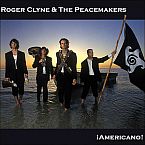

Album: Americano! (2004)
Play Video

Songfacts®:

  • Clyne: "That song is about my awakening to individual or national course of empire, and what I mean by that is, lately, as people of the world are gaining more and more sources of information, I think there's a general awakening as to what it really means to be part of a nation, and our nation is imperial, by its nature. It's interesting to find that your actions, simple things like turning the key on a car, or even paying your taxes, have global consequences. There's a certain callousness I kept in the character there in his responsibility to the consequences of what's going on. The song is a representation, it's a representation of what it feels like to understand responsibility, and I purposely, in that song, have that character, in a way, recognize that responsibility, and he turns his back on it. It's not as simple, it's not as happy-go-lucky, and it's not as carefree as "Banditos," but it could be the same character a little down the road, which could be me. The character in Americano! says, 'The blood is on my hands because I put down the money and I made up the plan,' there's a certain recognition of that consequence there. I wanted there to be a tragic element in it, because he's clearly on the run, and that's an uncomfortable place to be, and torn between two things: between two different kinds of pursuits of happiness. He's divorced himself from that. That character has turned his back on reckoning, reconciliation: 'It's in my blood to live for the kill, that God only knows I want to stay and love you.' He's made a choice to be torn in two, and that's a tough way to live."
  • Clyne has been compared to Bruce Springsteen in the sense that many of his songs are character-driven. He explains: "People are complex systems. We are large, we contain multitudes. I think that's part of the fun of exploring characters, because they can really be anything. I don't watch a lot of major media presentations, but I find that our characters in the modern day are far less black and white than they used to be in the old movies, in the old literature. I find that you can find somebody who's really adorable in a lot of respects, and despicable in others. One of my favorite Tom Robbins books, it's called Fierce Invalids Home From Hot Climates, and the protagonist in that, you're cheering him on 80% of the time, and the other 20 you want to just execute the son of a bitch, and I think that's really interesting. I also watch Deadwood, and there are characters in there who are total predators, and then they'll have a heart of gold at a certain moment. I think that's really, really interesting, how humans can be that complicated, that complex, that subtle, and finally our media is starting to reflect that, because everybody knows they are, it's just that it's never been acknowledged that it's normal to be so." (Get more in our Roger Clyne interview. His website is azpeacemakers.com.)

Comments

Be the first to comment...

Editor's Picks

David Bowie Leads the Society for Prevention of Cruelty to Long-Haired Men

David Bowie Leads the Society for Prevention of Cruelty to Long-Haired MenSong Writing

Bowie's "activist" days of 1964 led to Ziggy Stardust.

Jeff Trott

Jeff TrottSongwriter Interviews

Sheryl Crow's longtime songwriting partner/guitarist Jeff Trott reveals the stories behind many of the singer's hits, and what its like to be a producer for Leighton Meester and Max Gomez.

Crystal Waters

Crystal WatersSongwriter Interviews

Waters tells the "Gypsy Woman" story, shares some of her songwriting insights, and explains how Dennis Rodman ended up on one of her songs.

Christmas Songs

Christmas SongsFact or Fiction

Rudolf, Bob Dylan and the Singing Dogs all show up in this Fact or Fiction for seasonal favorites.

Vince Clarke

Vince ClarkeSongwriter Interviews

An original member of Depeche Mode, Vince went on to form Erasure and Yaz.

Lace the Music: How LSD Changed Popular Music

Lace the Music: How LSD Changed Popular MusicSong Writing

Starting in Virginia City, Nevada and rippling out to the Haight-Ashbury, LSD reshaped popular music.