Everybody Needs Somebody To Love

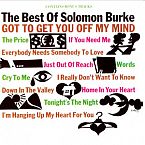
Album: The Best Of Solomon Burke (1965)
Charted: 58
Play Video

Songfacts®:

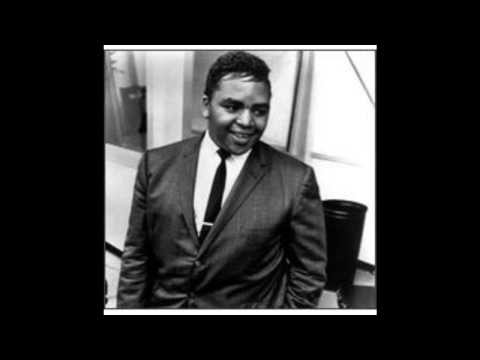
  • Solomon Burke wrote this with Bertrand Russell Berns and Jerry Wexler. Berns (aka Bert Russell or Bert Berns) was one of the great American songwriters and record producers of the 1960s. Burke is a soul and country music pioneer and member of the Rock and Roll Hall of Fame. Wexler is a music journalist who became a highly influential music producer, and is regarded as one of the major record industry players behind 1960s soul music.
  • A song about the virtues of the one you love, this was one of Burke's best-known tunes. Burke was one of the early Atlantic Records soul singers, paving the way for greats like Wilson Pickett and Otis Redding, though he never achieved their level of success.
  • The Rolling Stones are big fans of Burke, and recorded this song for their 1965 album The Rolling Stones Now!. Burke opened for The Stones and performed with them at a show in Los Angeles on November 4, 2002. >>>
    Suggestion credit:
    Bertrand - Paris, France, for all above
  • Burke performed this on the Food Network show Emeril Live, where Burke also make his Turkey Delight sandwich.
  • Solomon Burke recalled to Mojo magazine August 2008 that he'd hired musicians from Charlotte, North Carolina, to play at a gig in Long Island and he drafted them in to play the instrumental riff on this. The riff was the money march he did at church where the congregation marches down the aisle to the front to make offerings. Burke continued: "Got the band cooking, get a bit of echo, we went through it, came back out, said to (record executive/producer) Jerry (Wexler), 'Whaddya think?' He said, 'Too fast. Doesn't have any meaning.' (Engineer) Tommy (Dowd) says, 'What can we lose? His band's here, let's just cut it.'"
  • The Blues Brothers covered this for the 1980 film of the same name, starring SNL royalty Dan Aykroyd and John Belushi as the title duo. The band performed the song, along with Cab Calloway's "Minnie the Moocher," over the end credits.

    Bob Tischler, the soundtrack's producer, told Sound on Sound the recording was done at Bill Putnam's Universal Recording in Chicago. He explained: "The live area at Universal had a big booth, so we had the horn players in there playing at the same time as everyone else, individually miked with probably Sennheiser 441s. We did everything at once, with baffles around the drums and some of the other instruments, and someone - usually John Belushi - laying down a guide vocal that would subsequently be replaced."

    For the film's closing songs, the crowd joins in the performance, so the audience vocals were still needed. The studio booth was big, but not that big. So Tischler took the Chicago recordings to the Hollywood Palladium in Los Angeles, where the scene was filmed, and played them back to the audience so they could sing along and be recorded via the miked stage. Time to get technical: he used "two Ampex 24-track machines that were sync'ed together with SMPTE (time)code" to fuse the elements together for the feel of a live performance.

    Nine years later, "Everybody Needs Somebody to Love" was released as a single in the UK, backed by "Think" and it peaked at #12.

Comments: 5

  • Thomas Brokl from Pensacola, FloridaSolomon Burke sang "Everybody Needs Somebody To Love" on stage with The Rolling Stones in this clip: https://youtu.be/FDtCOvAEpUM
  • Barry from Sauquoit, NyOn January 31st 1967, Wilson Pickett performed his covered version of "Everybody Needs Somebody to Love" on the ABC-TV week-day afternoon program 'Where The Action Is.'
    At the time the song was in its first week on Billboard's Hot Top 100 chart at position #77; a little under five weeks later on March 5th it would peak at #29 {for 1 week}, the following week it fell 20 positions to #49 and that was its seventh and last week on the Top 100...
    Between 1963 and 1973 he had thirty eight Top 100 records; two made the Top 10, "Land of 1,000 Dances" {#6 in 1966} and "Funky Broadway" {#8 in 1967}...
    But on Billboard's R&B Singles chart he fared much better, he had forty eight hits; nineteen made the Top 10 with five reaching #1...
    The 'Wicked' Pickett passed away on January 19th, 2006 at the age of 64...
    May he R.I.P.
  • Reed from New Ulm, MnSolomon Burke is Fantastic!
  • Kevin from Reading , PaVan Morrison gives a great "shout out" to Burke in his song from the early '90s, "Real Real Gone," when he sings " . . . Solomon Burke says 'if you need me why don't you call me . . . "

    Also, Burke does a fine recording of a Bob Dylan blues song called "Stepchild," a song which I don't believe Dylan himself ever recorded or sang in concert. It's a fairly recent recording, from the early 00s I believe.
  • James from Vidalia, GaCovered by The Blues Brothers in the film of the same title.
see more comments

Editor's Picks

Matt Sorum

Matt SorumSongwriter Interviews

When he joined Guns N' Roses in 1990, Matt helped them craft an orchestral sound; his mezzo fortes and pianissimos are all over "November Rain."

Music Video Director David Hogan

Music Video Director David HoganSong Writing

David talks about videos he made for Prince, Alabama, Big & Rich, Sheryl Crow, DMB, Melissa Etheridge and Sisters of Mercy.

Michael Schenker

Michael SchenkerSongwriter Interviews

The Scorpions and UFO guitarist is also a very prolific songwriter - he explains how he writes with his various groups, and why he was so keen to get out of Germany and into England.

Weird Al Yankovic

Weird Al YankovicFact or Fiction

Did Al play on a Beach Boys record? Did he have beef with George Lucas and Coolio? See if you can spot weird but true stories.

Chris Fehn of Slipknot

Chris Fehn of SlipknotSongwriter Interviews

A drummer for one of the most successful metal bands of the last decade, Chris talks about what it's like writing and performing with Slipknot. Metal-neck is a factor.

Julian Lennon

Julian LennonSongwriter Interviews

Julian tells the stories behind his hits "Valotte" and "Too Late for Goodbyes," and fills us in on his many non-musical pursuits. Also: what MTV meant to his career.