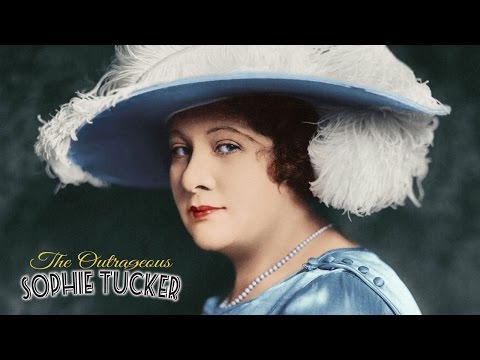
My Yiddishe Momme

Album: Last of the Red Hot Mommas (1925)
Play Video

Songfacts®:

  • The title of this 1920s hit is also (mis)spelled "My Yiddishe Mama", etc. Jack Yellen wrote the words - presumably about his own Yiddishe Momme - and collaborated on the music with Lew Pollack.
  • The melody of this song is very weak, and the words aren't exactly great, but like many genuinely great songs it has a universal message, one that is not simply for sons and daughters, Yiddish or otherwise, but for everyone who has looked back on a deceased loved one and thought of all the things he or she would have liked to have told them, or done for them, a song of regret and lament. It is also arguably the most famous song to be sung in both English and Yiddish.
  • Sophie Tucker's autobiography Some Of These Days is dedicated to Yellen "A grand song writer, and a grander friend". Later in the book she says '"Yiddisha Mama,' which Jack Yellen wrote for me... was tremendously popular, not only with the Jewish public but generally. The phonograph records of it have had an enormous sale. From that season, whenever I have gone to England [it] is the one song the audience always demands."
  • Tucker would sing the song in both English and Yiddish; she began singing it in 1925, after the death of her own mother. It appears to have been popular everywhere including in Nazi Germany. After Hitler came to power, Tucker’s records were ordered smashed and the sale of them banned, but after the outbreak of the Second World War, Tucker was told by a German exile in London that it was still popular in Germany.
  • Though Tucker made the song her own, "My Yiddishe Momme" was first recorded by Willie Howard. Her hit 1928 recording had the A Side in English and the B Side in Yiddish. Other popular recordings were by Leo Fuld (again in both languages) and a 1967 live version by the very un-Yiddish Tom Jones in 1967 for the album Live at the Talk of the Town. >>
    Suggestion credit:
    Alexander Baron - London, England, for all above

Comments

Be the first to comment...

Editor's Picks

Chris Fehn of Slipknot

Chris Fehn of SlipknotSongwriter Interviews

A drummer for one of the most successful metal bands of the last decade, Chris talks about what it's like writing and performing with Slipknot. Metal-neck is a factor.

In The Cards

In The CardsSong Writing

Songwriters have used cards and card games to make sense of heartache, togetherness, and even Gonorrhea.

Ed Roland of Collective Soul

Ed Roland of Collective SoulSongwriter Interviews

The stories behind "Shine," "December," "The World I Know" and other Collective Soul hits.

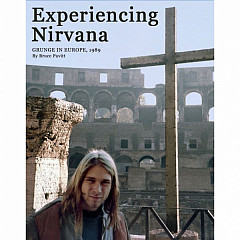
Experience Nirvana with Sub Pop Founder Bruce Pavitt

Experience Nirvana with Sub Pop Founder Bruce PavittSong Writing

The man who ran Nirvana's first label gets beyond the sensationalism (drugs, Courtney) to discuss their musical and cultural triumphs in the years before Nevermind.

Facebook, Bromance and Email - The First Songs To Use New Words

Facebook, Bromance and Email - The First Songs To Use New WordsSong Writing

Where words like "email," "thirsty," "Twitter" and "gangsta" first showed up in songs, and which songs popularized them.

The Fratellis

The FratellisSongwriter Interviews

Jon Fratelli talks about the band's third album, and the five-year break leading up to it.