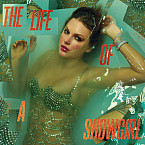
"Opalite" is a buoyant love song from Taylor Swift's 12th album, The Life of a Showgirl, where she shows resilience after hardship and celebrates finding a transformative romance with NFL star Travis Kelce.
Swift uses opalite - a synthetic version of the natural opal - as her central metaphor in this song. It's a gleaming stand-in for constructed happiness, suggesting that maybe joy doesn't have to be purely organic; maybe you can make it yourself after heartbreak. It's also a wink to Travis Kelce, whose birthstone is opal.
Kelce is a big fan of the song. On his New Heights podcast, he grinned through the admission: "I think 'Opalite' might be my favorite... every time it comes on, I always catch myself." That easy joy mirrors the song's spirit, Swift's version of a love touchdown dance.
Speaking to Capital Radio, Swift explained that the song was born from one of her lyrical "endless files" - those note fragments she hoards like gemstones. "I had written down the word Opalite because I learned it's a man-made opal," she said. "Travis's birthstone is an opal, and I loved the metaphor that happiness can be man-made too. That's what the song's about, how love and light can be things you build after the dark."
There's both dark and light in the chorus:
You were dancing through the lightning strikes
Sleepless in the onyx night
But now, the sky is opaliteThe shift from onyx (a black stone) to opalite (milky white) is a visual journey from heartbreak to renewal. Swift has long used color as emotional shorthand: "
Red is passion and chaos, "blue" means sadness, then love and safety, "gray" means melancholy. In "
Lavender Haze" she bathes love in a dreamy purple glow, while "
Maroon" captures nostalgia in deep red hues. "Opalite" feels like her next evolution, a prism catching every shade of healing.
Produced by Swift alongside Swedish pop masterminds Max Martin and Shellback, the song fuses pop-rock and Eurodance sparkle. Recorded in pockets during the Eras Tour, The Life of a Showgirl brims with the joy of finding love. "This album is about what was going on behind the scenes in my inner life during this tour," Swift told New Heights. "It was so exuberant and electric and vibrant."
The goal, she said, was to make a tight, unapologetic collection of "bangers," melodies "so infectious you're almost angry at them."
"Opalite" delivers exactly that. It's the sound of Taylor Swift, the alchemist, turning pain into pop, heartbreak into refracted light.
The video for "Opalite" is styled as a tongue-in-cheek retro infomercial that gradually morphs into a whimsical '90s-style romantic comedy about two isolated people finding connection. It begins with a spoof vintage TV commercial advertising an "Opalite" cleaning spray that claims it can "magically transform your problems into your paradise." The product acts as a symbolic device, representing emotional renewal and the possibility of healthier relationships.
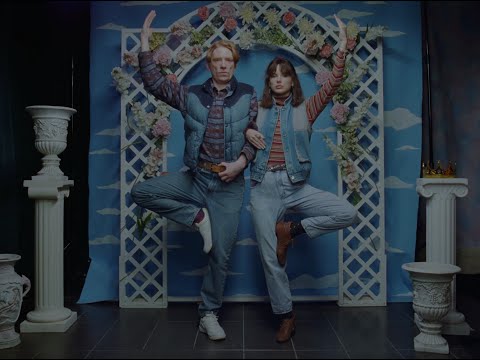
After the mock ad, the narrative shifts to Taylor Swift portraying a lonely woman whose main source of companionship is her pet rock. Her story runs in parallel with Domhnall Gleeson's character, a similarly isolated man who shares his life with a pet cactus. Both characters receive bottles of the Opalite spray, and when Swift's character uses it, she is transported into Gleeson's world, symbolizing the clearing away of emotional baggage and entrenched habits that kept them apart.
The video features a string of celebrity cameos, all drawn from the lineup of guests who appeared alongside Swift on BBC's The Graham Norton Show in October 2025 while she was promoting The Life of a Showgirl.
Cillian Murphy appears in the faux infomercial segments promoting the Opalite product.
Greta Lee and Jodie Turner-Smith appear on stylized in-universe television screens that reinforce the video's nostalgic TV aesthetic.
Lewis Capaldi plays a mall photographer who appears during photo booth scenes involving Swift and Gleeson.
Graham Norton turns up in a comedic role that leans into his talk-show host persona and the spoof-advertisement concept.
The casting of Gleeson reportedly stemmed from a spontaneous moment during the show's taping when the actor joked that he would like to appear in one of Swift's music videos. Swift said the comment sparked an idea for a narrative-driven video built around him. She subsequently wrote a script featuring Gleeson as the male lead and emailed it to him about a week after filming the program.
Swift felt unusually fortunate with that particular talk-show panel. The chemistry among the group helped inspire the idea of reuniting them as cameo appearances, giving the video an ensemble feel.
Following the release of its video, "Opalite" jumped 12 places to #1 on the UK Singles Chart, having previously peaked at #2. It was the first time any Taylor Swift album produced two chart-topping singles: "
The Fate Of Ophelia" previously spent seven non-consecutive weeks atop the listing.
"Opalite" won for Best Direction at the 2026 MTV Video Music Awards, an award that went to Swift because she wrote and directed it. At the ceremony, Swift was also bestowed the very first Artist Director Honors.