Mother Nature

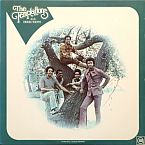
Album: All Directions (1972)
Charted: 92
Play Video

Songfacts®:

  • Environmentalism was increasingly in the American consciousness in the late '60s and '70s, but this song isn't actually about that, despite the title.

    "Mother Nature" is about yearning for freedom from modernity and seeking a more natural state of living. The words express spiritual dissatisfaction with civilization.

    Day in, day out I learn to find
    Leaves me half alive
    And I'm going nowhere
    I can't live in this classic world
    It's killing me
    Can't you see
    You're the only one to turn to


    It was common for popular musicians to romanticize nature in this period of popular music, which carried the calling cards of the '60s hippies but evolved into something new stylistically and thematically. In many ways, this song is perfectly illustrative of those changes, in fact.

    The '60s counterculture started as a pointedly political movement concerned with civil rights, the anti-war movement, and equality. Over time it became a cultural revolution first and foremost, with politics more on the periphery. Then, after the whole thing started to fall apart in 1969, the '60s revolutionary sentiment was turned decidedly inward into "self-empowerment."

    At this time, people became more concerned with changing themselves than with changing the world. That concern is essentially what's expressed in "Mother Nature," though all the way back in 1972 it's unlikely that the writers had a broader view of the changes happening to society at large. They were simply speaking as part of it.
  • Dino Fekaris and Nick Zesses wrote the song. The pair frequently collaborated together as writers. Fekaris also worked as a producer, penning Gloria Gaynor's "I Will Survive."
  • While the song only cracked the bottom of the Hot 100, it hit #27 on the R&B chart.

Comments

Be the first to comment...

Editor's Picks

Yoko Ono

Yoko OnoSongwriter Interviews

At 80 years old, Yoko has 10 #1 Dance hits. She discusses some of her songs and explains what inspired John Lennon's return to music in 1980.

Holly Knight ("The Best," "Love Is A Battlefield")

Holly Knight ("The Best," "Love Is A Battlefield")Songwriter Interviews

Holly Knight talks about some of the hit songs she wrote, including "The Warrior," "Never" and "The Best," and explains some songwriting philosophy, including how to think of a bridge.

Laura Nyro

Laura NyroSongwriting Legends

Laura Nyro talks about her complex, emotionally rich songwriting and how she supports women's culture through her art.

Sarah Brightman

Sarah BrightmanSongwriter Interviews

One of the most popular classical vocalists in the land is lining up a trip to space, which is the inspiration for many of her songs.

Supertramp founder Roger Hodgson

Supertramp founder Roger HodgsonSongwriter Interviews

Roger tells the stories behind some of his biggest hits, including "Give a Little Bit," "Take the Long Way Home" and "The Logical Song."

U2 Lyrics

U2 LyricsMusic Quiz

How well do you know the lyrics of U2?