Run Charlie Run

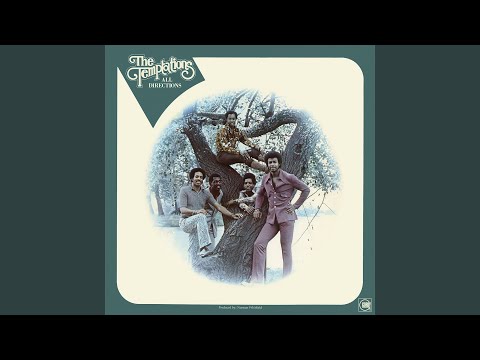
Album: All Directions (1972)
Play Video

Songfacts®:

  • "Run Charlie Run" is one of the most confrontational tracks in The Temptations' catalog, a hard-grooving funk workout that takes aim at white flight, the mass migration of white residents from American cities as Black families moved into urban neighborhoods during the late 1960s and early '70s. The title's "Charlie" is a generic white man, and the song's repeated command to run is delivered with heavy irony. The Temptations aren't endorsing the panic; they're satirizing it, holding up white racism for inspection.
  • The song fits comfortably alongside socially conscious Motown records such as The Temptations' own "Ball Of Confusion (That's What the World Is Today)" and Marvin Gaye's landmark album What's Going On. Like those works, it examines a society busy tearing itself apart while pretending everything is perfectly fine.
  • The Temptations initially wanted little to do with the song. "We hated 'Run Charlie Run' at first," founding member Otis Williams told Uncut. "It was a militant song about white flight. Norman insisted we sing 'The ni--ers are coming' while impersonating a white person. We just never sang that line onstage."

    Norman is their producer, Norman Whitfield, who was determined to keep the lyric. The spoken call-and-response section was eventually delivered by bassist Melvin Franklin, whose deep voice supplied the mock-panicked "the ni--ers is comin'" refrain. Whitfield was equally stubborn about another All Directions track, "Papa Was A Rollin' Stone," which the group also resisted before it became one of their biggest hits.
  • Songwriters C. Maurice King and Jan Forman penned "Run Charlie Run." King also co-wrote "I Ain't Got Nothin'," another track on All Directions.
  • Released in 1972, All Directions reached #2 on the US Albums chart and topped the R&B chart. Produced entirely by Whitfield, it stands as one of the defining statements of Motown's psychedelic soul era.
  • At Track 2 and Track 3, "Run Charlie Run" and "Papa Was a Rollin' Stone" form a powerful one-two punch of social commentary on an album otherwise devoted to sprawling funk workouts and lush ballads.

Comments

Be the first to comment...

Editor's Picks

The Girl in That Song

The Girl in That SongFact or Fiction

Billie Jean, Delilah, Sara, Laura and Sharona - do you know who the girls in the songs really are?

Jesus In Pop Hits: The Gospel Songs That Went Mainstream

Jesus In Pop Hits: The Gospel Songs That Went MainstreamSong Writing

These overtly religious songs crossed over to the pop charts, despite resistance from fans, and in many cases, churches.

Annie Haslam of Renaissance

Annie Haslam of RenaissanceSongwriter Interviews

The 5-octave voice of the classical rock band Renaissance, Annie is big on creative expression. In this talk, she covers Roy Wood, the history of the band, and where all the money went in the '70s.

Michael Schenker

Michael SchenkerSongwriter Interviews

The Scorpions and UFO guitarist is also a very prolific songwriter - he explains how he writes with his various groups, and why he was so keen to get out of Germany and into England.

Martyn Ware of Heaven 17

Martyn Ware of Heaven 17Songwriter Interviews

Martyn talks about producing Tina Turner, some Heaven 17 hits, and his work with the British Electric Foundation.

Gary Lewis

Gary LewisSongwriter Interviews

Gary Lewis and the Playboys had seven Top 10 hits despite competition from The Beatles. Gary talks about the hits, his famous father, and getting drafted.