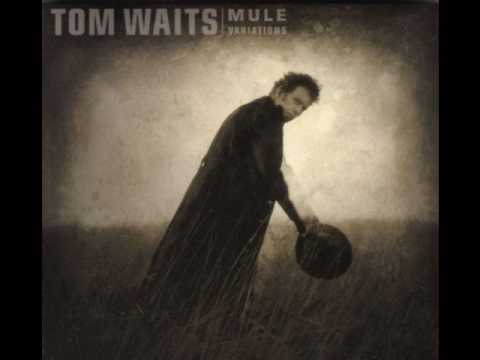
Come On Up To The House

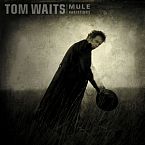
Album: Mule Variations (1999)
Play Video

Songfacts®:

  • "Come on Up to the House" is a gospel song in Tom Waits' idiosyncratic style. It's sung as a direct address to some unnamed person, presumably each of us as individual listeners. We're never exactly sure whose perspective Waits is singing from when he makes repeated entreaties to "come on up to the house." It's possible that the "house" is Heaven itself... or maybe just Waits' house.
  • One of the song's most mysterious lines, "The world is not my home, I'm just a-passing through" is taken from a Jim Reeves song that uses that line as its title. Reeves' song opens with the lines:

    This world is not my home, I'm just a-passin' through
    My treasures are laid up somewhere beyond the blue
    The angels beckon me from heaven's open door
    And I can't feel at home in this world anymore


    Waits' use of Reeves' song suggests the theme is similar. This is Waits talking to someone about the hardships of life and offering them someplace or something better. Waits doesn't deal with overtly religious themes often. Another song on Mule Variations, "Chocolate Jesus," even seems to make fun of Christianity or, at least, have fun with it.

    Still, it's hard to listen to "Come On Up To The House" as anything but a sincere expression of faith to someone lost in the mist of futility.
  • The line, "Does life seem nasty, brutish, and short" is a reference to philosopher Thomas Hobbes and his book Leviathan. Hobbes contended that democracy was dangerous because people are essentially selfish and self-interested, meaning that allowing common people to vote for leaders would thrust mankind into civil strife, "war of every man against every man," leading to life being "solitary, poor, nasty, brutish, and short."

    Hobbes believed rule by king was the best of all for the reasons above. It's hard to imagine Waits agrees with that concept, judging by the everyman nature of his songs and his antiauthoritarian ideals.
  • A variation in the line, "whipped by the forces that are inside of you" was used in Waits' song "Spidey's Wild Ride," released on Orphans, Bawlers & Bastards in 2006. That album compiled outtakes recorded from 1984 to 2005, so it's possible the song was written and/or recorded before "Come on Up to the House."

    The same line also came up in a 2002 Austin Chronicle interview. The interviewer, Margaret Moser, asked over the phone where Waits was as they spoke. He responded, "I'm out on my own recognizance in the day room, gluing pieces of macaroni on cardboard and painting it gold. After that I get to make a belt that says, 'Whipped by the forces within me' on the back."
  • "Come On Up To The House" plays during the closing sequence and end credits of the 2025 movie Wake Up Dead Man: A Knives Out Mystery. Its inclusion is significant given the film's "Gothic" and religious themes, as the lyrics include the line, "Come down off the cross, we can use the wood," which mirrors the film's focus on faith and sacrifice, and goes along with the church setting.

Comments: 3

  • AnonymousThe lyrics "Come down off the cross, we could use the wood" and "There's no light in the tunnel" I believe is a specific rejection of a faith-seeking interpretation of the song. It points the meaning more toward a communal support, "The House" being that community. Life is hard, and it can be difficult to keep going, but a little love and empathy from your fellow travellers can make it just that much easier to go through.
  • AnonymousIt’s about laying your burden down and letting go. When I was getting sober it was all about sobriety… after a divorce it was about letting go and not wallowing in self pity.
  • Author One from Sunset, La.An interesting interpretation of Tom Waits song ‘ Come on up to the house’. The preceding comments at least gives the lyrics of the song some perspective. My take is that the house is not real, but rather a metaphorical reference. The house can refer to a common table where reason can ensue. That metaphorical table allows for reason, different points of view and sober discussion to take place, especially in a disjointed world of hatred, bitterness and divisiveness, to occur. Dr. Martin Luther king said it this way; ‘If we do not learn to live together as brothers, we will together as fools’. This is simply a personal perspective(mine).
see more comments

Editor's Picks

AC/DC

AC/DCFact or Fiction

Does Angus really drink himself silly? Did their name come from a sewing machine? See if you can spot the real stories about AC/DC.

Bill Medley of The Righteous Brothers

Bill Medley of The Righteous BrothersSongwriter Interviews

Medley looks back on "Unchained Melody" and "You've Lost That Lovin' Feelin'" - his huge hits from the '60s that were later revived in movies.

Queen

QueenFact or Fiction

Scaramouch, a hoople and a superhero soundtrack - see if you can spot the real Queen stories.

Chris Isaak

Chris IsaakSongwriter Interviews

Chris tells the story of "Wicked Game," talks milkshakes and moonpies at Sun Records, and explains why women always get their way.

Gary Numan

Gary NumanSongwriter Interviews

An Electronic music pioneer with Asperger's Syndrome. This could be interesting.

Joe Ely

Joe ElySongwriter Interviews

The renown Texas songwriter has been at it for 40 years, with tales to tell about The Flatlanders and The Clash - that's Joe's Tex-Mex on "Should I Stay or Should I Go?"