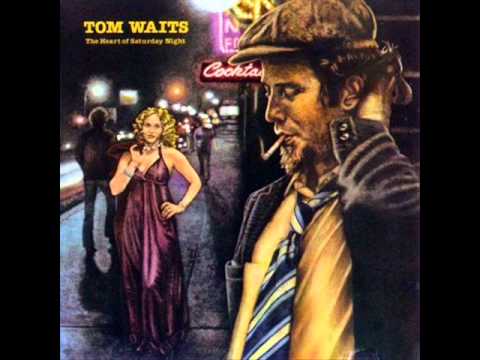
Ghosts Of Saturday Night (After Hours At Napoleone's Pizza House)

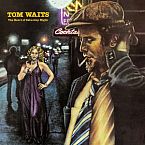
Album: The Heart Of Saturday Night (1974)
Play Video

Songfacts®:

  • This is the melancholic beatnik-poetry conclusion to Waits' album The Heart Of Saturday Night. With some soft, minimalist piano and Waits' mildly gruff voice, not yet as leathered and weather-beaten as it would later be, "Ghosts" is more a spoken-word piece than a song in the usual sense.

    In his later music, Waits' lyrics become more abstract and at some points just downright weird, but that's not the case here. "Ghosts" poetically paints a portrait of the end of a Saturday night. That's all. We even know where it was happening.

    "Ghosts" was written from Waits' experiences as a dishwasher and cook at Napoleone's Pizza House in National City, California. The shop was originally opened in 1958 (when Waits was nine years old). As of early 2019, the restaurant still stands and is run by the son of Sal Crivello, who hired Waits.

    "He [Waits] started when he was in high school," Sal Crivello says on the shop's website. "About 16 years old. He was shy at first, but I think that was just because he was young. He washed dishes, and then became a cook. He was an excellent worker. He made good pizzas."

    According to Napoleone's website, they were the "after hours Stomp" of National City during those early years. Located right off National City Boulevard, which is today known as the "mile of cars" for all its dealerships and galleries, it was the place where the revelers went to finish off the night (or load up to continue it). This was when Waits worked there.
  • Waits worked at the pizza shop for about five years, claiming they were among the best years of his life.

    "I thought I was gonna be a cook," Waits said. "That's about as far as I could see. But what also happened was that I was mystified by the jukebox, and the physics of how you get into the wire and come out of the jukebox. That's where that came from. I'd listen to Ray Charles singing 'Crying Time' and 'I Can't Stop Loving You,' and I'd think, that's something."
  • In talking about Napoleone's, Waits also said, "Every night about 4 o'clock in the morning all the white-vinyl-booted gogo dancers and all the sailors would come over about a quarter o' four. And just about that time Joe would go out in front just to check out the traffic on the street. You know, he would like leave his paper hat and he'd fold his apron and he would go out and stand in front of Napoleone's.'"

    That last quoted passage resembles what Waits described in the song's lyrics, except of course in the song he's crafted the imagery into some of the very best descriptions he's ever written. There are some killer lines, such as "A solitary sailor who spends the facts of his life like small change on strangers" and "the town cryer's crying there with nickels in his hands."

    Looking back on it now, the song acts as a great chronicle of an era of American culture that's been lost forever. People still go out to bars, of course, but that scene has changed radically with the advancement of home entertainment options. Jack Nicholson once said that the epic '60s and '70s club scene was destroyed most of all by the appearance of AIDS.

    Whatever the reason for the transformation, the world captured in "Ghosts Of Saturday Night" will never be again. Luckily, one of music's great poets was there to pen a description for the ages.
  • Waits never forgot his connection to the Napoleone's. After hearing that Sal Crivello had been mugged, Waits called in to the shop to check in on his health. He's also visited at least once since becoming famous. The restaurant keeps a portrait of Waits on the wall.

Comments

Be the first to comment...

Editor's Picks

Justin Hayward of The Moody Blues

Justin Hayward of The Moody BluesSongwriter Interviews

Justin wrote the classic "Nights In White Satin," but his fondest musical memories are from a different decade.

Eric Burdon

Eric BurdonSongwriter Interviews

The renown rock singer talks about "The House of the Rising Sun" and "Don't Let Me Be Misunderstood."
The Punk Photography of Chris Stein

The Punk Photography of Chris SteinSong Writing

Chris Stein of Blondie shares photos and stories from his book about the New York City punk scene.
The Untold Story Of Fiona Apple's Extraordinary Machine

The Untold Story Of Fiona Apple's Extraordinary MachineSong Writing

Fiona's highly-anticipated third album almost didn't make it. Here's how it finally came together after two years and a leak.
Tony Banks of Genesis

Tony Banks of GenesisSongwriter Interviews

Genesis' key-man re-examines his solo career and the early days of music video.

Leslie West of Mountain

Leslie West of MountainSongwriter Interviews

From the cowbell on "Mississippi Queen" to recording with The Who when they got the wrong Felix, stories from one of rock's master craftsmen.