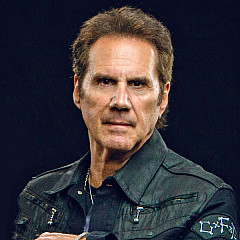
1976-2019David PaichKeyboards
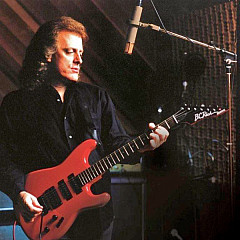
Steve LukatherGuitar
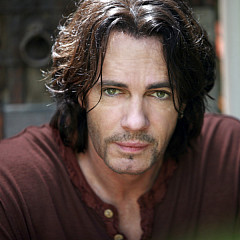
Steve PorcaroKeyboards1976-1987, 2010-
Jeff PorcaroDrums1976-1992
Bobby KimballLead vocals1977-1984, 1998-2008
David HungateBass1977-1982, 2014-2015
Mike PorcaroBass1982-2007
Simon PhillipsDrums1992-2014
Fergie FrederiksenLead vocals1984-1985
Joseph WilliamsLead vocals1986-1988, 2010-
Greg PhillinganesKeyboards2005-2008
A group of highly regarded session musicians formed Toto in Los Angeles in 1977. They built their reputations playing on studio recordings for Steely Dan, Seals and Crofts, Boz Scaggs, and other bands. In 1982, with the release of their album
Toto IV (the one with "
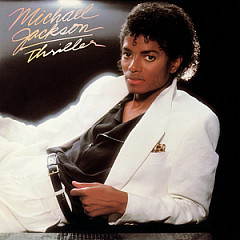
Africa"), they saturated the airwaves. Later that year, Steve Lukather, David Paich, Jeff Porcaro and Steve Porcaro all played on Michael Jackson's
Thriller.
Toto IV won the Grammy for Album Of The Year in 1983;
Thriller won the following year.
Jeff Porcaro (Steve's brother) passed away from a heart attack on August 5, 1992. Their other brother, Mike, later replaced Hungate on bass.
Elton John was one of the first big-time musicians to talk up Toto to the press. John Mellencamp was one of the first to talk them down.
The band members all made very good incomes as session musicians, but the artists they were working for were doing much better. Since they were playing together anyway on these sessions, they decided to form their own band and make their own music.
"Toto Mode" is when the band gets in a creative flow. In a
Songfacts interview with David Paich, he explained: "We're all songwriters and producers in our own rights, but when we get into the studio, this kind of magical thing happens where we get into this 'Toto mode' and start writing pieces for this particular ensemble. So it's a unique situation here."
Jeff Porcaro and David Paich went to Grant High School together and formed a band named Rural Still Life.
Mike Porcaro passed from amyotrophic lateral sclerosis in 2015. In
Classic Rock (October 15, 2016), Lukather
shared his sad experience of Porcaro's degenerative condition. "ALS is the most cruel, insidious disease," Lukather said. "It's so hard to watch someone just melt away, to become a prisoner in his own body. In his brain he's alive, but it's hard for him to take a breath. He can't eat, can't move. Every time I see him, the last thing I do is kiss him, and we cry together."
When they formed their band, they were so highly regarded for their session work that they didn't have to approach any record labels - the labels came to them. Paich explained to Sandy Robertson of Sounds (March 10, 1979), "We knew personally from working on lots of albums all the executives from all the companies, so we never called or approached anybody, but once we said we were forming a band everybody started calling us, begging us to sign."
The origin of the name "Toto" was a cause for debate for quite some time. The band themselves gave differing accounts on different occasions. Initially, rock mythology had it that the name was taken from the word that Porcaro would write on the band's demo tapes to keep them separate from the other bands in the studio. Then the band told the press that they were named after the dog in The Wizard of Oz. Eventually, the "official" story was revealed to be that "Toto" was taken from the Latin words "In Toto," which means "all-encompassing," with the significance of that selection being that the band brought together so many genres and areas of specialization that they could, and did, do anything and everything.
Writing for Virgin Yearbook in 1982, John Tobler floated a conspiracy theory about the band's name. He claimed there were those who believed Toto was deliberately generic (like the band's music, in his eyes). His reasoning is hard to even summarize because it's so convoluted. So, in his own words: "The theory went on to suggest that the generally vague group names were deliberately chosen because of their non-specific nature, since if a group experienced huge success one or more of its members would inevitably desire greater prominence, either within the group or as a separate solo act. This, of course, would upset the chemistry of the group (and no doubt the declared democracy therein), but since some egos are such that the continuing anonymity of being a member of a group (albeit a highly rich and successful one) is insufficient, the over-ambitious would-be star is allowed to embark on a solo career and is replaced by a new anonymous face. This can be easily achieved as the copyright holder of the group name is, in most cases, their manager – fascinating, and actually occurring."
The music press was hard on Toto for most, if not all, of their career. When the band first formed, they were put down for being session musicians (who presumably weren't raw, "real" artistes). Then, when they hit it big on the radio, many in the press lambasted them for sounding too much like all the other popular acts at the time.
Not everyone agreed with this negative assessment. Harry Doherty of Melody Maker (February 3, 1979) wrote, "This could have been an unholy disaster. A group of Los Angeles session men forming their own band could have been the signal for God-knows-what height of boredom. But, somehow, Toto have cleared all the fences and produced an album that, frankly, revalidates the idea of 'tastefulness,' and which goes some way towards redressing the damage caused to American credibility by the formula - riddled antics of the likes of Boston, Foreigner and Kansas (to name a few)."
Max Bell in New Musical Express (March 17, 1979) was more illustrative of the norm, however, when he wrote, "Will these people never learn? In the time-honored Hollywood tradition of foisting ambitious super-sessioners upon that large portion of the American public bereft of a brain, taste or the ability to decide for itself comes Toto, a six piece composed of former Boz Scaggs and Steely Dan (you know the rest) side men."
No one ever questioned the group's musical craftsmanship or polish. The complaint seemed to be primarily that they were too polished.
Their first hit single was "
Hold The Line." Written by Paich, it was indicative of their catchy, hook-heavy songwriting and musical craftsmanship.
The band has shifted membership repeatedly over the years. They took a few breaks, but only once declared their breakup. That happened in 2008 when Steve Lukather did so in a statement on the band's website. In 2010, they started playing together again.
Toto released a new album, Toto XIV, in 2015 because they were contractually obligated to do so. They fought it for a while but eventually decided to succumb to legal expenses and just make it.