"You Don't Pull No Punches, But You Don't Push the River" is a nearly nine-minute folk-rock composition that is often regarded as one of Van Morrison's most accomplished and experimental works. The song meanders through personal memories, mystical landscapes, and the rugged beauty of Ireland's west coast, all while grappling with a central metaphor that suggests a philosophy equal parts Zen and stubborn Irish resolve: You don't fight the current, but you don't let it drown you either.
The title phrase was inspired by Gestalt therapy, a form of psychotherapy that focuses on the present moment and how we perceive and interact with our environments. It emphasizes personal responsibility, self-awareness, and the integration of thoughts, feelings, and behaviors. Morrison had been reading Barry Stevens' Don't Push the River (It Flows by Itself) - a 1970 book which aligns with the Gestalt principle of allowing natural processes to unfold without forced intervention.
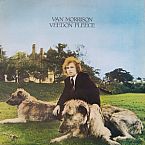
Written during Morrison's three-week trip to Ireland in October 1973 - an intensely fertile creative period that produced seven of the songs for Veedon Fleece - the track took inspiration from several places: the rugged Irish landscape, Morrison's interest in religion and mysticism, his literary explorations, and the works of William Blake.
William Blake and the Eternals standing with the Sisters of Mercy
Lookin' for the Veedon Fleece
Morrison nods here to "the Eternals" from Blake's The Book of Urizen. If you're unfamiliar with Blake's esoteric ramblings, let's just say "the Eternals" are a group of cosmic beings. The lyrics also invoke "the Sisters of Mercy," a Catholic religious institute established in 1831 by Catherine McAuley in Dublin, and the elusive "Veedon Fleece," a character (or concept?) Morrison dreamed up but has cheerfully admitted he doesn't fully understand.
This marks the first time Morrison explicitly name-checks the mystical poet William Blake in his lyrics. Since then, they've cropped up again and again throughout Morrison's career. Some examples:
"Summertime in England" (1980): From the album Common One, this song includes the lines
Did you ever hear about
William Blake
T. S. Eliot
In the summer
In the countryside
"Let The Slave" (1985): This song from the album A Sense of Wonder incorporates Blake's poem "The Price of Experience." It also includes the line "Everything that lives is holy," which is a direct quote from Blake.
"Ancient of Days" (1985): While this song doesn't directly mention Blake, its title is taken from a Blake painting.
"When Will I Ever Learn to Live in God" (1989): From the Avalon Sunset album, this song references Blake with the lyrics:
Suffering long time angels enraptured by Blake
Burn out the dross innocence captured again
"Golden Autumn Day" (1999): This song from the album Back on Top mentions Blake with the line "Among Blake's green and pleasant hills."
The musicians who performed on "You Don't Pull No Punches, but You Don't Push the River" are:
Van Morrison: guitar, vocal
Ralph Wash: guitar
David Hayes: bass guitar
Jef Labes: string and woodwind arrangements
Teressa Adams: cello
James Rothermel: flute
Nathan Rubin: violin
Jack Schroer: soprano saxophone
Dahaud Shaar (David Shaw): drums
James Trumbo: piano
David Hayes played a unique bass on the song built by American instrument and guitar accessory company Ernie Ball. "It was a big guitarrón with a western-shaped body, strung with piano strings but with an upright base string tuning," he told Mojo magazine. "There's something conventional in the sound but it has this almost Indian, transcendental quality to it. It's the kind of song that doesn't really have to go anywhere because it's just got that sound that kind of brings you in, you know?"
Musically, the song is as intricate as its lyrics, buoyed by Jeff Labes' lush string arrangements. Labes, clearly inspired, lets the strings echo the lilting flight of Rothermel's flute before building on the rhythmic push-pull of Trumbo's piano.
"Van originally gave me an 11-minute version of you don't push the river," remembered Labes to Mojo. "I pointed out to him it wasn't going to wash. It goes on too long, it starts to meander. We got it down to about nine minutes."