Guthrie was born in Okemah, Oklahoma. His father was a cowboy, land speculator, and local politician.
He experienced many losses that profoundly affected him: the death of his older sister Clara, financial and physical ruin, and the institutionalization of his mother. All of this helped form his rambling outlook on life.
He lived through and wrote about the Great Depression and the Great Dust Storm, which hit the Great Plains in 1935. He wrote such Dust Bowl Ballads as "I Ain't Got No Home," "Goin' Down The Road Feelin' Bad," "Talking Dust Bowl Blues," "Tom Joad" and "Hard Travelin'." He became part of the mass migration of dust bowl refugees known as "Okies." Without food or money, Woody hitchhiked, rode freight trains, and even walked to California, developing a love for traveling on the open road -- a practice he would repeat often.
Woody spent time in Oregon working for the Bonneville Power Authority, composing music for a documentary on the building Grand Coulee Dam. He produced The Columbia River Songs, which include "
Roll On Columbia" and "
Grand Coulee Dam."
He published a novel, Bound for Glory, in 1943. It details his experiences living through the Dust Bowl.
Woody composed a collection of children's songs called Songs To Grow On For Mother And Child, which was one of his few recordings. The album was released in 1956.
As Woody's behavior became erratic, he was incorrectly diagnosed with everything from alcoholism to schizophrenia, until he finally received the correct but devastating diagnosis, Huntington's chorea, a genetic disease that forced his mother's institutionalization 30 years earlier.
Woody is the father of Arlo Guthrie, a popular folk singer known for the songs "
Alice's Restaurant" and "
City Of New Orleans." Arlo in turn is the father of the singer-songwriter Sarah Lee Guthrie, who also performs with her husband as Sarah Lee Guthrie & Johnny Irion.
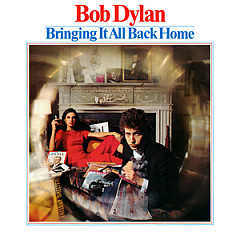
Many folk singers saw the light through Guthrie, but his most notable acolyte was Bob Dylan, who tracked down Guthrie less than a week after moving to New York in 1961. Dylan's tribute tune, "
Song To Woody," was included on his first album in 1962. When Dylan's career erupted a few years later, many fans dug into his back catalog and learned about Guthrie.
On his guitar, he wrote "This Machine Kills Fascists," a reference to authoritarian leaders like Adolf Hitler. In a fascist society, Guthrie wouldn't be allowed to sing his songs; by executing his rights to protest and speak freely, he was advancing American ideals. This didn't stop many from branding him a communist.
His first attempt at a music career was with a band in the 1934 Texas band the Corn Cobb Trio.
Guthrie: "I am out to sing songs that will prove to you that this is your world and that if it has hit you pretty hard and knocked you for a dozen loops, no matter what color, what size you are, how you are built, I am out to sing the songs that make you take pride in yourself and in your work. And the songs that I sing are made up for the most part by all sorts of folks just about like you."
In 1988, he was inducted into the Rock & Roll Hall of Fame, and in 1996, he was honored at the Rock & Roll Hall of Fame American Music Masters Series.
>>
Suggestion credit:
Bertrand - Paris, France, for above 3
Because of his Huntington's, Guthrie spent the last 13 years of his life in institutions. When he checked himself into Brooklyn State Hospital in 1954, his condition wasn't diagnosed and he thought he would get better. He didn't, and when he left in 1956, he ended up homeless, wandering around Morristown, New Jersey, where he was arrested for trespassing. He landed in nearby Greystone Park Psychiatric hospital, which figured out about six months later that his quivering and strange behavior were caused by Huntington's disease. He stayed at Greystone until 1961, when his family moved him back to Brooklyn State Hospital.