Check The Rhime

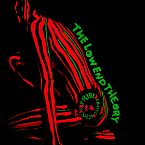
Album: The Low End Theory (1991)
Play Video

Songfacts®:

  • You can identify a Tribe Called Quest fan by asking, "You on point Phife?"

    If the answer is, "All the time Tip," you've found a kindred spirit.

    In the mid-'80s, Phife Dawg and Q-Tip would kick rap routines on Linden Boulevard in Queens as they developed their rhyming skills. "Check The Rhime" is based on one of those routines, with the song looking back on those days with a warm nostalgia. Phife and Q-Tip later teamed with two other guys from the area, MC Jarobi White and DJ Ali Shaheed Muhammad, to form A Tribe Called Quest. White left the group after their debut album, so he doesn't appear on "Check The Rhime."
  • The track for "Check The Rhime" is a stew of '70s samples. The main groove is a sample of "Baby, This Love I Have" by Minnie Riperton (1975). The horn riff comes from "Love Your Life" by the Average White Band (1976), and there's also some bass sampled from "Hydra" by Grover Washington, Jr. (1975).
  • "Check The Rhime" was the first single from A Tribe Called Quest's second album, The Low End Theory. The album came out on September 24, 1991, the same day Nirvana released Nevermind. As consequential as Nevermind was to rock, The Low End Theory was to hip-hop. Songs like "Check The Rhime," "Scenario" and "Jazz (We've Got)" had a focus on friendship, with lots of positive energy. They also used much more eclectic samples than were previously heard in hip-hop, particularly jazz grooves.
  • In Phife Dawg's line, "I slayed in Buddy, El Segundo and Push It Along," he's referring to three other tracks he's featured on. "Buddy" is a 1989 track from De La Soul, who were part of the Native Tongues collective of New York hip-hoppers along with Tribe, Jungle Brothers and Queen Latifah. "I Left My Wallet in El Segundo" and "Push It Along" are both tracks from the first A Tribe Called Quest album, People's Instinctive Travels And The Paths Of Rhythm.
  • In Q-Tip's line, "Got the scrawny legs but I move just like Lou Brock," he's referencing the speed of former St. Louis Cardinals outfielder Lou Brock, who broke Ty Cobb's record for most stolen bases with his 893rd swipe on August 29, 1977. He held the record until Rickey Henderson broke it in 1991.
  • The music video was shot on Linden Boulevard and 192nd Street in Queens, where the song takes place. In 2016, that intersection was renamed "Malik 'Phife Dawg' Taylor Way" in honor of Phife, who died that year at 45 after suffering from kidney problems.

Comments

Be the first to comment...

Editor's Picks

Songs Discussed in Movies

Songs Discussed in MoviesSong Writing

Bridesmaids, Reservoir Dogs, Willy Wonka - just a few of the flicks where characters discuss specific songs, sometimes as a prelude to murder.

Mick Jones of Foreigner

Mick Jones of ForeignerSongwriter Interviews

Foreigner's songwriter/guitarist tells the stories behind the songs "Juke Box Hero," "I Want To Know What Love Is," and many more.

Mark Arm of Mudhoney

Mark Arm of MudhoneySongwriter Interviews

When he was asked to write a song for the Singles soundtrack, Mark thought the Seattle grunge scene was already overblown, so that's what he wrote about.

Stand By Me: The Perfect Song-Movie Combination

Stand By Me: The Perfect Song-Movie CombinationSong Writing

In 1986, a Stephen King novella was made into a movie, with a classic song serving as title, soundtrack and tone.

Victoria Williams

Victoria WilliamsSongwriter Interviews

Despite appearances on Carson, Leno and a Pennebaker film, Williams remains a hidden treasure.

Adam Duritz of Counting Crows

Adam Duritz of Counting CrowsSongwriter Interviews

"Mr. Jones" took on new meaning when the song about a misguided view of fame made Adam famous.