

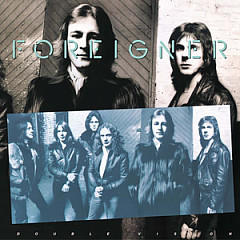
Foreigner got the title for "Double Vision" after watching a hockey game where goalie John Davidson got a concussion. It was announced over the PA system that he was suffering from "Double Vision."

Clarence Clemons, who played the sax in Bruce Springsteen's E Street Band, had the biggest solo hit of anyone in the group - aside from Springsteen - when "You're A Friend Of Mine" (a collaboration with Jackson Browne) hit #18 in 1985.

"I Want It That Way" is the most popular Backstreet Boys song, but the lyric doesn't make much sense. That's because it was written by the hitmaking swedish producers Max Martin and Andreas Carlsson, who were more worried about how it sings than what it means.
Paul McCartney's favorite song that he wrote for someone else is Cilla Black's 1968 UK Top 10 hit "Step Inside Love."
The original "Venus" was a #1 hit for the Dutch band Shocking Blue. Listen to the first line and you'll hear a muffed word: "goddess" was sung as "goddness."
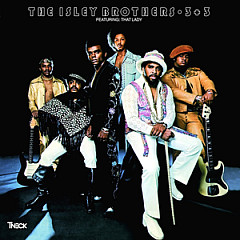
The Isley Brothers' "That Lady" was sampled by Kendrick Lamar for his 2014 single "I." Lamar turned up at Ronald Isley's house to personally ask permission to borrow from the song.
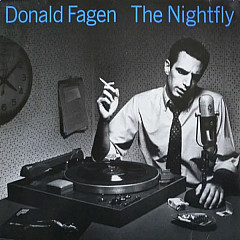
Fagen talks about how the Steely Dan songwriting strategy has changed over the years, and explains why you don't hear many covers of their songs.
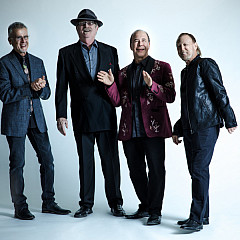
Emilio talks about what it's like to write and perform with the Tower of Power horns, and why every struggling band should have a friend like Huey Lewis.
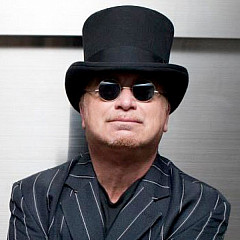
Toto's keyboard player explains the true meaning of "Africa" and talks about working on the Thriller album.
Nirvana, Billy Joel and Bruce Springsteen are among those who wrote songs with cities that show up in this quiz.
Starting in Virginia City, Nevada and rippling out to the Haight-Ashbury, LSD reshaped popular music.

Smith breaks down some of his worship tracks as well as his mainstream hits, including "I Will Be Here For You" and "A Place In This World."