So What'cha Want

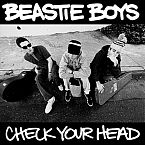
Album: Check Your Head (1992)
Charted: 93
Play Video

Songfacts®:

  • When Beastie Boys made their second album, Paul's Boutique (1989), they went crazy with samples, using loops of grooves from older songs to build their tracks. This was when sampling was lawless, so they weren't worried about clearing them. But when they set out to make their third album, Check Your Head, the whip had come down and samples had to be cleared. They adapted by creating grooves with their own instruments.

    The group actually started in the early '80s as a hardcore band with traditional guitar/bass/drums, but when they signed with Def Jam a few years later they became rappers. They jettisoned their drummer (Kate Schellenbach, a Beastie Girl), used samples for grooves, and hired DJs to play the tracks when they performed. So this was a return to their roots, but they were in a transitional stage when they worked on "So What'cha Want." They started it their old way, sampling a soul track from 1975 called "I've Been Watching You" by Southside Movement. But as they got into it, they decided to try re-creating the bits they wanted from that song with their own instruments - interpolating instead of sampling. The result exceeded their expectations and gave them the freedom to expand on the track, adding lots of musical goodies along the way. It was an exciting new sound that progressed the form of hip-hop.
  • The group used a karaoke microphone to distort their vocals. At the time, most elite rappers had big, powerful voices that might get some reverb, but never distortion. Beastie Boys were in a different, higher vocal range, so this effect suited them well. Years later, another vocal effect became the in-thing in rap: Auto-Tune.
  • The big, bass-y "Yeah... you can't front on that" vocal is the rapper Biz Markie, best known for his 1989 hit "Just A Friend." The Beastie Boys brought him into the studio to record and quickly learned he was not an efficient worker. The Boys and Biz had a great time hanging out, playing basketball, and enjoying libations, but they didn't get much done. Markie would scat out some vocals when inspiration struck, and at some point he did the "Yeah... you can't front on that" line they ended up using here. Beastie Boys also inserted it into another song, "Drunken Praying Mantis Style," used as the B-side to the "Pass The Mic" single.

    You can also hear the Biz on another Check Your Head track called "The Biz vs. The Nuge," a 33-second interlude where he says a few words over a sample of Ted Nugent's "Home Bound."
  • A big part of this song is the organ played by "Money Mark" Nishita, who entered their ambit at an opportune time. Nishita was a friend of their producer, Mario Caldato, and was originally hired to do construction work. When the group started to focus on live instrumentation, they needed a keyboard player, and Nishita had those skills - the Beastie Boys said he was a better musician than any of them. He was also a good fit for their crew, willing to hang around, kick it, and do lots of experimentation on a very loose schedule. His organ on this track was a key complement to Ad-Rock's guitar, MCA's bass, and Mike D's drums.
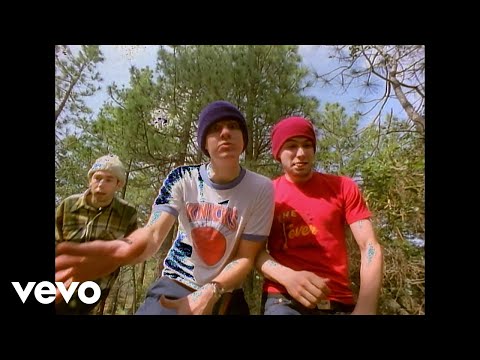
  • Unlike most Beastie Boys songs, this one made the pop chart, landing at #93 in the US when it was released as the second single from the album, following "Pass The Mic." It got a lot of exposure from the music video, which earned airplay on MTV. Like many of their videos, it was directed by Beastie Boy MCA and made on a slim budget. The group usually took to the streets in their videos, honoring their urban (New York City) upbringing, but "So What'cha Want" was mostly shot in the woods with the Boys rapping their parts with time distortion - they either did their lines at double speed and then slowed down the tape, or did them in slow motion and sped it up. Either way, it created a mildly distorted effect to go with a solarized treatment applied to the video - low budget, but effective.
  • Beastie Boys also put out a laid-back remix of "So What'cha Want" made by Cypress Hill's producer, DJ Muggs, and featuring an additional verse by their rapper, B-Real. Cypress Hill was the group's opening act for some shows in November 1992; the groups would perform this song together as an encore.

Comments

Be the first to comment...

Editor's Picks

Gilby Clarke

Gilby ClarkeSongwriter Interviews

The Guns N' Roses rhythm guitarist in the early '90s, Gilby talks about the band's implosion and the side projects it spawned.

Ron and Russell Mael of Sparks

Ron and Russell Mael of SparksSongwriter Interviews

The men of Sparks on their album Hippopotamus, and how Morrissey handled it when they suggested he lighten up.

Sam Hollander

Sam HollanderSongwriter Interviews

The hitmaking songwriter/producer Sam Hollander with stories about songs for Weezer, Panic! At The Disco, Train, Pentatonix, and Fitz And The Tantrums.

Dave Edmunds

Dave EdmundsSongwriter Interviews

A renowned guitarist and rock revivalist, Dave took "I Hear You Knocking" to the top of the UK charts and was the first to record Elvis Costello's "Girls Talk."

Church Lyrics

Church LyricsMusic Quiz

Here is the church, here is the steeple - see if you can identify these lyrics that reference church.

Martin Page

Martin PageSongwriter Interviews

With Bernie Taupin, Martin co-wrote the #1 hits "We Built This City" and "These Dreams." After writing the Pretty Woman song for Go West, he had his own hit with "In the House of Stone and Light."