Ameriican Requiem

Album: Cowboy Carter (2024)
Charted: 30
Play Video

Songfacts®:

  • "Ameriican Requiem" is the opening track of Cowboy Carter, Beyoncé's eighth studio album and the second part of her trilogy project that began with the release of Renaissance. The song declares her intentions with the country-tinged project. While Renaissance explored the forgotten Black and queer roots of house music, Cowboy Carter is a reclamation of country music's Black roots.
  • Beyoncé laces the song with Southern pride, as she did before on the Lemonade track "Formation." She references her family's roots among Alabama moonshiners and Louisiana Creoles. "If that ain't country," Bey drawls, daring you to disagree, "tell me what is?"

    With both subtlety and swagger, Beyoncé positions country music as an offshoot of Black American music, a soulful cousin to gospel and blues. These roots run deep, a shared well of storytelling that's been bubbling away for generations.
  • The lyrics hit hard:

    Used to say I spoke too country
    And the rejection came, said I wasn't country 'nough
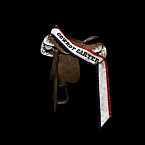
    Said I wouldn't saddle up, but
    If that ain't country, tell me what is?


    Bey is responding to the criticism she faced for her country-tinged song "Daddy Lessons" on her 2016 album Lemonade. This tension came to a head when Beyoncé performed "Daddy Lessons" at the Country Music Association Awards that same year, alongside the group The Chicks (formerly known as Dixie Chicks). While the performance was a critical success and drew record viewership, there was also backlash from some fans who felt Beyoncé didn't belong in the genre.

    "The criticisms I faced when I first entered this genre forced me to propel past the limitations that were put on me," said Beyoncé of Cowboy Carter. "Act ii is a result of challenging myself, and taking my time to bend and blend genres together to create this body of work."
  • Forget neat categories, "Ameriican Requiem" is a genre-bending anthem that amalgamates '70s rock, funk and blues. The first verse sets the tone. Beyoncé's voice dips low, a sultry drawl that oozes Southern confidence. She croons,

    Nothin' really ends
    For things to stay the same they have to change again
    Hello, my old friend
    You change your name, but not the ways you play pretend
    American Requiem
    Them big ideas are buried here
    Amen


    This cryptic message feels like a continuation of the themes explored on Renaissance, particularly the notion of an "un-American life" on the album opener and mission statement "I'm That Girl." Is Beyoncé calling out the music industry for clinging to outdated ideas of genre and ownership?

    As the song progresses, it morphs into a bluesy powerhouse. Beyoncé's trademark layered vocals intertwine with scorching guitar riffs and ambitious arrangements. This is cinematic grandeur, a bold statement that signals Queen Bey is here to claim her space in country music, and she's doing it on her own terms. Deal with it.
  • Beyoncé co-wrote "American Requiem" with her husband Jay-Z, Ink, CamJon Batiste, No I.D., Dan Walsh, DIXSON, Derek Dixie, Raphael Saadiq, Stephen Stills and Tyler Johnson.

    The producers are Beyoncé, Derek Dixie, Jon Batiste, Khirye Tyler, No I.D. & Tyler Johnson.

    Louisiana native Jon Batiste's musical journey began early. By 17, the piano prodigy had already released his debut album, Times In New Orleans. He honed his craft further at the prestigious Juilliard School, where he also formed the dynamic Stay Human band. Their musical chemistry landed them the coveted role of house band on The Late Show With Stephen Colbert in 2015.

    But Batiste's talents extend far beyond late-night television. He's a critically acclaimed artist in his own right. In 2022, his album We Are took home the prestigious Grammy Award for Album Of The Year.

    "When I catch inspiration, the words and chords pour out of me," he wrote of "Ameriican Requiem." "What an honor to then see how brilliantly Beyoncé made them her own and THEN further enhanced the lyrical statement, synthesizing it into the larger body of work."
  • Beyoncé originally planned to drop Cowboy Carter before Renaissance. "This album took over five years," she said of her country project. "It's been really great to have the time and the grace to be able to take my time with it. I was initially going to put Cowboy Carter out first, but with the pandemic, there was too much heaviness in the world. We wanted to dance. We deserved to dance. But I had to trust God's timing."
  • The unusual spelling of "Ameriican Requiem" isn't a typo. It's a deliberate choice that reflects the "Act II" theme of Cowboy Carter. This is just one of several instances on the album where Beyoncé plays with spelling to reference the sequel to Renaissance.

Comments

Be the first to comment...

Editor's Picks

Narada Michael Walden - "Freeway of Love"

Narada Michael Walden - "Freeway of Love"They're Playing My Song

As a songwriter and producer, Narada had hits with Aretha Franklin, Whitney Houston, Mariah Carey and Starship. But what song does he feel had the greatest impact on his career?
David Sancious

David SanciousSongwriter Interviews

Keyboard great David Sancious talks about his work with Sting, Seal, Springsteen, Clapton and Aretha, and explains what quantum physics has to do with making music.
Paul Stanley of Kiss, Soul Station

Paul Stanley of Kiss, Soul StationSongwriter Interviews

Paul Stanley on his soul music project, the Kiss songs with the biggest soul influence, and the non-make-up era of the band.

Strange Magnetics

Strange MagneticsSong Writing

How Bing Crosby, Les Paul, a US Army Signal Corps Officer, and the Nazis helped shape rock and Roll.
Jack Blades of Night Ranger and Damn Yankees

Jack Blades of Night Ranger and Damn YankeesSongwriter Interviews

Revisit the awesome glory of Night Ranger and Damn Yankees: cheesily-acted videos, catchy guitar licks, long hair, and lyrics that are just plain relatable.
The End Of The Rock Era

The End Of The Rock EraSong Writing

There are no more rock stars - the last one died in 1994.