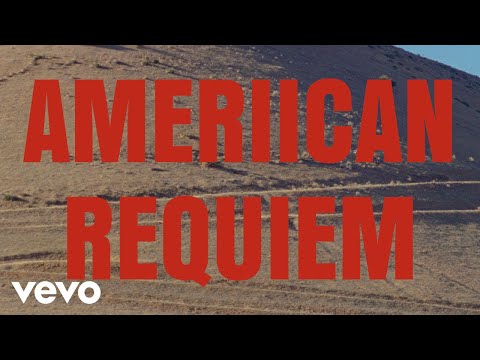
Ameriican Requiem

Album: Cowboy Carter (2024)
Charted: 30
Play Video

Songfacts®:

  • "Ameriican Requiem" is the opening track of Cowboy Carter, Beyoncé's eighth studio album and the second part of her trilogy project that began with the release of Renaissance. The song declares her intentions with the country-tinged project. While Renaissance explored the forgotten Black and queer roots of house music, Cowboy Carter is a reclamation of country music's Black roots.
  • Beyoncé laces the song with Southern pride, as she did before on the Lemonade track "Formation." She references her family's roots among Alabama moonshiners and Louisiana Creoles. "If that ain't country," Bey drawls, daring you to disagree, "tell me what is?"

    With both subtlety and swagger, Beyoncé positions country music as an offshoot of Black American music, a soulful cousin to gospel and blues. These roots run deep, a shared well of storytelling that's been bubbling away for generations.
  • The lyrics hit hard:

    Used to say I spoke too country
    And the rejection came, said I wasn't country 'nough
    Said I wouldn't saddle up, but
    If that ain't country, tell me what is?


    Bey is responding to the criticism she faced for her country-tinged song "Daddy Lessons" on her 2016 album Lemonade. This tension came to a head when Beyoncé performed "Daddy Lessons" at the Country Music Association Awards that same year, alongside the group The Chicks (formerly known as Dixie Chicks). While the performance was a critical success and drew record viewership, there was also backlash from some fans who felt Beyoncé didn't belong in the genre.

    "The criticisms I faced when I first entered this genre forced me to propel past the limitations that were put on me," said Beyoncé of Cowboy Carter. "Act ii is a result of challenging myself, and taking my time to bend and blend genres together to create this body of work."
  • Forget neat categories, "Ameriican Requiem" is a genre-bending anthem that amalgamates '70s rock, funk and blues. The first verse sets the tone. Beyoncé's voice dips low, a sultry drawl that oozes Southern confidence. She croons,

    Nothin' really ends
    For things to stay the same they have to change again
    Hello, my old friend
    You change your name, but not the ways you play pretend
    American Requiem
    Them big ideas are buried here
    Amen


    This cryptic message feels like a continuation of the themes explored on Renaissance, particularly the notion of an "un-American life" on the album opener and mission statement "I'm That Girl." Is Beyoncé calling out the music industry for clinging to outdated ideas of genre and ownership?

    As the song progresses, it morphs into a bluesy powerhouse. Beyoncé's trademark layered vocals intertwine with scorching guitar riffs and ambitious arrangements. This is cinematic grandeur, a bold statement that signals Queen Bey is here to claim her space in country music, and she's doing it on her own terms. Deal with it.
  • Beyoncé co-wrote "American Requiem" with her husband Jay-Z, Ink, CamJon Batiste, No I.D., Dan Walsh, DIXSON, Derek Dixie, Raphael Saadiq, Stephen Stills and Tyler Johnson.

    The producers are Beyoncé, Derek Dixie, Jon Batiste, Khirye Tyler, No I.D. & Tyler Johnson.

    Louisiana native Jon Batiste's musical journey began early. By 17, the piano prodigy had already released his debut album, Times In New Orleans. He honed his craft further at the prestigious Juilliard School, where he also formed the dynamic Stay Human band. Their musical chemistry landed them the coveted role of house band on The Late Show With Stephen Colbert in 2015.

    But Batiste's talents extend far beyond late-night television. He's a critically acclaimed artist in his own right. In 2022, his album We Are took home the prestigious Grammy Award for Album Of The Year.

    "When I catch inspiration, the words and chords pour out of me," he wrote of "Ameriican Requiem." "What an honor to then see how brilliantly Beyoncé made them her own and THEN further enhanced the lyrical statement, synthesizing it into the larger body of work."
  • Beyoncé originally planned to drop Cowboy Carter before Renaissance. "This album took over five years," she said of her country project. "It's been really great to have the time and the grace to be able to take my time with it. I was initially going to put Cowboy Carter out first, but with the pandemic, there was too much heaviness in the world. We wanted to dance. We deserved to dance. But I had to trust God's timing."
  • The unusual spelling of "Ameriican Requiem" isn't a typo. It's a deliberate choice that reflects the "Act II" theme of Cowboy Carter. This is just one of several instances on the album where Beyoncé plays with spelling to reference the sequel to Renaissance.

Comments

Be the first to comment...

Editor's Picks

Album Cover Inspirations

Album Cover InspirationsSong Writing

Some album art was at least "inspired" by others. A look at some very similar covers.

Loreena McKennitt

Loreena McKennittSongwriter Interviews

The Celtic music maker Loreena McKennitt on finding musical inspiration, the "New Age" label, and working on the movie Tinker Bell.

Part of Their World: The Stories and Songs of 13 Disney Princesses

Part of Their World: The Stories and Songs of 13 Disney PrincessesSong Writing

From "Some Day My Prince Will Come" to "Let It Go" - how Disney princess songs (and the women who sing them) have evolved.

Vanessa Carlton

Vanessa CarltonSongwriter Interviews

The "A Thousand Miles" singer on what she thinks of her song being used in White Chicks and how she captured a song from a dream.

Jon Anderson of Yes

Jon Anderson of YesSongwriter Interviews

From the lake in "Roundabout" to Sister Bluebird in "Starship Trooper," Jon Anderson talks about how nature and spirituality play into his lyrics for Yes.

Boz Scaggs

Boz ScaggsSongwriter Interviews

The "Lowdown" and "Lido Shuffle" singer makes a habit of playing with the best in the business.