Spaghettii
by Beyoncé (featuring Shaboozey)

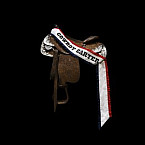
Album: Cowboy Carter (2024)
Charted: 31
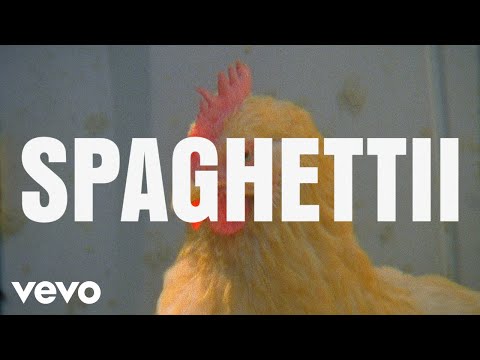
Play Video

Songfacts®:

  • Beyoncé has been sing-rapping since 1990s Destiny's Child songs like "No, No, No Part 2" and "Jumpin' Jumpin'," so did anyone honestly think she'd leave that firebrand persona locked away in the vault for Cowboy Carter? Absolutely not.

    In "Spaghettii," Beyoncé throws down the gauntlet, spitting rhymes like a seasoned gunslinger. She's here to dominate, leaving copycats and clout-chasers in the dust. This is Queen Bey on a mission, mic in hand, ready to drop everything you ever wanted and more. High-noon showdown meets hip-hop hoedown. That's "Spaghettii" in a nutshell.
  • "Spaghettii" is smack dab in the middle of Cowboy Carter. The album is the second part of a trilogy Beyoncé dreamed up during the pandemic, following hot on the heels of Renaissance. The title of the song, "Spaghettii" with those two "i"s, fits into the album's whole "Act II" theme. It's also a nod to those classic Spaghetti Westerns filmed in Italy but set in the American Wild West. Think Clint Eastwood with a side of penne.

    The song thematically complements the preceding track on Cowboy Carter, "Daughter," which finds Bey carrying out a murder fantasy.
  • During the song, Beyoncé bridges the gap between country music's past and a future that throws all the rules out the window. She ropes in country legend Linda Martell at the beginning for a bit of good-natured ribbing about genre labels ("Genres are a funny little concept, aren't they?" Martell chuckles).

    Later, she brings in rising country star Shaboozey, and together they paint themselves as outlaws in the contemporary country scene. It's a playful rebellion, a middle finger to those who try to confine artists to neat little boxes.
  • Linda Martell broke barriers, becoming the first Black woman to achieve commercial success in country music and grace the Grand Ole Opry stage as a solo artist. Her 1970 album Color Me Country was a bold move, a country reinvention after her earlier pop beginnings. It landed her two Top 40 hits, but the road wasn't easy. Martell faced racism and a career-stalling dispute with her producer. She never released another album.

    Martell sees a kindred spirit in Beyoncé's exploration of country music. "I am proud," she says, "and honored to be a part of it. After all, it's Beyoncé!"

    Her appearance on "Spaghettii" is a powerful symbol of progress, a reminder of the challenges Black artists have faced in country music and the doors Beyoncé is helping to open.
  • Shaboozey isn't the only Black artist on Cowboy Carter, but he brings a unique flavor to the album. His stage name, a play on his last name (Chibueze, meaning "God is king" in Igbo), reflects his diverse musical background. Hip-hop blends with the country sounds of his Virginia roots, all seasoned with classic rock influences.
  • Shaboozey appears on another track, "Sweet Honey Buckiin'," and his journey to "Spaghettii" is a testament to the collaborative spirit of the album. He recorded his parts in Los Angeles, unsure if his efforts would feature on the album.

    "Everyone's working at the same time and different rooms and I came in a couple of days and recorded some parts," he told Billboard. "[Beyoncé] heard them later and liked them. It's cool how you don't know until the last moment if your part made it or not. We were waiting up until 9 p.m. PT [on album release day] to know if we made the cut."
  • Beyoncé co-penned the song with Shaboozey, her husband Jay-Z, her frequent songwriting partner The-Dream, and her musical director, Khirye Tyler. The-Dream, who first teamed up with Beyoncé in 2008 for "Single Ladies (Put a Ring on It)," contributed to 11 of the album's 27 tracks; Jay-Z co-wrote six and Tyler worked on seven.
  • Swizz Beatz produced the track with Beyoncé and Tyler. American hip-hop producer-rapper Kasseem "Swizz Beatz" Dean's history with Beyoncé dates back to her 2005 solo single "Check On It." He also produced four tracks for her B'Day album and several for her husband, Jay-Z.
  • Beatz, Beyoncé and Tyler built this country-rap hybrid off a sample of the beat from Brazilian funk artist O Mandrake's "Aquecimento Das Danadas" (with DJ Xaropinho). Because why not? In the world of Beyoncé, anything goes. Genres are indeed a funny little concept.
  • Fun fact: In September 1969, Linda Martell's groundbreaking single "Color Him Father" cracked the Country chart at #22. Remarkably, it held the distinction of being the highest-ranking song by a Black woman on that very chart for over five decades, until Beyoncé's "Texas Hold 'Em" rode to #1 in February 2024.

Comments

Be the first to comment...

Editor's Picks

Bob Daisley

Bob DaisleySongwriter Interviews

Bob was the bass player and lyricist for the first two Ozzy Osbourne albums. Here's how he wrote songs like "Crazy Train" and "Mr. Crowley" with Ozzy and Randy Rhoads.

Krishna Das

Krishna DasSongwriter Interviews

The top chant artist in the Western world, Krishna Das talks about how these Hindu mantras compare to Christian worship songs.

Bill Medley of The Righteous Brothers

Bill Medley of The Righteous BrothersSongwriter Interviews

Medley looks back on "Unchained Melody" and "You've Lost That Lovin' Feelin'" - his huge hits from the '60s that were later revived in movies.

"Private Eyes" - The Story Behind the Song

"Private Eyes" - The Story Behind the SongSong Writing

How a goofy detective movie, a disenchanted director and an unlikely songwriter led to one of the biggest hits in pop history.

Howard Jones

Howard JonesSongwriter Interviews

Howard explains his positive songwriting method and how uplifting songs can carry a deeper message.

John Kay of Steppenwolf

John Kay of SteppenwolfSongwriter Interviews

Steppenwolf frontman John Kay talks about "Magic Carpet Ride," "Born To Be Wild," and what he values more than awards and accolades.