Loverboy

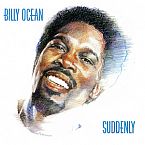
Album: Suddenly (1984)
Charted: 15 2
Play Video

Songfacts®:

  • "Loverboy" was the follow-up to Billy Ocean's smash hit "Caribbean Queen (No More Love On The Run)." It's a similar storyline, with Ocean smitten by an alluring woman and ready to commit - he wants to be her only loverboy. And as in "Caribbean Queen," the drum machines and soul groove are there, but "Loverboy" has a more prominent guitar riff and a synthesizer solo instead of the saxophone.
  • Billy Ocean wrote this song with his producer Keith Diamond and with Mutt Lange, who produced AC/DC's Back In Black, Foreigner's 4, and Def Leppard's Pyromania. If his name was on a track, there was a good chance it would be a hit. That memorable chorus where Ocean sings, "Lover... lover... loverboy" was likely his doing.

    And here's a connection for you: A year later, the group Loverboy had a hit with "Lovin' Every Minute of It," written by Lange. So he had a hit called "Loverboy" and a hit with Loverboy.
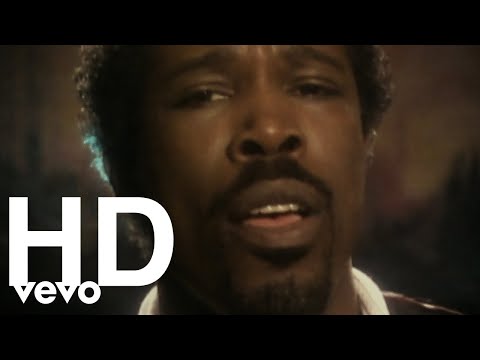
  • The music video, directed by Maurice Phillips, is clearly based on the Mos Eisley Cantina scene in Star Wars. We see a similar motley collection of aliens, including a woman who gets swept away by a mysterious creature who comes in on horseback. In Ocean's scenes, he looks very Lando.

    It clearly cost a lot to make the video, which also used cutting-edge special effects. It got some airplay on MTV but not as much as you might think, considering the production value. There was a lot of competition around this time from the likes of Madonna, Prince and Van Halen, who were all making very memorable videos and were far more famous than Ocean, especially in America.
  • Billy Ocean was on his second wind at this time. He was born in Trinidad but made his mark in London, where he started recording in the early '70s as Les Charles, his real name. When he signed with GTO records and changed his name to Billy Ocean, he had a hit with the 1976 single "Love Really Hurts Without You." More UK hits followed but he fell off the radar in America until "Caribbean Queen," a song that was originally released in Europe as "European Queen." "Caribbean Queen" went to #1 in America and Ocean used it as a launching pad for more hits, starting with "Loverboy" and then "Suddenly." In 1985 he was tapped for the theme song to the movie The Jewel Of The Nile, "When The Going Gets Tough, The Tough Get Going." His next single was "There'll Be Sad Songs (To Make You Cry)," which gave him his second #1 in the US. He landed his third with "Get Outta My Dreams, Get Into My Car" in 1988, which like "Loverboy" was also co-written by Mutt Lange.
  • The title was very popular in the mid-'80s. Shor Patrol had a hit with their "Loverboy" in 1983, and Karen Kamon in 1984, the same year Teena Marie released "Lovergirl." The title went dormant until 2001 when Mariah Carey released her "Loverboy."

Comments

Be the first to comment...

Editor's Picks

Michael Glabicki of Rusted Root

Michael Glabicki of Rusted RootSongwriter Interviews

Michael tells the story of "Send Me On My Way," and explains why some of the words in the song don't have a literal meaning.

Colbie Caillat

Colbie CaillatSongwriter Interviews

Since emerging from MySpace with her hit "Bubbly," Colbie has become a top songwriter, even crafting a hit with Taylor Swift.

Eric Burdon

Eric BurdonSongwriter Interviews

The renown rock singer talks about "The House of the Rising Sun" and "Don't Let Me Be Misunderstood."

Michael Schenker

Michael SchenkerSongwriter Interviews

The Scorpions and UFO guitarist is also a very prolific songwriter - he explains how he writes with his various groups, and why he was so keen to get out of Germany and into England.

John Waite

John WaiteSongwriter Interviews

"Missing You" was a spontaneous outpouring of emotion triggered by a phone call. John tells that story and explains what MTV meant to his career.

Barney Hoskyns Explores The Forgotten History Of Woodstock, New York

Barney Hoskyns Explores The Forgotten History Of Woodstock, New YorkSong Writing

Our chat with Barney Hoskyns, who covers the wild years of Woodstock - the town, not the festival - in his book Small Town Talk.