Six Pack

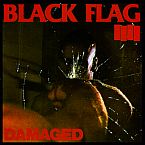
Album: Damaged (1981)
Play Video

Songfacts®:

  • This song is about a guy who spends his time drinking six-packs of beer, and, well, doing very little else: "Thirty-five dollars and a six pack to my name/Six-pack!/Spent the rest on beer so who's to blame/Six-pack!"
  • Rumor has it this song is about Keith Morris, who fronted Black Flag between 1976 and 1979. Morris admitted that his drinking caused a tension between him and the rest of the band: "Whenever there would be arguments, everyone would be pointing their finger at me, and it would be my fault. Like, if we weren't learning new songs fast enough, it was my fault. Coming to rehearsal after having drunk a six-pack of beer, maybe having snorted a couple lines of coke, that would be my fault. They made me feel like I was the cement shoes attached to their feet." Morris was replaced by Ron Reynes, who was then replaced by Dez Cadena, who was then replaced by Henry Rollins in 1981. Rollins remained front man until Black Flag's dissolution in 1986.

    Despite the mocking tone of "Six Pack", Morris revealed to The Quietus that he has no beef with Rollins, in fact, he is a big fan: "I've got the utmost respect for the man; I don't have a bad word to say about him. I'm one of the administrators of the Black Flag Facebook page. So if they start talking sh*t about Henry I'll put them in their place, I have no problem doing that. Because Henry went out and did the work. Henry busted his ass. Henry was in the van, Henry slept in cardboard boxes, in a metal shed behind the Ginns' house, Henry slept under a desk at the SST offices at Redondo Beach, Henry would've got $5 a day while they were out on the road, Henry scrounched around for whatever food he could get or whoever's floor he could sleep on that night when they were out on tour. So anybody that has any bad words about Henry, 'Oh, he's an asshole, he's a fag because he lifts weights and he hangs around a bunch of guys', that's all a bunch of bullsh*t. I'm here to shoot that down. And I won't shoot it down with a bullet; I'll shoot it down with a nuclear weapon. Hank's a straight up, no-bullsh*t guy. As for a vocalist, he is my favourite Black Flag vocalist… after Dez, who I like more than Ron. Now Ron's a better vocalist than I am. I'm a better vocalist than Dez but I'm not as good as Henry, Henry's better than Ron and Ron is better than me and Dez is better than me. Do you get a sense of where I'm going with this?"
  • This song features on Black Flag's debut studio album, Damaged. The president of MCA Records, Al Bergamo, refused to distribute the album, labeling it "anti-parent" with "no redeeming social values." Black Flag consequently decided to throw Bergamo's words back into his face, and issued early copies of Damaged with a sticker stating "As A Parent...I Found It An Anti-Parent Record" stuck on the back of the jacket, as to cover up the MCA logo.

Comments: 2

  • Sixpack from Hermosa Beachbeing a badass and being a douche are not mutually exclusive
  • Will from SlapthisdownAstounding story.
see more comments

Editor's Picks

Ian Astbury of The Cult

Ian Astbury of The CultSongwriter Interviews

The Cult frontman tells who the "Fire Woman" is, and talks about performing with the new version of The Doors.

Jimmy Webb

Jimmy WebbSongwriter Interviews

Webb talks about his classic songs "By the Time I Get to Phoenix," "Wichita Lineman" and "MacArthur Park."

Vince Clarke

Vince ClarkeSongwriter Interviews

An original member of Depeche Mode, Vince went on to form Erasure and Yaz.

Julian Lennon

Julian LennonSongwriter Interviews

Julian tells the stories behind his hits "Valotte" and "Too Late for Goodbyes," and fills us in on his many non-musical pursuits. Also: what MTV meant to his career.

Rush: Album by Album - A Conversation With Martin Popoff

Rush: Album by Album - A Conversation With Martin PopoffSong Writing

A talk with Martin Popoff about his latest book on Rush and how he assessed the thousands of albums he reviewed.

Justin Hayward of The Moody Blues

Justin Hayward of The Moody BluesSongwriter Interviews

Justin wrote the classic "Nights In White Satin," but his fondest musical memories are from a different decade.