It Ain't Me Babe

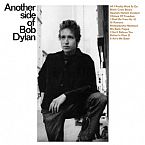
Album: Another Side of Bob Dylan (1964)
Play Video

Songfacts®:

  • "It Ain't Me Babe" appears as the last track on Side 2 of Dylan's fourth studio album, Another Side of Bob Dylan. This was the legendary album which Dylan recorded in a single all-night studio session, aided by "a couple of bottles of Beaujolais." The last master take was in the can by 1:30 a.m.
  • According to legend, the opening line "Go away from my window..." is a shout-out to fellow folk-singer John Jacob Niles' song "Go 'Way From My Window" - Dylan cited Niles as an early influence.

    Also the refrain "no, no, no, it ain't me babe" is a call-back to the Beatles' "she loves you, yeah, yeah, yeah," as heard on their song "She Loves You."
  • This was one of the songs given an electric arrangement by Dylan when he started the electric guitar concerts in 1965.
  • Longtime mutual admirer Johnny Cash covered this song with Dylan's blessings for his album Orange Blossom Special. Joan Baez, Peter, Paul and Mary, Johnny Thunders, and The Turtles also covered it, with The Turtles' version reaching #8 on the US singles charts.
  • The lyrics for Another Side of Bob Dylan were an outgrowth of his attempt to publish a book of poetry at the time. The book didn't take yet, but Dylan benefited from the mental exercise nonetheless. This was also a year after the Kennedy assassination - can you hear a more intense soulfulness to the lyrics? Especially with songs such as "Chimes of Freedom," Dylan scholar Clinton Heylin would note that Dylan had been reborn as a poet of the road.

Comments: 8

  • Utter from LondonTo me, he's clearly calling out/saying no to a person with narcissistic relationship expections (tho ones that often presented/misconstrued as 'traditional romantic). 'Babe's' expectations reveal that she wants her lover to be nothing more than a cipher. Others are objects for her use - aggrandisement, protection etc - no matter if it requires them to betreray themselves, have no views of their own, even die. Classic narcissitic expectation.
  • Arlie from Ny NyThere is also a song written by John Jacob Niles that begins this way, sung by Joan Baez. It was written in 1946, or rather transcribed then, if I'm thinking that might be right. Anyway, it begins "Go way from my window, go way from my door." That's where I'm pretty sure he got the phrasing.
  • Gerry ODuring the early 60s, due to “protest” songs like Blowing in the Wind, Dylan was proclaimed in the media as the voice of his generation. This is something he was very uncomfortable with. But due to this label that was given to him, it was expected in certain circles that he would show up at demonstrations around the country in support of causes like the civil rights and anti war movements, much in the way other folk acts were doing (Pete Seeger, Joan Baez, Peter Paul and Mary). First and foremost, Dylan considered himself to be an artist and performer, not an activist, and he began to resent people in the different movements and media who were defining who he was and putting pressure on him to participate in activities and organizations that he wasn’t comfortable with. This song was an answer to them. He wanted people to know that he wasn’t going to allow them to define who he was, and he wanted them to know that he wasn’t going to be pressured into joining them.
  • Liz from NyI believe it is about how if we have these needs we must find these within ourself and not seek them out through a relationship. That relationship could be with a partner or even a parent/child relationship.
  • Guy Murray from LondonI feel like it’s a song about non attachment and learning to unconditionally love. Reflecting back to people (man or women) that if you NEED this person, to close their heart, to always pick you up when you fall down, to be picking wild flowers, then you are not living life as an individual selflessly. It’s not saying that I’m leaving you- just that within me I am the rock, I do not need anyone else and that you do not either. Instead we learn to do things for ourselves and shine brighter next to one another in this way.
    This was after a serious trip on LSD.
  • Eustace Fril from New YorkThis song is clearly an antiwar song! it is addressed to the American flag, and refers to the war in Vietnam. See full analysis at http://emf.neocities.org/bd/itaintmebabe.html
  • Jebber from Sudbury, OnI too am surprised there aren't many comments, I guess it's about what this song means to the listener?

    To me it's about a relationship that despite the feelings involved simply didn't work, and both were bound to be hurt either way, regardless of the feelings... Whatever it is the song is powerful and only Bob himself would have to tell us the true meaning.
  • David from Woburn, MaHow are there no comments yet?

    This is one of my favorite Dylan songs, particularly the live version off Bootleg Vol. 6 when he sings a duet with Joan Baez. Definitely one of the more intricate and imaginative ways to sing about infidelity.
see more comments

Editor's Picks

Donnie Iris (Ah! Leah!, The Rapper)

Donnie Iris (Ah! Leah!, The Rapper)Songwriter Interviews

Before "Rap" was a form of music, it was something guys did to pick up girls in nightclubs. Donnie talks about "The Rapper" and reveals the identity of Leah.

Bass Player Scott Edwards

Bass Player Scott EdwardsSong Writing

Scott was Stevie Wonder's bass player before becoming a top session player. Hits he played on include "I Will Survive," "Being With You" and "Sara Smile."

Chris Fehn of Slipknot

Chris Fehn of SlipknotSongwriter Interviews

A drummer for one of the most successful metal bands of the last decade, Chris talks about what it's like writing and performing with Slipknot. Metal-neck is a factor.

Carol Kaye

Carol KayeSongwriter Interviews

A top session musician, Carol played on hundreds of hits by The Beach Boys, The Monkees, Frank Sinatra and many others.

James Bond Theme Songs

James Bond Theme SongsMusic Quiz

How well do you know the 007 theme songs?

Annie Haslam of Renaissance

Annie Haslam of RenaissanceSongwriter Interviews

The 5-octave voice of the classical rock band Renaissance, Annie is big on creative expression. In this talk, she covers Roy Wood, the history of the band, and where all the money went in the '70s.