Last Thoughts on Woody Guthrie

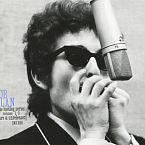
Album: The Bootleg Series Volumes 1-3 (Rare & Unreleased) 1961-1991 (1963)
Play Video

Songfacts®:

  • This is a poem that Dylan recited in the form of a monologue on April 12, 1963 at the end of his first major concert, which took place at The Town Hall in New York City. Woody Guthrie was a huge influence on Dylan; the two met in 1961 when Guthrie was suffering from Huntington's disease (Guthrie died in 1967). Dylan's poem shows a great deal of emotional turmoil, and he ends it by making a comparison of Woody with going to church, stating that in some way he has found peace in the "Grand Canyon. Sundown." >>>
    Suggestion credit:
    Gregg - Southampton, United Kingdom
  • Before reciting the poem, Dylan said: "There's this book coming out and they asked me to write something about Woody. Sorta like "What does Woody Guthrie Mean to You" in 25 words. And I couldn't do it, I wrote out five pages and... I have it here... I have it here by accident, actually. But I'd like to say this out loud. So, if you could sorta roll along with this thing here, this is called Last Thoughts on Woody Guthrie."
  • Dylan's penchant for borrowing lines from other people's lyrics and books may be at work in this song. In discussing his own music, Woody Guthrie once said, "I hate a song that makes you think that you are not any good. I hate a song that makes you think that you are just born to lose. Bound to lose. No good to nobody. No good for nothing. Because you are too old or too young or too fat or too slim too ugly or too this or too that. Songs that run you down or poke fun at you on account of your bad luck or hard traveling."

    The second-to-last line in that quote is nearly the same as the second line in "Last Thoughts on Woody Guthrie," which goes, "When you think you're too old, too young, too smart or too dumb."

    This would appear to be nothing more than coincidence, except that "Last Thoughts on Woody Guthrie" is essentially one long note of encouragement for listeners who may be feeling beaten down by life, which is precisely what Guthrie was talking about. Dylan has been long been known to take other people's songs and words as his own. His critics have accused him of being a plagiarist, but Dylan himself has long stated that he is simply continuing an old folk tradition.

    "It's called tradition, and that's what I deal in. Tradition with a capital T," Dylan told Rolling Stone when asked about those who've accused him of artistic theft. "And if you think it's so easy to quote him [in this case referring to Civil War poet Henry Timrod] and it can help your work, do it yourself and see how far you get. Wussies and pu--ies complain about that stuff. It's an old thing – it's part of the tradition. It goes way back."
  • The poem mentions Brooklyn State Hospital because that's where Woody Guthrie was hospitalized in 1963 when Dylan wrote and performed this piece. Guthrie was there from 1961 to 1966.
  • The line "you need a Greyhound bus that don't bar no race" is a direct reference to racial segregation and perhaps a nod to Rosa Parks.
  • The poem assures us that, "And Uncle Remus can't tell you and neither can Santa Claus." Uncle Remus was a fictional character first created by Joel Chandler Harris in 1881 for a collection of African-American folktales. All in all, Harris went on to produce seven Uncle Remus books. Br'er Rabbit was the main character for these books, while Remus narrated them.

    Uncle Remus is central to the 1946 Disney movie Song of the South.

Comments: 1

  • Jeff from Lacey, WashingtonAnytime I get the existential doldrums and I start to feel like there's nothing good left, I listed to this poem. It's one of the finest things Dylan ever created.
see more comments

Editor's Picks

Gavin Rossdale On Lyric Inspirations and Bush's Album The Kingdom

Gavin Rossdale On Lyric Inspirations and Bush's Album The KingdomSongwriter Interviews

The Bush frontman on where he finds inspiration for lyrics, if his "machine head" is a guitar tuner, and the stories behind songs from the album The Kingdom.

Phil Hurtt ("I'll Be Around")

Phil Hurtt ("I'll Be Around")Songwriter Interviews

Phil was a songwriter, producer and voice behind many Philadelphia soul classics. When disco hit, he got an interesting project: The Village People.

Brian Kehew: The Man Behind The Remasters

Brian Kehew: The Man Behind The RemastersSong Writing

Brian has unearthed outtakes by Fleetwood Mac, Aretha Franklin, Elvis Costello and hundreds of other artists for reissues. Here's how he does it.

Reverend Horton Heat

Reverend Horton HeatSongwriter Interviews

The Reverend rants on psychobilly and the egghead academics he bashes in one of his more popular songs.

British Invasion

British InvasionFact or Fiction

Go beyond The Beatles to see what you know about the British Invasion.

Chris Rea

Chris ReaSongwriter Interviews

It took him seven years to recover from his American hit "Fool (If You Think It's Over)," but Chris Rea became one of the top singer-songwriters in his native UK.