
I Can Change

Album: The Desired Effect (2015)
Charted: 52
Play Video

Songfacts®:

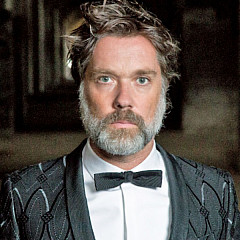
  • Over Ariel Rechtshaid's driving, uptempo production, this electro tune finds Brandon Flowers imploring a former lover that he can change to be the man she wants.
  • The song samples Bronski Beat's 1984 hit "Smalltown Boy." The band's lead singer, Jimmy Sommerville, told NME: "I received the demo to ask for my permission, listened to it and thought, 'Yeah, this is great, this man gets it. The vocal on there is almost like a cry.'"

    "Smalltown Boy was part of my political and sexual coming-of-age in the '80s," he continued. "The youth culture explosion in the '80s was intense - sexual politics, fashion, music, art, technology, heavy guitars combined with synths - and it was exported from the UK to the USA. If you were a kid at the time, like Brandon, it must have looked like the world was on fire."
  • This employs a cameo from Neil Tennant in the form of a spoken voicemail message. Flowers told Billboard magazine that getting the Pet Shop Boys frontman involved took a matter of seconds. "I'm a big Pet Shop Boys fan, and Ariel [Rechtshaid]'s a big Pet Shop Boys fan," explained the singer. "We just talked about it, and we just had this gap in a verse and we needed to stick something in there. We were talking about it being a speaking part, and the greatest musical 'speaker' is Neil Tennant! His voice is like no other."

    "I texted him if he would - he didn't even hear the song or the tempo or anything, I just texted him this line. I asked, 'Will you send us a voicemail of yourself saying, 'When you're looking for a change'?' And that was it," Flowers added. "He sent us a voice memo, and we stuck it onto the track, from the phone. It was done within 20 seconds."
  • The song came from Flowers' record company pushing him to do an appearance on a DJ song. Artists like Calvin Harris, David Guetta and Avicii all sent The Killers' frontman tunes, but he just couldn't sing them. So they asked Flowers what he would like and his answer was something like "Smalltown Boy."
  • Brandon Flowers told The Sun that getting Jimmy Sommerville to clear the sample was a tricky feat. "He was hard to get hold of which gave us a bit of a panic at the time," The Killers frontman said. "We just could not track him down. I'd had that song kicking around and it originally had a similar progression to 'Smalltown Boy' - but instead of putting my generic sound on it, I started messing around with the sampling and singing over it."

    "I don't think I would have used the sample if it wasn't for Ariel, he is more used to using samples," Flowers added. "So the song was getting better and better and then we finally got clearance, which was great."
  • The live music video was directed by Giorgio Testi, who previously helmed The Killers' "Miss Atomic Bomb" clip. The visual was recorded during Flowers' May 2015 solo shows at London's Brixton Academy.

Comments

Be the first to comment...

Editor's Picks

Jim McCarty of The Yardbirds

Jim McCarty of The YardbirdsSongwriter Interviews

The Yardbirds drummer explains how they created their sound and talks about working with their famous guitarists.

Daryl Hall

Daryl HallSongwriter Interviews

Daryl Hall's TV show is a hit, and he's been inducted into the Rock and Roll Hall of Fame - only one of these developments excites him.

Chris Robinson of The Black Crowes

Chris Robinson of The Black CrowesSongwriter Interviews

"Great songwriters don't necessarily have hit songs," says Chris. He's written a bunch, but his fans are more interested in the intricate jams.

Graham Parker

Graham ParkerSongwriter Interviews

When Judd Apatow needed under-appreciated rockers for his Knocked Up sequel, he immediately thought of Parker, who just happened to be getting his band The Rumour back together.

Sarah Brightman

Sarah BrightmanSongwriter Interviews

One of the most popular classical vocalists in the land is lining up a trip to space, which is the inspiration for many of her songs.

David Gray

David GraySongwriter Interviews

David Gray explains the significance of the word "Babylon," and talks about how songs are a form of active imagination, with lyrics that reveal what's inside us.