Kingdom Of Fear

Album: Deep Water (2026)
Charted: 94
Play Video

Songfacts®:

  • "Kingdom of Fear" is a song about the gap between the public face ("I'll say I'm great") and the inner reality ("under my skin, I'm not okay"). Cameron Whitcomb refuses to reach out when he's hurting, not out of indifference but out of guilt and the fear of being a burden.
  • The title nods to Hunter S. Thompson, specifically his 2003 book Kingdom of Fear: Loathsome Secrets of a Star-Crossed Child in the Final Days of the American Century. Whitcomb uses Thompson's phrase to evoke an internal psychological landscape rather than a physical one: the singer's mind as a kingdom governed by fear, where every interaction becomes a performance of wellness.
  • Cameron Whitcomb wrote "Kingdom of Fear" at his home in Nanaimo on Vancouver Island alongside his producer Jack Riley and Nolan Sipe, before finishing the track in Nashville with Cal Shapiro.

    Cal Shapiro (also known professionally as CAL) is a Los Angeles-based songwriter, producer, and vocalist, who is one of Alex Warren's most trusted creative collaborators. He co-wrote Warren's 2025 worldwide breakout hit "Ordinary" and has been a key part of Warren's songwriting circle as his profile has risen. Beyond his work with Warren, Shapiro co-founded the electronic pop-rap duo Timeflies with Rob Resnick while the pair were students at Tufts University, scoring hits including "Once in a While" and "All the Way."

    Nolan Sipe is a Los Angeles-based record producer, composer, and engineer, and co-founder of Drive Music. His credits include Andy Grammer's "Honey, I'm Good," Parmalee and Blanco Brown's "Just The Way," Benson Boone's "Ghost Town" and Mimi Webb's "Ghost Of You." He is a returning Whitcomb collaborator, having also co-written "Quitter" from Whitcomb's debut album The Hard Way, which was certified platinum in Canada.

    Jack Riley (full name John Bookhout Riley) is a Los Angeles-based freelance music producer, songwriter, mix engineer, and multi-instrumentalist, and a Brown University graduate. He produced much of The Hard Way.
  • Jack Riley also produced "Kingdom of Fear." His use of cello rather than conventional country instrumentation is a notable sonic choice, reinforcing the song's cold, minor-key emotional atmosphere.
  • "Kingdom of Fear" is track 4 on the five-track Deep Water EP, released April 17, 2026. Whitcomb wrote and released Deep Water during a period of creative renaissance after nearly quitting music entirely following his debut album, The Hard Way.

    "It became a job... I was almost ready to quit music because of how stressed out I was," he told People. "It spiraled into this brutal depression where I was like, 'I'm literally going to just make as much money as I can and then I'm going to take off.'"

    He approached Deep Water with deliberate looseness: "I really just wanted to put out some music that I'd been working on and that I'm proud of... I became an artist again."
  • Country Central frames the EP as "a tragic love story told in five parts." In that arc, "Kingdom of Fear" is the turning point where warmth drains away and the relationship begins to collapse under the narrator's emotional defenses, leading into the closing track, "Crying On The Inside," which continues the theme of performed wellness.

    Whitcomb described the EP more loosely: "There's not one underlying tone... I just wanted to just write some songs and throw them on a project and put them out."
  • Whitcomb was reading Hunter S. Thompson's book at the time. "It had nothing to do with the song, but I thought the title of the book, 'Kingdom of Fear,' was just a cool title," Whitcomb told Billboard. "We all kind of live in a kingdom of fear, whether it's struggling with anxiety, depression, or any of that. Sometimes it feels like a constant, overwhelming presence. That's how I pictured it."
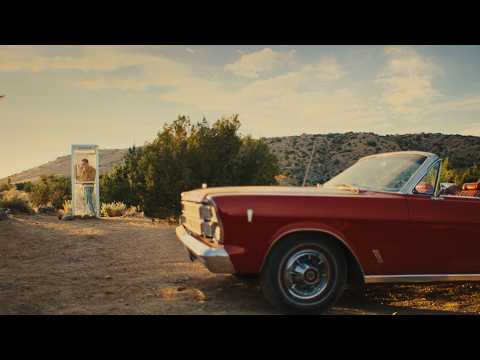
  • The music video follows Whitcomb through what might easily be described as the worst day imaginable. What starts as a simple road trip quickly goes spectacularly wrong. The resulting chaos includes a gas station robbery, leaving Whitcomb trapped in an increasingly bizarre series of unfortunate events. Throughout the clip, a deliberate contrast emerges between the escalating disasters on screen and Whitcomb's relatively calm presence. It captures the song's underlying message that even when everything around you is falling apart, you still have to keep moving forward.

Comments

Be the first to comment...

Editor's Picks

John Lee Hooker

John Lee HookerSongwriter Interviews

Into the vaults for Bruce Pollock's 1984 conversation with the esteemed bluesman. Hooker talks about transforming a Tony Bennett classic and why you don't have to be sad and lonely to write the blues.

Krishna Das

Krishna DasSongwriter Interviews

The top chant artist in the Western world, Krishna Das talks about how these Hindu mantras compare to Christian worship songs.

Songs About Movies

Songs About MoviesSong Writing

Iron Maiden, Adele, Toto, Eminem and Earth, Wind & Fire are just some of the artists with songs directly inspired by movies - and not always good ones.

Donnie Iris (Ah! Leah!, The Rapper)

Donnie Iris (Ah! Leah!, The Rapper)Songwriter Interviews

Before "Rap" was a form of music, it was something guys did to pick up girls in nightclubs. Donnie talks about "The Rapper" and reveals the identity of Leah.

Eagles Lyrics Quiz

Eagles Lyrics QuizMusic Quiz

Lots of life lessons in these Eagles lyrics - can you match them to the correct song?

Which Restaurants Are Most Mentioned In Song Lyrics?

Which Restaurants Are Most Mentioned In Song Lyrics?Song Writing

Katy Perry mentions McDonald's, Beyoncé calls out Red Lobster, and Supertramp shouts out Taco Bell - we found the 10 restaurants most often mentioned in songs.