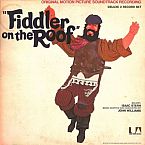
Album: Fiddler on the Roof (1964)
Play Video

Songfacts®:

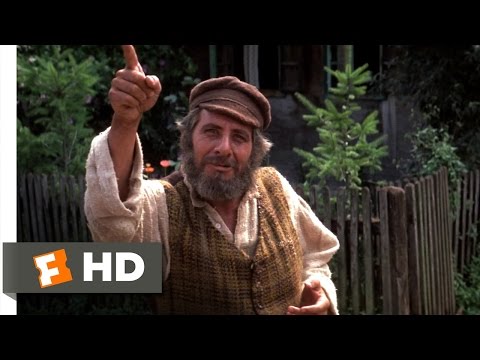
  • The opening number to the 1964 Broadway smash Fiddler on the Roof introduces the main theme of the movie: tradition. In pre-Revolutionary Russia, the growing anti-Jewish sentiment casts a dark cloud over the Jewish village Anatevka where the protagonist Tevye lives with his wife and daughters. The villagers cling to their customs, including the traditional roles of a husband who works outside the home, a wife who oversees the household, and children who follow in their parents' footsteps until a spouse is chosen for them. But Tevye begins to realize that the outside world has different ideas.
  • Composer Jerry Bock and lyricist Sheldon Harnick wrote a different song for the introduction, a lively number called "We've Never Missed A Sabbath Yet," which had Tevye's wife and daughters scrambling to prepare for the coming Sabbath. Director Jerome Robbins, however, wanted the duo to write a song that cut to the core of the story. Harnick explained to NPR Fresh Air host Terry Gross:

    "We had many, many meetings before we went on to rehearsal and at each meeting he started with the same question, what is this show about? And he would say there's something that gives this show its power and we don't know what it is. And finally at one of those meetings one of us said hey, you know what this show is about? It's about this changing of the way of life, of a people, in these Eastern European communities, these little towns, these shtetls, and Robbins got very excited by that. He said if that's the case, then what you have to write is a number about traditions, because we're going to see those traditions change. And that's so important in the show. Every scene or every other scene will be about whether a tradition changes or whether a tradition remains the same. So instead of a song with the mother and the daughters getting ready for the Sabbath, he wanted us to write a song about tradition because he thought that's what the show was really about."

    "We've Never Missed A Sabbath Yet" was cut from the musical, but was included on Harnick's album Sheldon Harnick: Hidden Treasures, 1949-2013.
  • For the 2015 Broadway revival, director Bartlett Sher included a framing device as a nod to the global refugee crisis. Before transforming into Tevye and launching into "Tradition" with the rest of the cast, actor Danny Burstein takes the stage wearing modern clothing to deliver the prologue. At the end, he emerges wearing the same modern clothing and exits with the rest of the villagers who are being forced out of their community.

    "You see him enter the line of refugees, making sure we place ourselves in the line of refugees, as it reflects our past and affects our present," Sher explained to the New York Times. "I'm not trying to make a statement about it, but art can help us imagine it, and I would love it if families left the theater debating it."

Comments

Be the first to comment...

Editor's Picks

Martin Page

Martin PageSongwriter Interviews

With Bernie Taupin, Martin co-wrote the #1 hits "We Built This City" and "These Dreams." After writing the Pretty Woman song for Go West, he had his own hit with "In the House of Stone and Light."

Album Cover Inspirations

Album Cover InspirationsSong Writing

Some album art was at least "inspired" by others. A look at some very similar covers.

Vince Clarke

Vince ClarkeSongwriter Interviews

An original member of Depeche Mode, Vince went on to form Erasure and Yaz.

James Bond Theme Songs

James Bond Theme SongsMusic Quiz

How well do you know the 007 theme songs?

Tony Joe White

Tony Joe WhiteSongwriter Interviews

The writer of "Rainy Night in Georgia" and "Polk Salad Annie" explains how he cooks up his Louisiana swamp rock.

Little Richard

Little RichardFact or Fiction

Was Long Tall Sally a cross-dresser? Did he really set his piano on fire? See if you know the real stories about one of rock's greatest innovators.