
You've Got A Habit Of Leaving

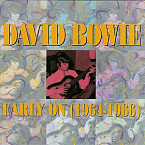
Album: Early On (1964-1966) (1965)
Play Video

Songfacts®:

  • This song is about a woman who keeps leaving David Bowie (then calling himself by his birth name, Davy Jones), just as the title implies. Sung from Bowie's perspective, it's a 2:31-long sensitive, almost whiny, complaint about the woman's penchant for bailing on him.
  • The song strongly represents the mod-music sound then popular in the UK. Mods - mostly teens and 20-somethings - cruised around on scooters, wore long hair, did some drugs, and occasionally brawled in the streets (you can see them in fictionalized glory in The Who film Quadrophenia). Their name stemmed from "modernist," a label they carried due to their appreciation of bebop (aka modern jazz).

    Mods were something like a cross between the beatniks and the hippies. Of course, to actually be a mod was something very different from looking at mods from the outside. Their rebellion was substantive for the true faithful, even though the movement was later diluted and cheapened by corporate moves to cash in on it (again much like the American hippies).

    The mod-music sound is hard to describe but is easy to recognize. The Who, The Kinks, and some early Rolling Stones songs are good representatives of it.
  • "You've Got A Habit Of Leaving" is the last song Bowie released under the name Davy Jones, which is from his birth name David Jones and also happened to be identical to the name of one of The Monkees. After this song, Bowie recorded as David Bowie.
  • This was the first single Bowie released with a band named The Lower Third, which he'd joined after departing from a group named The Manish Boys. The second and final single The Lower Third did was "Can't Help Thinking About Me."

    In addition to Bowie, The Lower Third were Phil Lancaster (drums), Graham Rivens (bass), and Denis Taylor (lead guitar).
  • Shel Talmy produced this song. He worked with many big acts over the course of his career, arranging and producing on mod-music hits including "My Generation" and "You Really Got Me."
  • In 1991 Bowie re-released this single on a compilation album titled Early On (1964-1966). Bowie released the original again in 2014 on another complication, this one titled Nothing Has Changed.
  • In 2000, Bowie updated the song for his album Toy, which wasn't released until 2021, after Bowie's death. This same updated version was also included on the Japanese and the second Austrian version of the "Slow Burn" single released in 2002 off the Heathen album. Bowie also released it as the B-side (along with "Baby Loves That Way") to the third UK version of the "Everyone Says 'Hi,'" which was the second single released off the album.
  • On March 2, 1979, EMI released the song as the B-side to a small compilation they made of Bowie's earlier songs (before he changed his name to Bowie). See For Miles Records reissued the album in 1982.
  • The B-side of the single was "Baby Loves That Way."

Comments

Be the first to comment...

Editor's Picks

Elton John

Elton JohnFact or Fiction

Does he have beef with Gaga? Is he Sean Lennon's godfather? See if you can tell fact from fiction in the Elton John edition.

Dave Mason

Dave MasonSongwriter Interviews

Dave reveals the inspiration for "Feelin' Alright" and explains how the first song he ever wrote became the biggest hit for his band Traffic.

90s Metal

90s MetalFact or Fiction

Test your metal - Priest, Maiden, and Beavis and Butt-head show up in this one.

Jack Blades of Night Ranger and Damn Yankees

Jack Blades of Night Ranger and Damn YankeesSongwriter Interviews

Revisit the awesome glory of Night Ranger and Damn Yankees: cheesily-acted videos, catchy guitar licks, long hair, and lyrics that are just plain relatable.
Verdine White of Earth, Wind & Fire

Verdine White of Earth, Wind & FireSongwriter Interviews

The longtime bassist of Earth, Wind & Fire discusses how his band came to do a holiday album, and offers insight into some of the greatest dance/soul tunes of all-time.

P.F. Sloan

P.F. SloanSongwriter Interviews

P.F. was a teenager writing hits and playing on tracks for Jan & Dean when he wrote a #1 hit that got him blackballed.