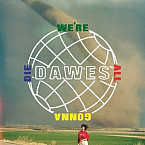

We're All Gonna Die

Album: We're All Gonna Die (2016)
Play Video

Songfacts®:

  • For Dawes' fifth studio album, the California folk-rock band supplemented their vintage Laurel Canyon sound with notes of funk, reggae, and pop rock. According to lead singer-songwriter Taylor Goldsmith, each band member contributed a key element to the title track to make it stand out despite its common chord progression.

    "We were trying to find this balance of what the sound was going to be and it's a little different for each guy," Goldsmith told Pancakes and Whiskey in 2016. "In the very beginning of that track, all that our piano player, Lee [Pardini], was doing was hitting a really, really low note that you could sort of hear ringing over the track. And Griffin [Goldsmith] used - instead of a normal snare drum - he used a snare drum that's almost the size of a softball. It's this really small thing so it made the snare sound a certain, specific way and I was playing this strange, distorted pianet keyboard. It's like we all had these little elements, and again, we're all playing very little. I'm hitting that one chord once and Lee's hitting that one note once. So by doing it all how we arrange it, it all of a sudden becomes a recognizable track. And then when that song comes on, even though it's a chord progression that like every other song ever written uses, it kind of has its own personality to it. That is something that we really wanted to pay close attention to. In the past, for me, I wanted to create that identity with the composition itself."
  • Goldsmith was intrigued by the phrase "We're All Gonna Die" and in the lyrics used it to express his feelings about his art and his place in the world. "It's about losing touch with why I started writing songs in the first place and what it meant to really deeply care about the work that you do, or anything at all," he explained in the behind-the-scenes documentary Alternative Theories Of Physics. "And in the song, I'm remind myself that it's not that important, like let's really think about our position in this universe and how brief and ridiculous it is and not to take anything too seriously, including any sorts of anxiety about, 'Am I gonna write a great song?'"
  • The album was produced by Blake Mills, Goldsmith's former partner in the post-punk band Simon Dawes. "We're cut from the same cloth in terms of what our sensibilities are musically," Goldsmith said of Mills. "We speak the same exact language. If he wants to take it to a certain place, I have an easier time understanding why and what he means and it’s wonderful to be able to trust someone like that."
  • This was the band's second consecutive #1 album on the Billboard Folk Albums chart, following 2015's All Your Favorite Bands. It also reached #8 on the Rock Albums chart.

Comments

Be the first to comment...

Editor's Picks

Howard Jones

Howard JonesSongwriter Interviews

Howard explains his positive songwriting method and how uplifting songs can carry a deeper message.

Psychedelic Lyrics

Psychedelic LyricsMusic Quiz

Whoa man! Do you know which band came up with these cosmic lyrics?

The Punk Photography of Chris Stein

The Punk Photography of Chris SteinSong Writing

Chris Stein of Blondie shares photos and stories from his book about the New York City punk scene.

Why Does Everybody Hate Nu-Metal? Your Metal Questions Answered

Why Does Everybody Hate Nu-Metal? Your Metal Questions AnsweredSong Writing

10 Questions for the author of Precious Metal: Decibel Presents the Stories Behind 25 Extreme Metal Masterpieces

80s Video Director Jay Dubin

80s Video Director Jay DubinSong Writing

Billy Joel and Hall & Oates hated making videos, so they chose a director with similar contempt for the medium. That was Jay Dubin, and he has a lot to say on the subject.

Waiting For The Break of Day: Three Classic Songs About All-Nighters

Waiting For The Break of Day: Three Classic Songs About All-NightersSong Writing

These Three famous songs actually describe how they were written - late into the evening.