Mandrake Root

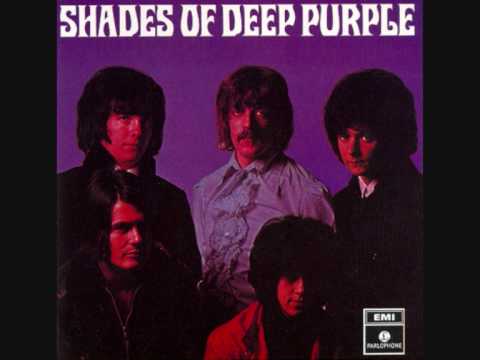
Album: Shades of Deep Purple (1968)
Play Video

Songfacts®:

  • Although it has words, "Mandrake Root" is primarily a solo, with a heavy emphasis on drumming. A single sheet of the basic music without the solos was filed with the British Library (then the British Museum Library) for copyright purposes probably shortly after it was recorded; the manuscript claims Copyright 1968 by B. Feldman & Co trading as HEC MUSIC of London, and the song is credited to Rod Evans, Jon Lord, and Ritchie Blackmore.

    However, anyone may claim the copyright or authorship of a song; A.P. Carter put his name to "Wildwood Flower", but that doesn't mean he actually wrote it, and the authorship of "Mandrake Root" is every bit as controversial as some of Carter's shenannigans.

    In the Jerry Bloom biography of Ritchie Blackmore, drummer Ricky Munro is quoted: "I co-wrote the song, I invented all the drumming and the accents and he wrote the riff. It was more of an instrumental than a vocal song."

    Blackmore had intended to use "Mandrake Root" as the theme song for a band he was putting together, but although Mandrake Root rehearsed, they never actually played a live gig. While Munro's claim to have co-written the song was made in good faith, he didn't know that Blackmore had ripped it off, or at least the riff, from another guitarist. Nick (Nic) Simper, the original bassist with Deep Purple, is also quoted by Bloom: "'Mandrake Root' was written by a guy called Bill Parkinson and it was called 'Lost Soul' originally."

    Parkinson had written the song as a drum solo for Carlo Little, the original drummer of the Rolling Stones, who like Blackmore had played with The Savages, the backing band for Screaming Lord Sutch. Simper said Blackmore learned the melody "note for note" from Little. Bill Parkinson was lead guitarist with the Savages July to September 1966; Blackmore had played with Sutch from May to October 1962, February to May 1965 and December 1966 to April 1967, so their paths had clearly crossed.
  • "Mandrake Root" was the first song ever recorded by Deep Purple, and although they ended their first show (in Denmark) with "Hey Joe," it would soon become their closing number, and remained so for the next three years. Like the rest of their debut album it was recorded at Pye's Marble Arch studios over a weekend in May 1968, after their Danish tour, and produced by Derek Lawrence.

    The original recording ran to 6 minutes 9 seconds, although like the instrumental "Wring That Neck" from their second album, it was often stretched out to half an hour or more in concert.

    In view of the extraordinary success of the fledgeling band, it was not surprising that word soon got back to Parkinson, and just as unsurprisingly he was not happy with regard to (what he saw as) the rip off of "Mandrake Root," and turned up on Simper's doorstep to complain. By this time, Simper had left the band, Parkinson threatened court action, he said, and Simper agreed with some reluctance to testify for him, but "...I never saw Bill again. Apparently they paid him off with about £600."

    In December 2008, Bill Parkinson confirmed the above facts in a telephone interview with this website, as far as he recalled he'd settled for £500. He could have got more, but money was tight in those days. This sort of thing was and still is rife in the music business, he said, citing the case of "The Lion Sleeps Tonight." He added that the notation of 'Lost Soul' is exactly the same as 'Smoke On The Water' with slightly different timing, but pursuing a claim for "Smoke On The Water" would open up a whole new can of worms!

    Parkinson said too that when at last he'd run into Blackmore some time later, his fellow axeman had complimented him on "Lost Soul" and asked "Have you got any more like that?" Needless to say, he was not amused.

    Although Blackmore did undoubtedly rip off "Mandrake Root" from "Lost Soul," it remains to be seen to what extent the two tracks can be considered the same piece of music; there are only so many ways an eight note scale can be played, intervals, sharps and flats considered! >>
    Suggestion credit:
    Alexander Baron - London, England, for above 2

Comments: 2

  • Don from Sevierville, TnI think part of the guitar riff at the beginning resembles the Jimi Hendrix classic, "Foxy Lady".
  • Ricky from Killie, United KingdomAll musicians borrow from the peers and influences, although this does sound like blatant stealing. Thing is though if Purple had done one album and disappeared Simper and Parkinson wouldn't have batted an eyelid, when moneys being made people from the past come knocking at your door. Mandrake Root was really used as a vehicle for Purple's improvisations and wasn't a hit song in itself. As for it being the same as Smoke, I know where Bill Parkinson's coming from as they're played in parallel fourths, but they're not the same. They're in different keys/timing/speed and are used in a different context. If you start saying both riffs are the same for these two songs then you'll find almost every guitar riff is the same as something else! Its a fairly incestious music style. Blackmore himself has varied a theme slightly to come with a new song many times, look at the similarities between Smoke - Burn - Man on the Silver Mountain - All Night Long - Can't Happen Here. All riffs in Gm played in parallel fourths and yet the songs have their own individual styles making them different to the ears of the audience.
see more comments

Editor's Picks

Michael Schenker

Michael SchenkerSongwriter Interviews

The Scorpions and UFO guitarist is also a very prolific songwriter - he explains how he writes with his various groups, and why he was so keen to get out of Germany and into England.

Gavin Rossdale On Lyric Inspirations and Bush's Album The Kingdom

Gavin Rossdale On Lyric Inspirations and Bush's Album The KingdomSongwriter Interviews

The Bush frontman on where he finds inspiration for lyrics, if his "machine head" is a guitar tuner, and the stories behind songs from the album The Kingdom.

John Kay of Steppenwolf

John Kay of SteppenwolfSongwriter Interviews

Steppenwolf frontman John Kay talks about "Magic Carpet Ride," "Born To Be Wild," and what he values more than awards and accolades.

Ralph Casale  - Session Pro

Ralph Casale - Session ProSongwriter Interviews

A top New York studio musician, Ralph played guitar on many '60s hits, including "Lightnin' Strikes," "A Lover's Concerto" and "I Am A Rock."

Rick Astley

Rick AstleySongwriter Interviews

Rick Astley on "Never Gonna Give You Up," "Cry For Help," and his remarkable resurgence that gave him another #1 UK album.

David Gray

David GraySongwriter Interviews

David Gray explains the significance of the word "Babylon," and talks about how songs are a form of active imagination, with lyrics that reveal what's inside us.