Demon Hunter

Demon Hunter Artistfacts

  • 2000-
    Ryan ClarkVocals2000-
    Jesse SprinkleDrums2000-2004
    Don ClarkRhythm guitar2000-2009
    Kris McCaddonLead guitar2002-2005
    Ethan LuckLead guitar2005-2009
    Ryan HelmRhythm guitar2009-2011
    Jon DunnBass2002-
    Tim WattsDrums2004-
    Patrick JudgeLead guitar2009-
    Jeremiah ScottRhythm guitar2011-
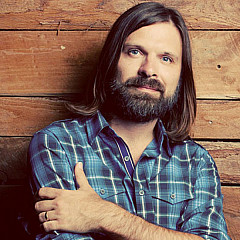
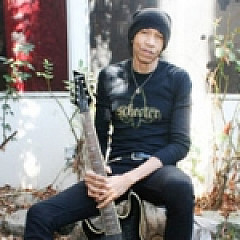
  • Demon Hunter are a Seattle Christian metal band formed by brothers Ryan and Don Clark in 2000. Their music pairs blunt-force riffs and metalcore intensity with melodic hooks, existential lyrics, and an unusually strong visual identity, a combination that has kept them relevant well beyond their early-2000s rise.
  • Demon Hunter were formed in Seattle in 2000 by brothers Ryan and Don Clark after the breakup of their experimental metalcore band Training for Utopia. The Clarks wrote and played most of the material for their debut themselves, bringing in drummer Jesse Sprinkle for the sessions. Their self-titled album arrived on Solid State Records on October 22, 2002, after a demo of "Through The Black" appeared on the label's This Is Solid State Vol. 3 compilation earlier that year.
  • The band began as a mysterious project. Demon Hunter initially obscured the identities of its members, using pseudonyms (Sgt. Serpent, Chuck Knuckles...) and keeping publicity to a minimum, which let the music and the striking demon-skull logo do the talking. Ryan Clark said their name was not the result of a grand theological plan. "We were jokingly throwing out band names one day, and it just came out," he told Indie Vision music.
  • Ryan Clark is Demon Hunter's vocalist, chief lyricist, co-founder, and creative director. He often develops an album's title, visual theme, photo concepts and video ideas before the songs are finished. Alongside his brother Don, he also runs Invisible Creature, the design studio behind artwork and campaign materials for artists including Alice In Chains, Chris Cornell, Stone Sour, Wolfmother and Underoath.
  • Demon Hunter have always identified as Christian, but they avoid making every lyric a sermon. Their songs regularly confront death, guilt, fear, isolation, and personal failure, then look for a way through. Clark told Full Metal Jackie that even when writing about grief or "the more negative aspects" of the human condition, he tries to offer "some sort of solution" and a light at the end of the tunnel.
  • Don Clark left Demon Hunter in 2009, leaving Ryan as the only remaining original member. Ryan later said that Patrick Judge, who joined after Don's departure, expanded the music beyond what he described as the early records' "caveman-esque style."
  • Demon Hunter's fanbase includes a Navy SEAL who was identified by Esquire as "the Shooter" in its 2013 account of the raid that killed Osama bin Laden. The SEAL said the band sent CDs and patches after Metallica objected to its music being used in military interrogations. "I wore my Demon Hunter patch on every mission. I wore it when I blasted bin Laden," he said.

    Demon Hunter explained that they supported service members wearing their patches but had not volunteered their music for interrogations and did not know it was being used that way.
  • The band have an intense connection with their fans, whose tattoos, weddings and funerals incorporate Demon Hunter imagery and lyrics. Fans have named children Hunter after the group, while some have used lines from "Carry Me Down" on grave markers. "We've been lucky enough to be part of those big moments in people's lives," Clark told Full Metal Jackie.
  • Demon Hunter balance heavy material with songs built around big, accessible melodies. Their official biography points to tracks such as "Dead Flowers," as songs fans use as personal anthems through both celebrations and mourning. This emotional range has allowed the band to reach audiences beyond the strictly metalcore crowd.
  • The band were vexed by the popularity of the Netflix KPop Demon Hunters franchise, which exploded into music in 2025 with the hit song "Golden." It would be hard to confuse a Christian band with an animated K-pop trio, but Demon Hunter claimed that was the case, citing an email they got from someone who mistakenly bought premium tickets for one of their shows, only to realize later it wasn't the child-friendly K-pop show they expected. The band's company filed a lawsuit to protect their trademark, claiming the film's soundtrack, merchandise, and planned global concert tour create "almost complete overlap" with the band's own music, live-performance, and merchandise business.

Comments

Be the first to comment...

Editor's Picks

Grammar In Lyrics

Grammar In LyricsMusic Quiz

Lyrics don't always follow the rules of grammar. Can you spot the ones that don't?

John Waite

John WaiteSongwriter Interviews

"Missing You" was a spontaneous outpouring of emotion triggered by a phone call. John tells that story and explains what MTV meant to his career.

Tom Johnston from The Doobie Brothers

Tom Johnston from The Doobie BrothersSongwriter Interviews

The Doobies guitarist and lead singer, Tom wrote the classics "Listen To The Music," "Long Train Runnin'" and "China Grove."

Macabre Mother Goose: The Dark Side of Children's Songs

Macabre Mother Goose: The Dark Side of Children's SongsSong Writing

"London Bridge," "Ring Around the Rosie" and "It's Raining, It's Pouring" are just a few examples of shockingly morbid children's songs.

The Police

The PoliceFact or Fiction

Do their first three albums have French titles? Is "De Do Do Do, De Da Da Da" really meaningless? See if you can tell in this Fact or Fiction.

Eric Clapton

Eric ClaptonFact or Fiction

Did Eric Clapton really write "Cocaine" while on cocaine? This question and more in the Clapton edition of Fact or Fiction.