
All In All (This One Last Wild Waltz)

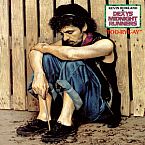
Album: Too-Rye-Ay (1982)
Play Video

Songfacts®:

  • A bittersweet ballad, "All in All (This One Last Wild Waltz)" explores a distant relationship with an authority figure. Kevin Rowland encapsulates this tension by repeatedly claiming, "All in all, I'd say things have turned out good," even while lamenting that the other party "still don't smile at me."
  • You don't waste time on praise. Do you sir?

    The "Sir" is Rowland's own father, whose violent disapproval broke his self-confidence. Rowland responded by adopting a macho veneer, one that later seeped into his sometimes-tyrannical leadership of Dexys. He calls his father "Sir" with a sneer.
  • "All in All" was originally about class and repression and titled "All It Takes," but Rowland didn't think the lyric was strong enough. "On the morning I was due to record it," he told Uncut magazine, "I went into what looks like a wood at the back of the studio and I rewrote the whole lyric in 10 minutes."

    Years later, a relative pointed out the obvious: Rowland wrote the song about his dad. "It was only some years later that I thought, of course it is," he said. "He never smiled, never told me anything any good. 'You don't waste time on praise' and 'from lower down, you just seemed so much better' - looking up at him as a child, I suppose."
  • The track grew out of a pivotal phase for Dexys. Rowland and trombonist "Big" Jim Paterson co-wrote it just as the band were grafting violinists Helen O'Hara and Steve Brennan onto their famously brassy sound.
  • The song was recorded for Dexys Midnight Runners' seminal second album, Too-Rye-Ay, released in July 1982. Produced by Clive Langer and Alan Winstanley, who were central to the album's sound, the track is built around a waltz structure. Its gentle strings and keyboards create a contemplative atmosphere, providing a stark contrast to the album's energetic, radio-friendly centerpiece, "Come On Eileen."
  • "All in All" ends with an Irish-language invocation: "Anduici tú mé san damsa fión" (roughly "Come with me in the wine dance"). It's a nod to Rowland's roots and a hint of the Celtic identity that threads through Too-Rye-Ay like a fiddle line wandering home.
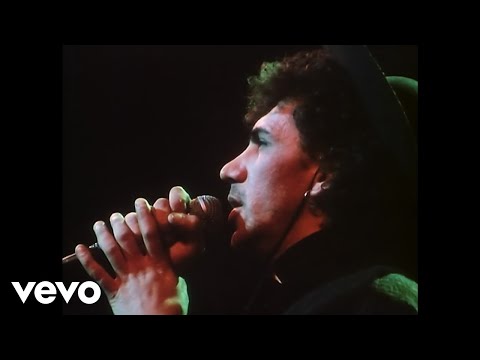
  • The song remains a fixture in Dexys' live performances and has been captured in multiple concert recordings, including performances at at London's Shaftesbury Theatre in 1982 and La Cigale in Paris in 2023.

Comments

Be the first to comment...

Editor's Picks

Meshell Ndegeocello

Meshell NdegeocelloSongwriter Interviews

Meshell Ndegeocello talks about recording "Wild Night" with John Mellencamp, and explains why she shied away from the spotlight.

Elton John

Elton JohnFact or Fiction

Does he have beef with Gaga? Is he Sean Lennon's godfather? See if you can tell fact from fiction in the Elton John edition.

Joe Ely

Joe ElySongwriter Interviews

The renown Texas songwriter has been at it for 40 years, with tales to tell about The Flatlanders and The Clash - that's Joe's Tex-Mex on "Should I Stay or Should I Go?"

Laura Nyro

Laura NyroSongwriting Legends

Laura Nyro talks about her complex, emotionally rich songwriting and how she supports women's culture through her art.

Classic Metal

Classic MetalFact or Fiction

Ozzy, Guns N' Roses, Judas Priest and even Michael Bolton show up in this Classic Metal quiz.

Ian Astbury of The Cult

Ian Astbury of The CultSongwriter Interviews

The Cult frontman tells who the "Fire Woman" is, and talks about performing with the new version of The Doors.