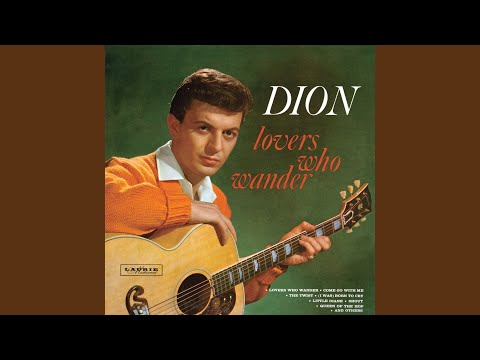
(I Was) Born To Cry
by Dion

Album: Lovers Who Wander (1962)
Charted: 42
Play Video

Songfacts®:

  • On "(I Was) Born to Cry" Dion's vocals are powerful and raw, conveying the emotional turmoil expressed in the lyrics. The song is a heartbreaker. Dion pours his pain over a bluesy guitar riff, singing about his loneliness and the state of the world. He even hints at financial struggles, adding to the overall sense of despair.
  • Amid the darkness, a flicker of hope emerges.

    Well, I know someday
    And maybe soon
    That master will call
    And when he does
    I'll you something
    Ha ha, I won't cry at all


    The lyric references Dion's Catholic faith and the promise of eternal life when God will wipe every tear from our eyes. It foreshadows his later foray into contemporary Christian music in the 1980s.
  • Dion was originally supposed to be on the plane that crashed and took Buddy Holly's life on February 3, 1959, but he opted out because of the cost. This close call with mortality influenced this song.

    "What was I writing about? Chuck Berry was writing about cars and schools and I was writing born to cry and lovers who wander and love came to me," Dion told Uncut magazine. "I was a rock and roll philosopher. I guess on some level I wanted to understand things. Especially after the plane crash with Buddy Holly. Why am I here? Why me? Where do you go when you die? That near miss made me ask I'd lot of questions and something like Born To Cry is about that."
  • When Dio composed "Born To Cry," he wanted to write something that used the baritone sax. "I was so crazy that I went and got myself a kazoo because I didn't know how to play horn and our thought that made me sound like a sax player," he told Uncut. "Now I listen back to it and wonder what the hell I was thinking of. I could swear I sounded like King Curtis or Al Sears."
  • Dion's singing was influenced by Jewish cantors. "In the Bronx there were Jewish neighborhoods to the east and west of us," he told Mojo magazine. "I was walking past the synagogue in Pelham Bay one day and heard this cantor. His name was Henry Rosenblatt. I walked in there because there were some ethereal kind of beautiful sounds. He brought me in the back and played me his father's records. His father was Yossele Rosenblatt, and he was in (1927 film) The Jazz Singer as the Jewish Caruso. I went home, and I wrote 'Born To Cry.'"

Comments

Be the first to comment...

Editor's Picks

Ian Anderson of Jethro Tull

Ian Anderson of Jethro TullSongwriter Interviews

The flautist frontman talks about touring with Led Zeppelin, his contribution to "Hotel California", and how he may have done the first MTV Unplugged.

Dave Pirner of Soul Asylum

Dave Pirner of Soul AsylumSongwriter Interviews

Dave explains how the video appropriated the meaning of "Runaway Train," and what he thought of getting parodied by Weird Al.

Martyn Ware of Heaven 17

Martyn Ware of Heaven 17Songwriter Interviews

Martyn talks about producing Tina Turner, some Heaven 17 hits, and his work with the British Electric Foundation.

Band Names

Band NamesFact or Fiction

Was "Pearl" Eddie Vedder's grandmother, and did she really make a hallucinogenic jam? Did Journey have a contest to name the group? And what does KISS stand for anyway?

Angelo Moore of Fishbone

Angelo Moore of FishboneSongwriter Interviews

Fishbone has always enjoyed much more acclaim than popularity - Angelo might know why.

Julian Lennon

Julian LennonSongwriter Interviews

Julian tells the stories behind his hits "Valotte" and "Too Late for Goodbyes," and fills us in on his many non-musical pursuits. Also: what MTV meant to his career.